
recovery
Hair falling out after a transplant: what shock loss is and why it is normal
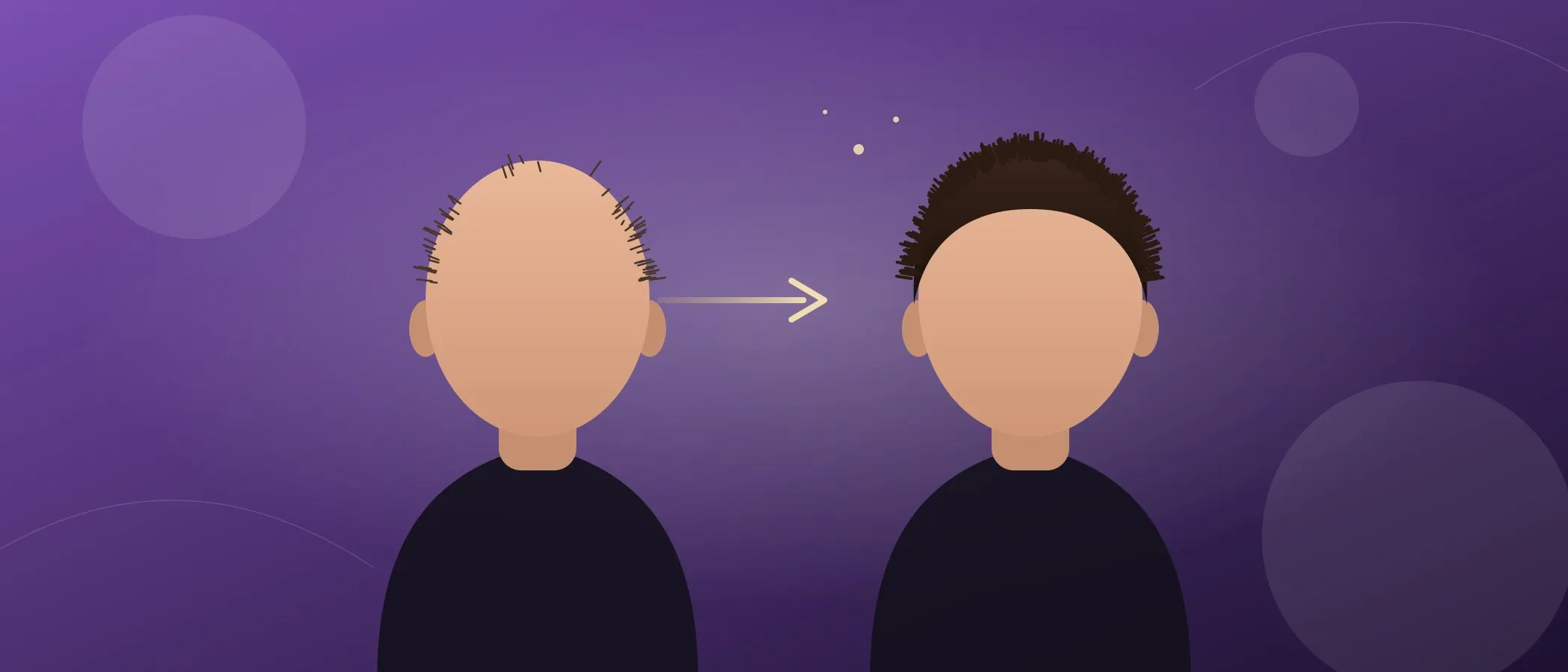
The question we get most often two or three weeks after surgery: “The hair you transplanted is falling out. Has it failed?” Almost always, no. It is an expected stage of recovery with its own name — shock loss.
What actually falls out
A transplant moves whole follicles, hair shafts included. Surgery is a stress for the skin and the follicles themselves: they are extracted, moved and placed in a new site. In response, many follicles enter a resting phase and the visible shaft is shed.
The key distinction: the shaft falls out, not the follicle that grows it. The follicle stays in the skin and, after a rest, starts producing a new hair.
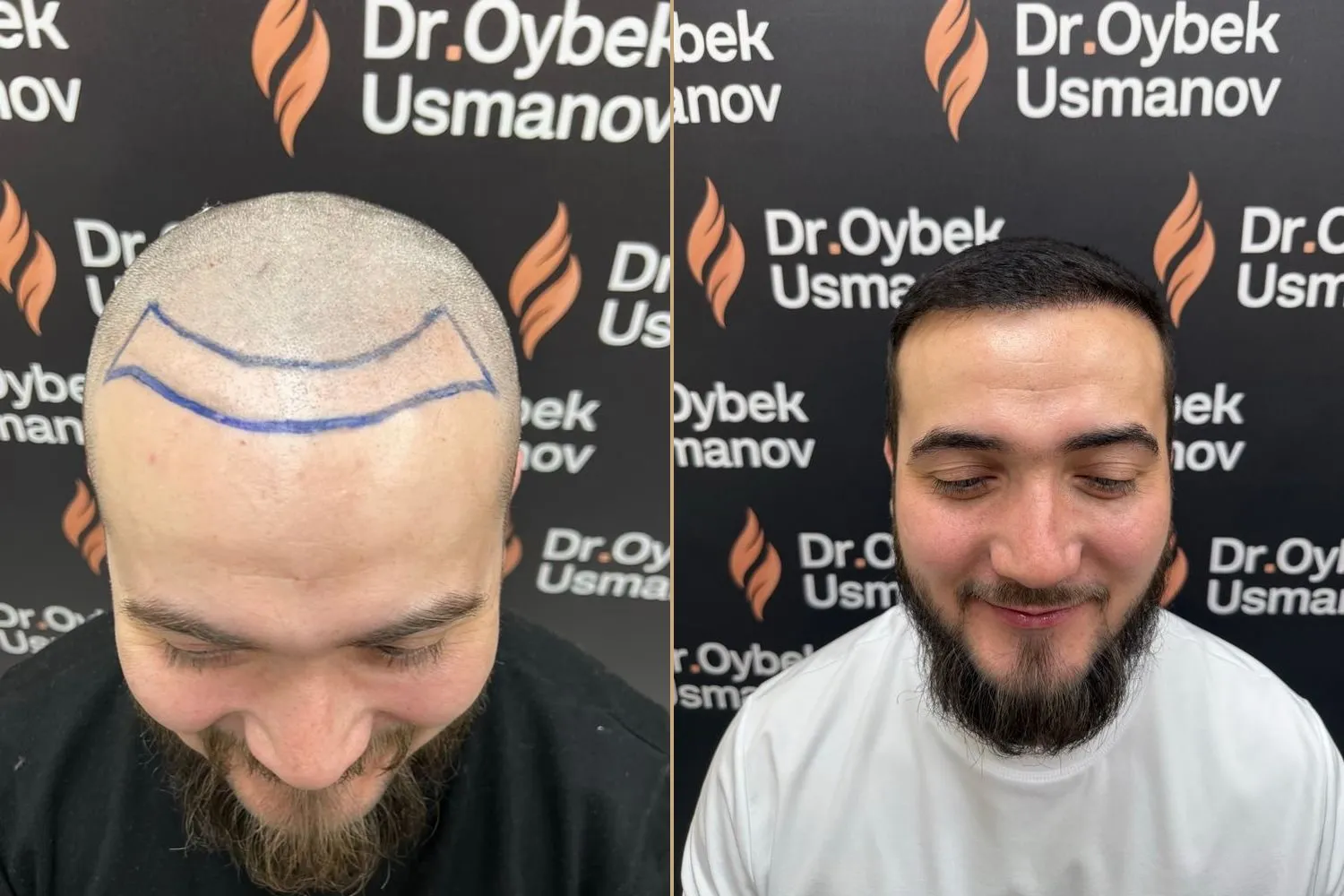
- Mostly it is the transplanted hairs that shed, during the first weeks.
- Sometimes your own existing hairs next to the recipient area thin out temporarily — this is also called shock loss.
- The donor area at the back of the head is usually not affected in this way.
The timeline, in order
People differ, so follow the sequence rather than exact days.
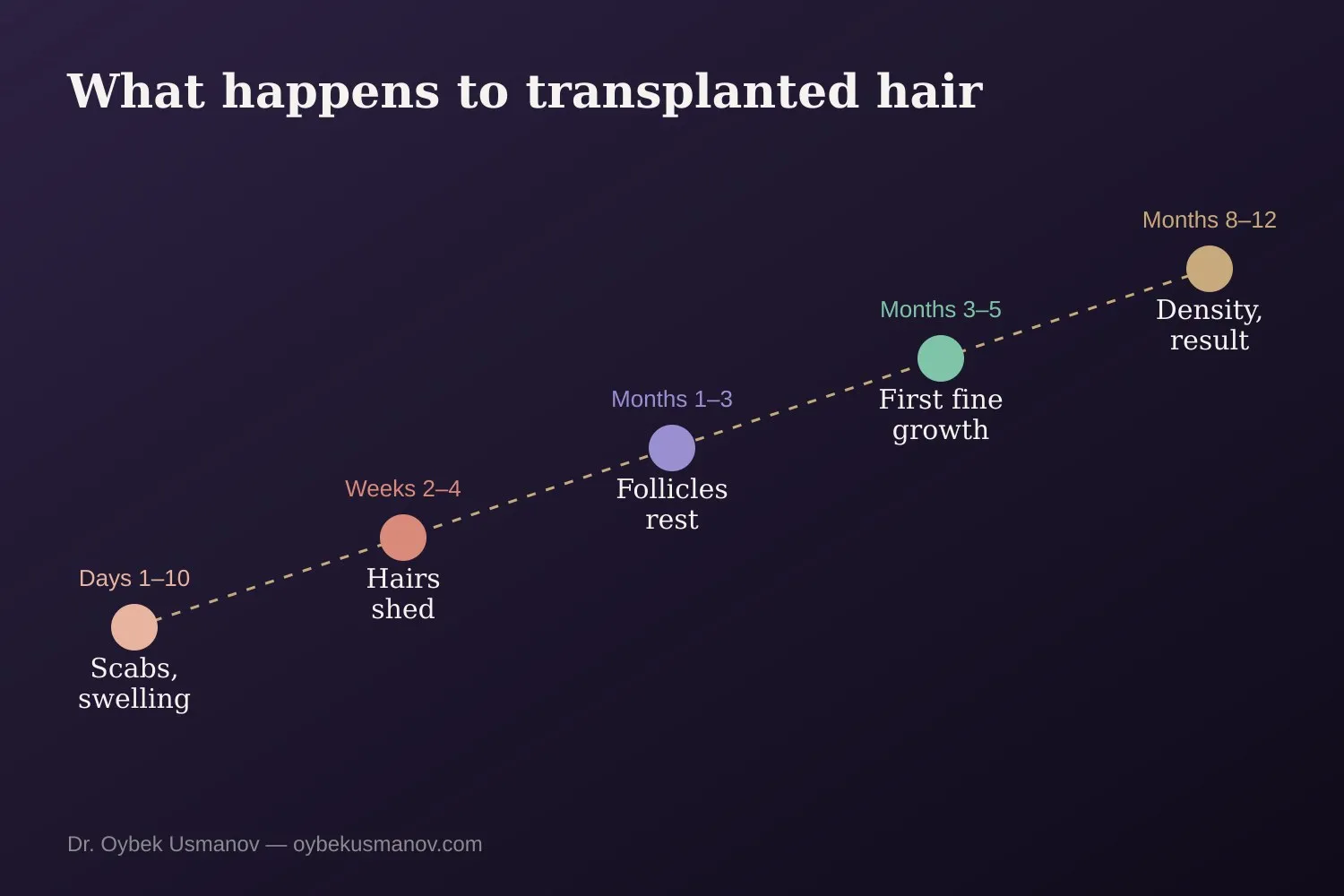
- First days: scabs, swelling, pink skin. The hair looks “planted”.
- Roughly weeks two to four, and over the weeks after: hairs shed together with the scabs. The area may look as it did before surgery, or sparser.
- The following two to three months: a quiet phase while follicles rest. This is the hardest part psychologically.
- From about month three or four: first fine, soft new hairs appear.
- By months eight to twelve: hair thickens and the result is close to final. Full maturation can take longer.
How common is it
Published numbers depend heavily on what counts as shock loss. Shedding of the transplanted shafts in the first weeks is normal and usually not counted at all. In research papers, shock loss most often means temporary thinning of existing hair in the recipient area.
In a Japanese retrospective study of 621 patients after FUE, 23 had this temporary recipient-area loss. It was more common in women, and among women in those over 40 with female pattern hair loss (Okochi et al., Aesthetic Plastic Surgery, 2023, doi:10.1007/s00266-023-03699-z).
In an Indian series of 2,896 patients over ten years, the surgeon recorded temporary loss in the recipient area in three patients and partial loss of implanted hair in five, with no major complications (Garg & Garg, Indian Journal of Plastic Surgery, 2021, doi:10.1055/s-0041-1739255).
The numbers differ because definitions and record-keeping differ. We quote them not as your personal odds, but to show this is a known, described and mostly temporary phenomenon.
What to do while it sheds
- Do not pick at scabs — they come off on their own with the washing routine your surgeon gave you.
- Do not panic-buy “miracle” products: they do not change the natural hair cycle.
- Keep following your aftercare. Take medication such as minoxidil only if your surgeon prescribed it.
- Photograph the area monthly in the same light — trends are easier to see in photos than in the mirror.
- Protect your scalp from the sun and avoid strain until your surgeon lifts the restrictions.
When to contact your surgeon
Shock loss alone is not a reason to worry, but some signs should not wait.
- Increasing pain, fever, growing swelling or redness after the first week.
- Pus, or painful pimple-like bumps (folliculitis).
- Shedding that continues at five or six months with no sign of new growth.
- Anxiety that is stopping you from sleeping — that is worth a message too.
What we do
After surgery you stay in touch with the surgeon. Send photos at two weeks, one month and three months, and we will tell you whether things look like a normal recovery. If you are only planning a transplant, message us on WhatsApp: the surgeon will review your photos and tell you honestly what is realistic.
This article is general information and does not replace a consultation. A specific case is assessed by a doctor in person or from photos.