uzbekistan
140 Landmarks per Square Kilometer, and No Rush at All
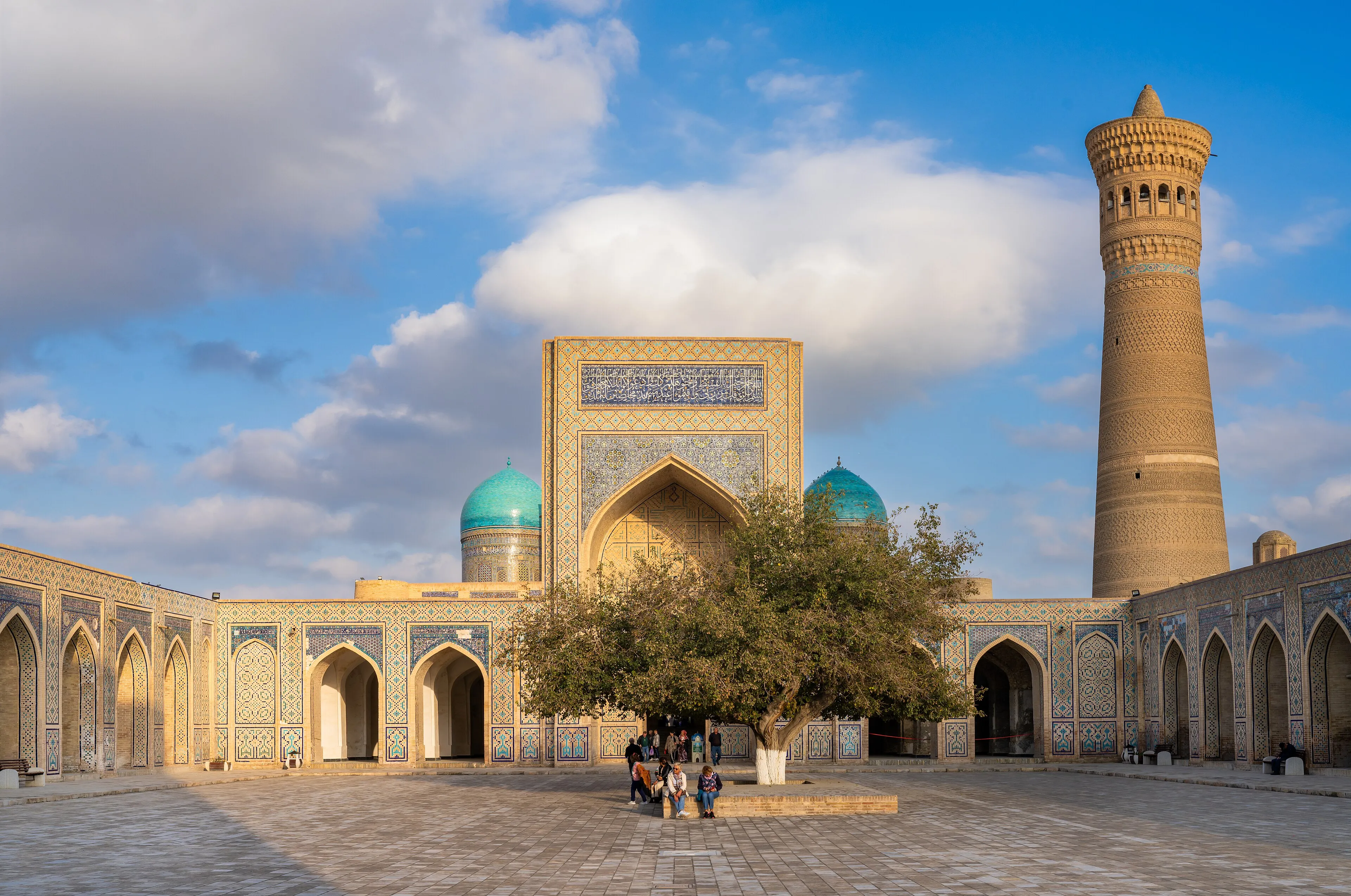
If Samarkand is grand squares and scale, Bukhara is narrow streets, clay walls, and the feeling of having stepped into a different century. The old town survives here as a whole, not as scattered monuments, and the entire thing is a UNESCO World Heritage site.
Roughly 140 architectural landmarks are packed into a single square kilometer of old Bukhara. You can wander without a route — you'll run into something regardless.
What to see
- The Kalyan Minaret — 46 meters tall, standing since 1127. Legend says Genghis Khan ordered it spared when he razed the city.
- The Ark fortress — the residence of Bukhara's emirs, a city within a city.
- Lyab-i Hauz — a square around a pond with a teahouse in the shade of mulberry trees. This is where you understand why people come to Bukhara at all.
- The trading domes — 16th-century covered bazaars still working as intended.
- The Samanid Mausoleum — a small 10th-century brick cube that specialists call one of the finest buildings in Central Asia.
Getting there
The same high-speed train that goes to Samarkand continues on — about four hours from Tashkent to Bukhara. Direct flights exist too, just over an hour.
Many patients combine the two: Samarkand first, then two hours by train to Bukhara, then a flight back to Tashkent. That's three to four days for the full Silk Road classics.
Where to stay
The old town has many small hotels converted from old merchant houses — a courtyard, an aivan, breakfast outside. It's noticeably more interesting than a chain hotel, and usually cheaper.
If you'd rather have something familiar, Bukhara also has standard four-star hotels. Tell us your preference and we'll book it.