recovery
Washing your head after a hair transplant for the first time: scabs, fears and what to do
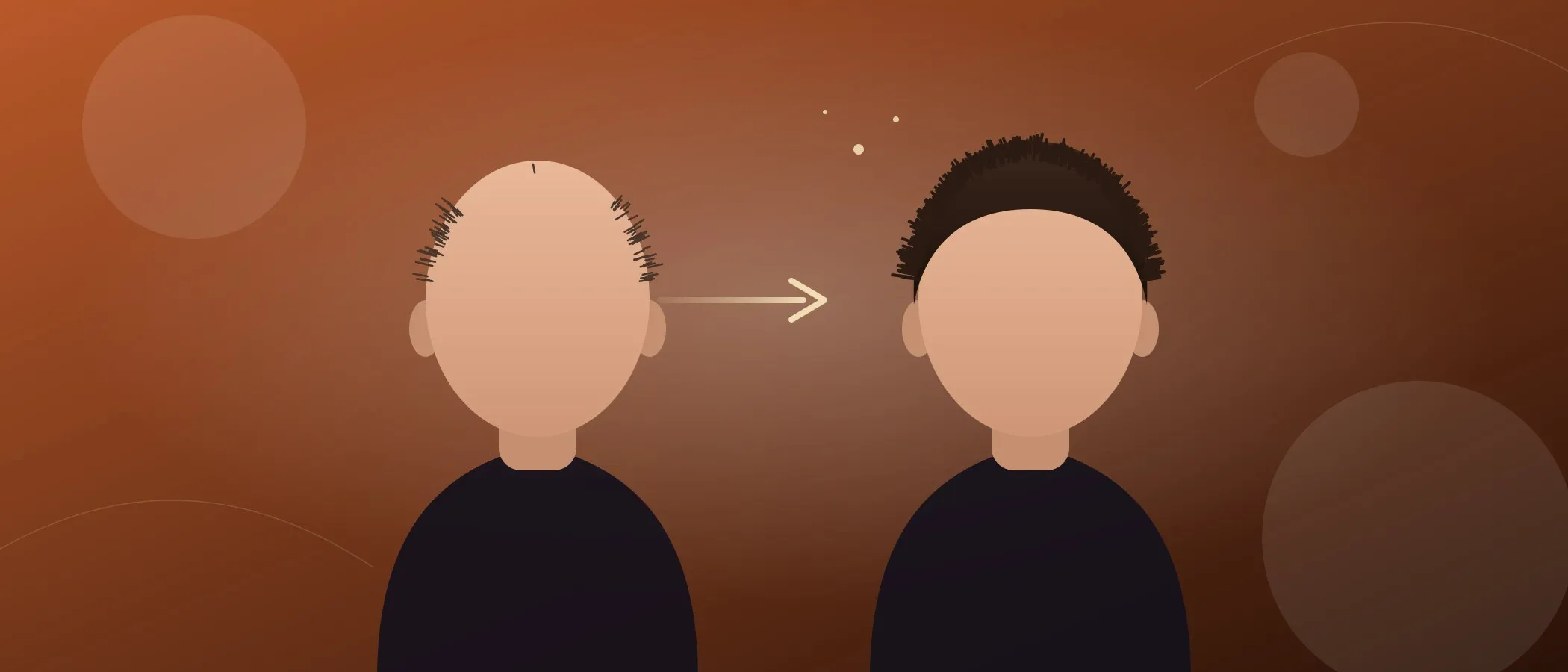
“When can I wash my head after a transplant, and how do I avoid damaging the grafts?” is one of the questions patients ask us most. The fear is understandable: thousands of hairs were just placed, and any touch seems likely to wash them away. In fact proper care is part of the surgery, and it is safer than it feels.
Where scabs come from
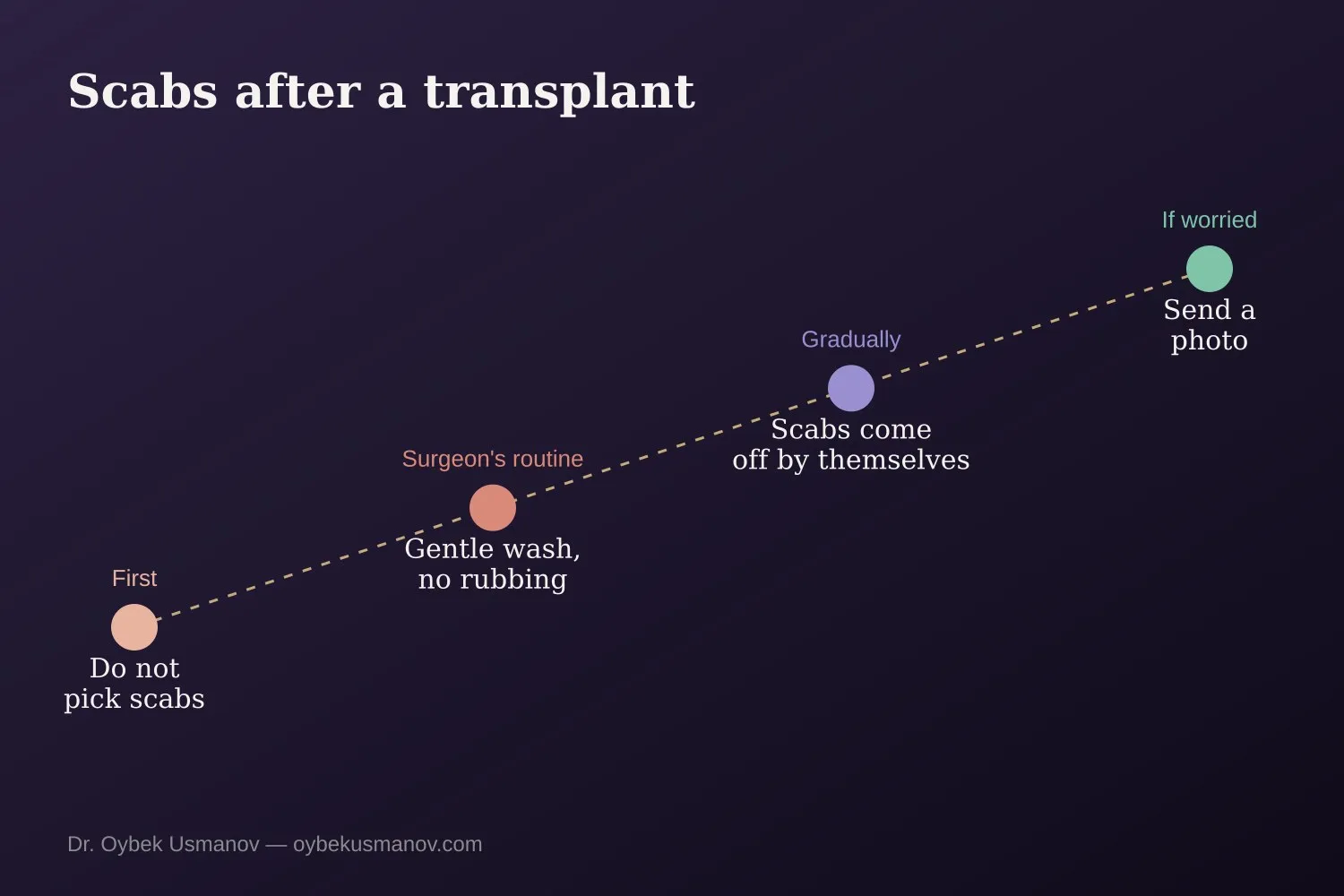
Every graft leaves a tiny wound. Blood and serum dry, and within days the whole recipient area is covered with small scabs. This is normal and expected: it is how skin heals.
But scabs should not stay for long. The authors of a 2026 study note that persistent scabs after FUE may delay healing and raise infection risk, and that postoperative care is still poorly standardized (Meyer et al., Frontiers in Medicine, doi:10.3389/fmed.2026.1741064).
What the study showed
In a small prospective study, 21 men after FUE washed their scalp on a structured 10-day routine starting 48–72 hours after surgery. Scab severity fell on average from 2.67 to 1.76 points (investigator scale), and the skin tolerated washing without burning, itching or pain; redness after washing was temporary (Meyer et al., 2026).
Important caveats: the sample is small, there was no comparison group, and some authors are linked to the maker of the shampoo used. So this is not an endorsement of a product but support for a general principle: gentle, regular washing by a routine helps scabs come off without damaging the skin.
What the first wash looks like
Your surgeon will give you the exact day and order — they depend on the technique and your skin. The logic is the same in every routine.
- Wash only as and when you were told, never earlier.
- Apply lather gently with the pads of your fingers, no rubbing; rinse with warm, not hot, water at low pressure.
- Never rub or pick scabs with your nails: a graft can be pulled out with them.
- Dry by blotting with a soft cloth, no hot hairdryer.
- Mild redness right after washing is a common reaction and usually passes.
What not to do
- Do not pick scabs, even if they look “ready”.
- Do not use random shampoos or folk remedies without your surgeon’s approval.
- No steam rooms, saunas or pools until your surgeon says so.
- Do not panic if fine hairs come out with the scabs — it is ordinary shock loss, which we wrote about separately.
When to message your surgeon
- Scabs stay noticeably longer than the usual recovery period.
- Pus, severe pain, increasing swelling, redness or fever.
- Painful pimple-like bumps on the recipient skin.
- You are not sure you are doing it right — that alone is reason enough to write.
What we do
After surgery every patient gets a care routine and stays in touch with the surgeon. If you are only planning a transplant, send photos on WhatsApp — we will tell you what is realistic and how recovery goes.
This article is general information and does not replace a consultation; your surgeon prescribes your washing routine.