choosing a clinic
Signs of a bad hair transplant and how to choose a clinic
The fear of “it will be done badly” is a main worry when choosing a clinic. The good news: a poor result usually shows clear signs, and many problems can be fixed. The bad: the best way to avoid failure is to choose the surgeon and plan before the operation, not after.
We rely on PubMed publications and note separately the questions worth asking a clinic. That list is common-sense selection logic, not a study result.
What the literature calls an unnatural result
A review on the “unnatural-appearing hair transplant” explains that contemporary techniques usually give results practically indistinguishable from native hair, yet many patients still bear the consequences of older techniques, and some got a similar result from poorly performed procedures in recent times. To correct it, the surgeon needs to understand the anatomic problems of the case (Vogel, Facial Plastic Surgery, 2008, doi:10.1055/s-0028-1102908).
In a recent multicenter study, patients were dissatisfied with hairlines that were too aggressive, too straight or too rounded, and with low hairlines (Gómez-Zubiaur et al., Frontiers in Medicine, 2026, doi:10.3389/fmed.2026.1735251). We covered hairline design separately.
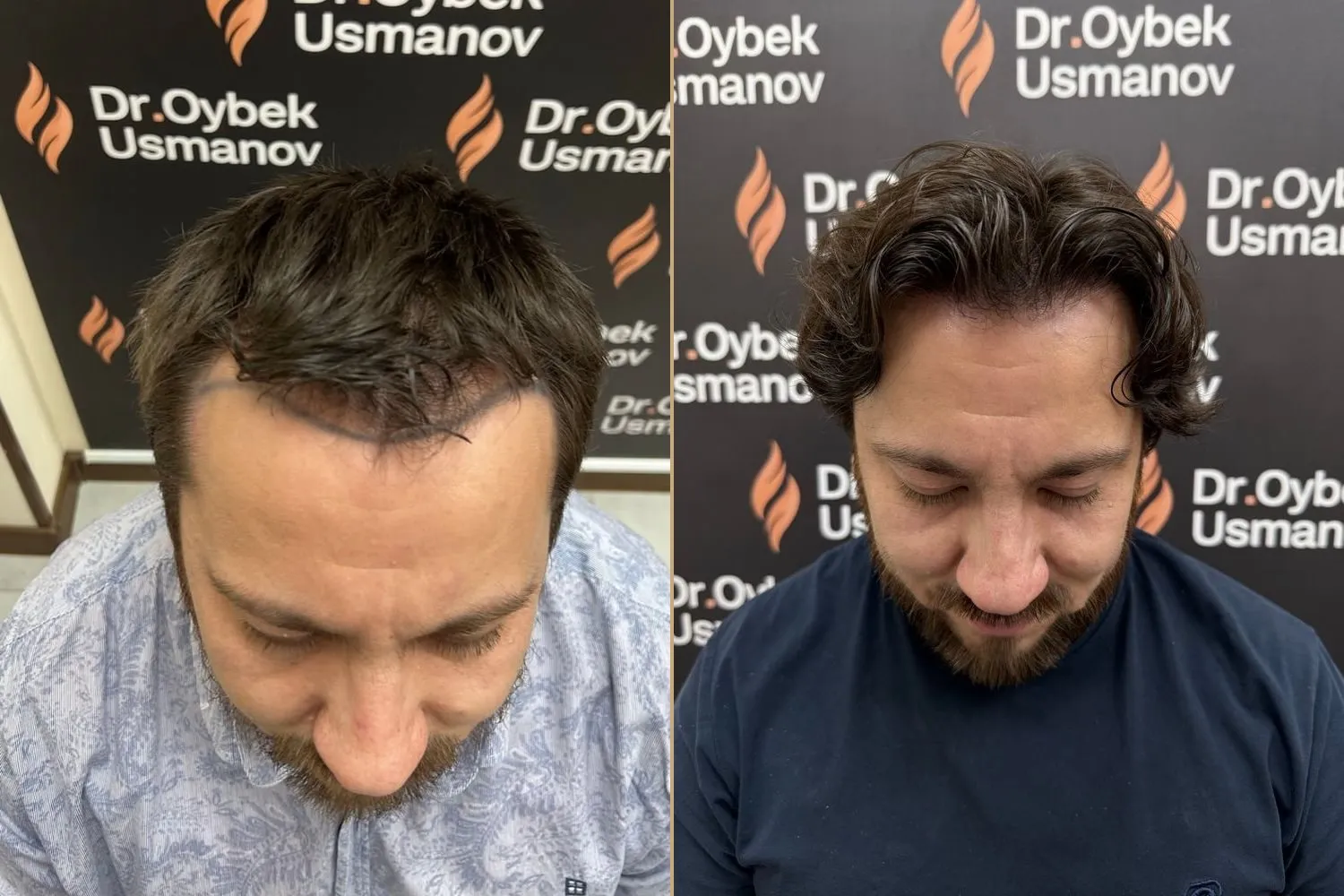
Can it be fixed: data on hairline correction
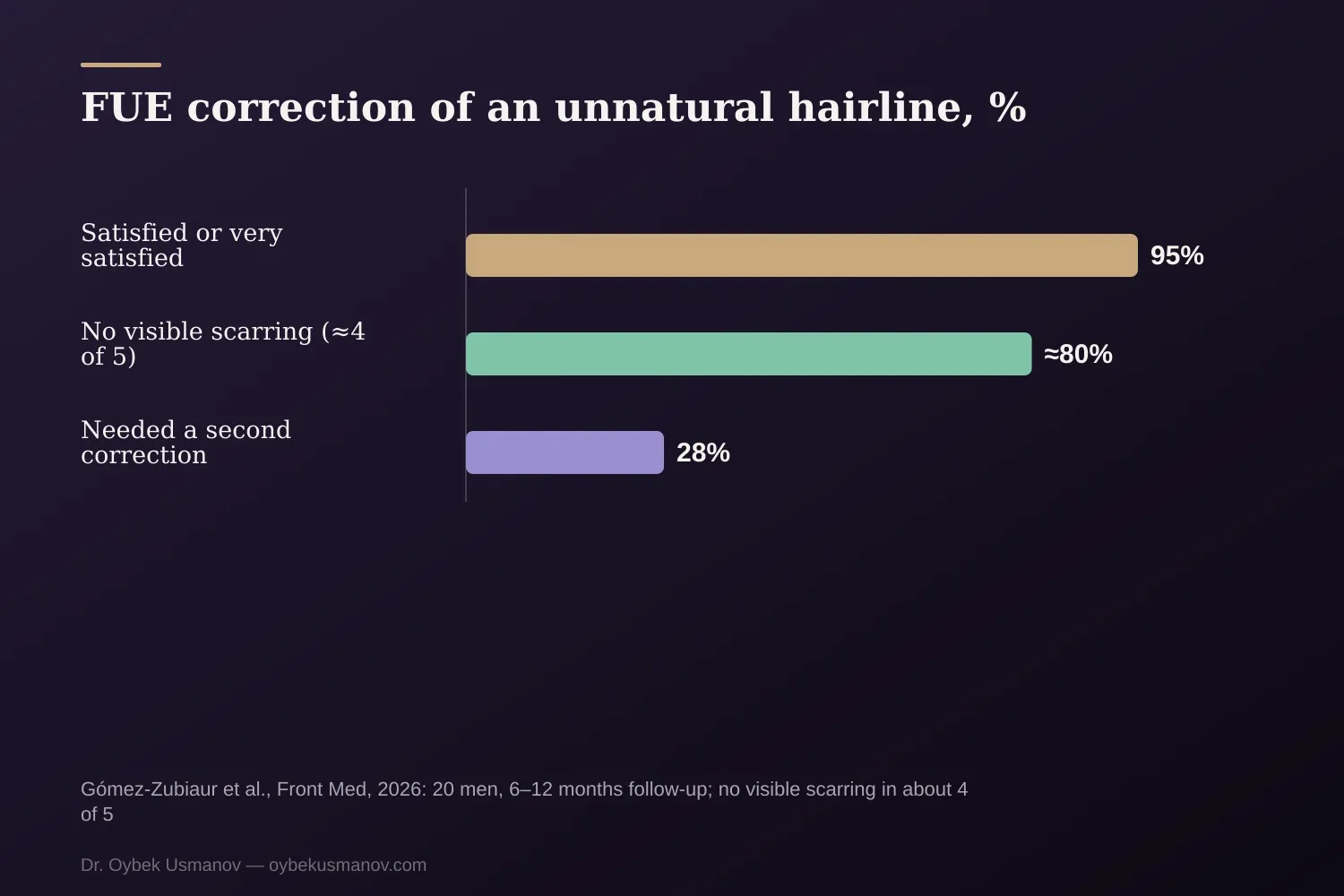
In a retrospective multicenter observation, 20 men (median age 37.5) with poorly designed or too-low hairlines underwent FUE correction. At 6–12 months about four out of five had no visible scarring or pigmentary change, 95% were satisfied or very satisfied, and 28% needed a second correction. The authors note technical difficulty: transection rates during extraction were high (Gómez-Zubiaur et al., Frontiers in Medicine, 2026, doi:10.3389/fmed.2026.1735251).
The sample is small, but the practical point stands: many poor hairlines can be corrected, though it is harder than doing it right the first time.
What to look at when choosing a clinic
- Who exactly operates: ask for the surgeon’s name and who does the hairline marking, extraction and implantation.
- Show your photos and talk about your health: a good clinic asks about medication, illnesses and past surgery, not just draws a design.
- Ask about the long-term plan: expert consensus stresses candidate selection, treating hair loss before surgery and an individualized plan (Vañó-Galván et al., Journal of Dermatological Treatment, 2023, doi:10.1080/09546634.2023.2232065).
- Find out how follow-up works: the same consensus calls for close monitoring through the first year.
- Ask for examples of the surgeon’s own work with method, graft count and time after surgery, not advertising images.
- Be wary of “100%” or “unlimited grafts” promises and pressure to decide quickly.
What we do
Send photos of your head and results of a previous transplant, if any, on WhatsApp: the surgeon will say what can be fixed and which method suits you. We show clinic results only with the surgeon’s data: method, graft count, time since surgery.
This article is general information and does not replace a consultation.