procedure
Body hair transplant: beard, chest and abdomen donors — when it is needed and what is known
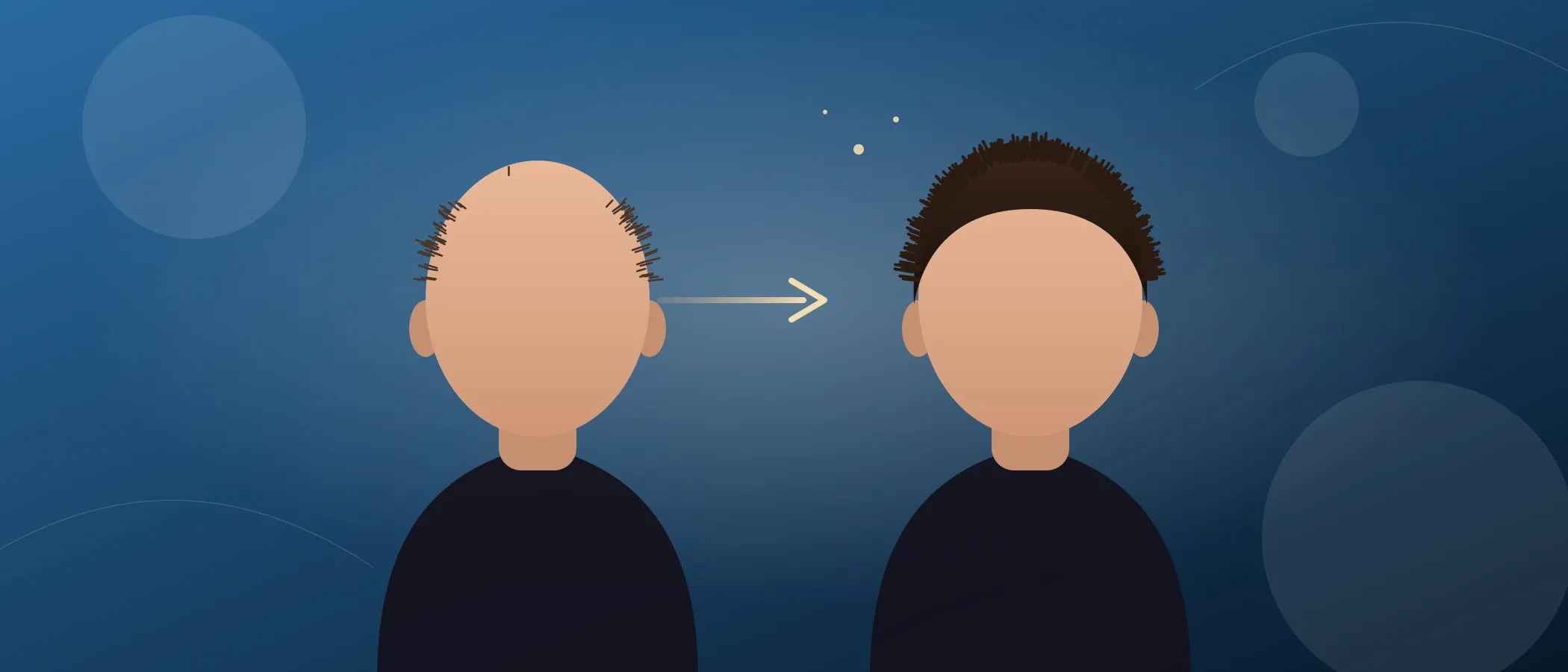
Sometimes the donor hair at the back and sides of the scalp is not enough for the area to cover. Then “non-scalp” donors are discussed: beard, chest, abdomen. Body hair transplantation is a narrow topic with a small evidence base: in PubMed it is mainly reviews, case series and single cases. Below is what they say and what is still missing.
Note: the decision on such a transplant is the surgeon’s after an exam. A general article cannot tell whether your body hair would be suitable.
When and where hair is taken from
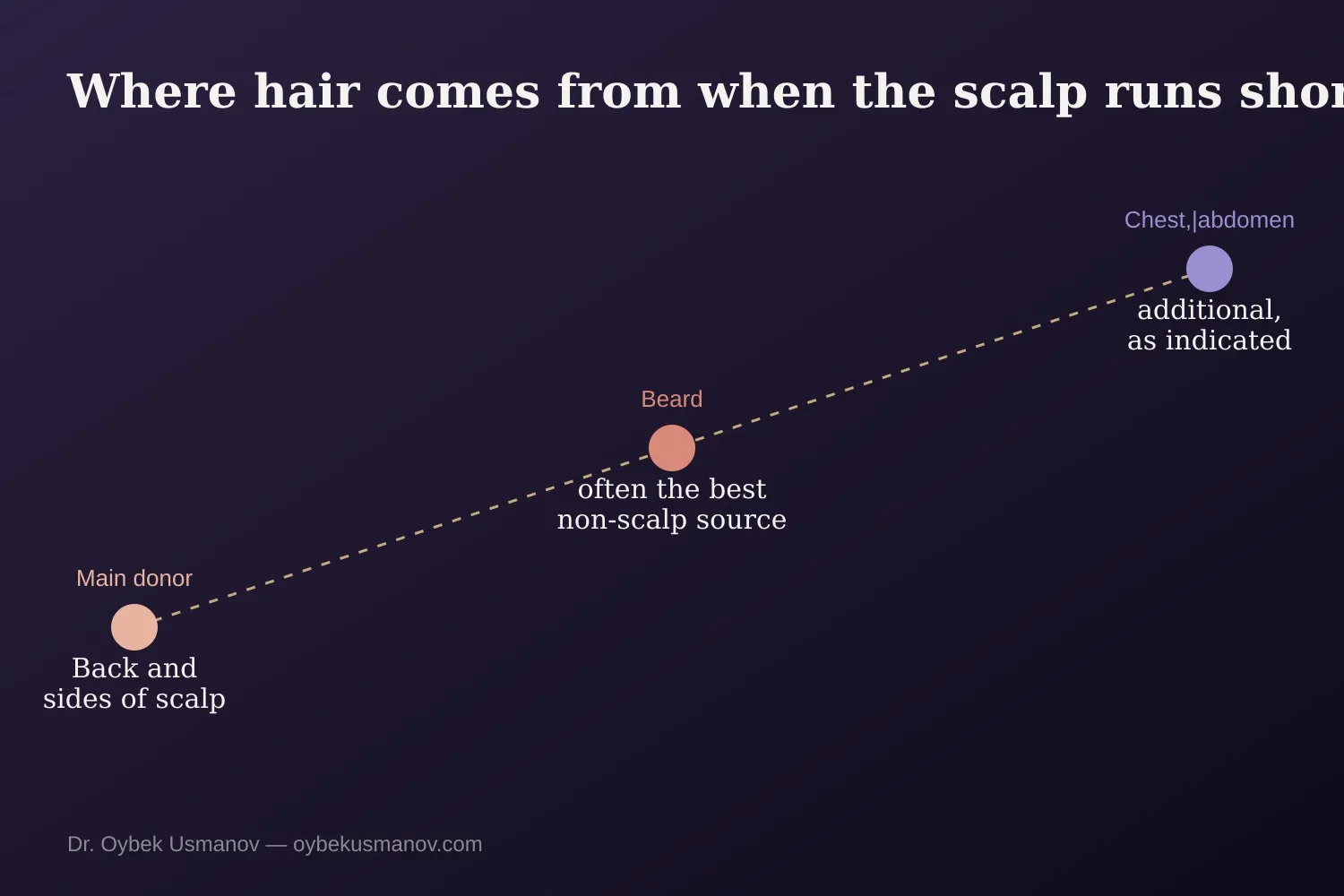
A review says body donor hair gives an additional source when the scalp lacks enough for the intended area; most often these are patients with advanced hair loss or those needing to camouflage scars from earlier operations. In the author’s view the beard is usually the best source, followed by chest and abdomen; together they may supply thousands of additional grafts, but harvesting is technically challenging and needs extensive FUE experience (Gabel, Facial Plastic Surgery, 2023, doi:10.1055/s-0043-1776401).
Another review adds that not all body hair is suitable: only hairs similar in appearance and behavior to scalp hair work for transplanting to the scalp. The best non-scalp sources are the beard and anterior torso, while hair from other sites may be used for eyebrows; harvesting technique and anesthesia must be modified from scalp harvesting (True, Indian Journal of Plastic Surgery, 2021, doi:10.1055/s-0041-1739242).
What small series show
In a series of 20 patients with Norwood grade 6–7 baldness, the beard was used as an additional donor; the authors note minimal complications and consider the approach worthwhile, but stress the need for further research (Gupta et al., Journal of Maxillofacial and Oral Surgery, 2021, doi:10.1007/s12663-021-01535-y).
In a study of 16 patients, “combination grafting” of scalp and body hair (beard first, then chest and abdomen) increased visual density and improved coverage in higher grades of baldness; results were judged by photographs at 4, 8 and 12 months (Garg, Garg, Journal of Cutaneous and Aesthetic Surgery, 2020, doi:10.4103/JCAS.JCAS_89_18).
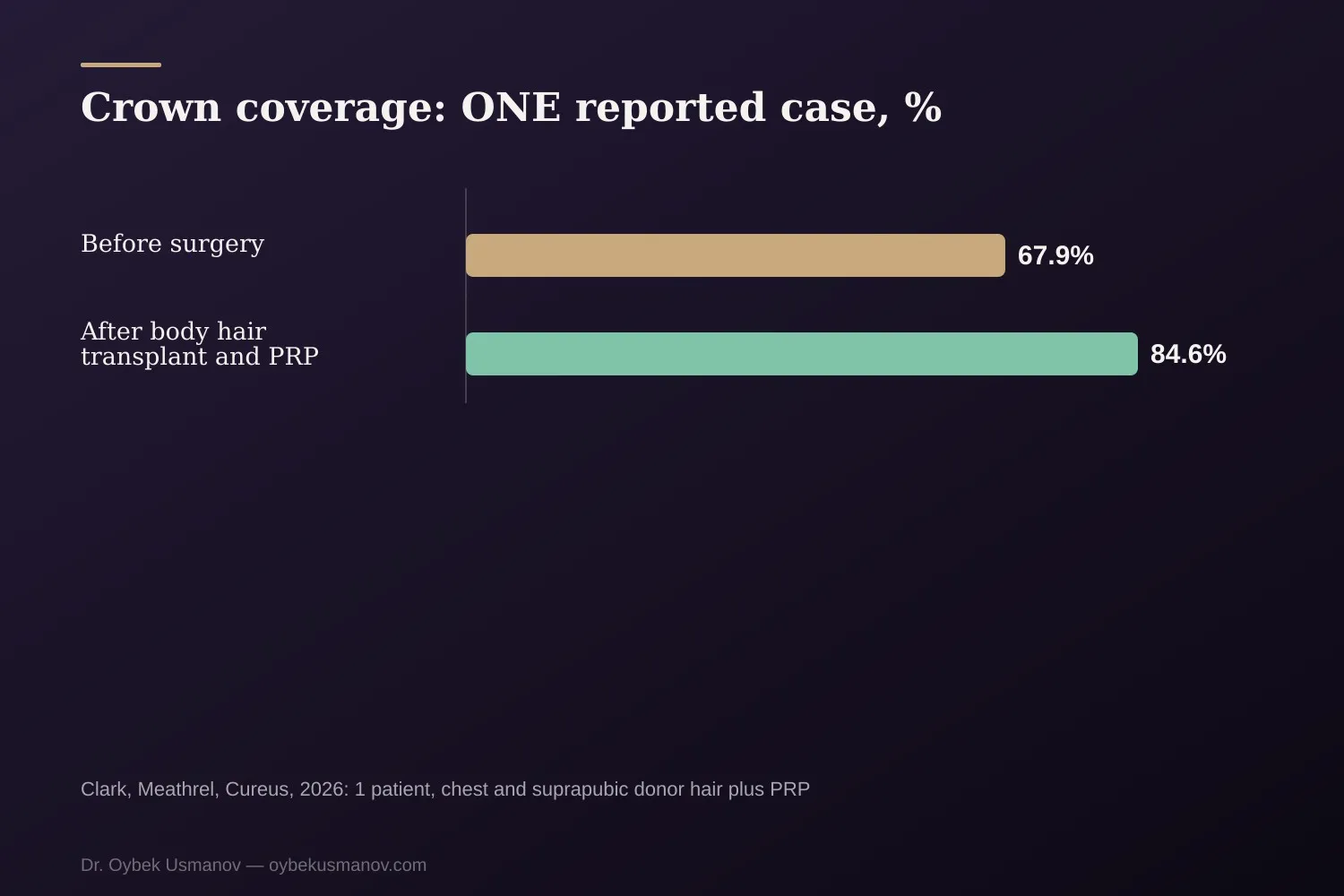
In one reported case, crown coverage rose from 67.9% to 84.6% after chest and suprapubic hair transplant combined with PRP; the authors note the lack of standard selection criteria and follow-up (Clark, Meathrel, Cureus, 2026, doi:10.7759/cureus.106127). A single case does not allow conclusions.
Limits and what to know
- Body and beard hair have their own features: a different growth cycle, thickness and shape, so they do not suit everyone or every area.
- Harvesting from the body is technically harder and needs experience: per a review, anesthesia and technique must be modified.
- It is an additional resource, not a replacement for the back of the scalp: usually used when main donor hair is lacking or to cover scars.
- The evidence base is small: mostly series and single cases, so there are no exact survival forecasts.
- The decision is individual: an exam is needed to assess available hair, density and expectations.
What we do
Send photos of your head and the areas where you have thick hair on WhatsApp: the surgeon will assess your donor reserve and say whether non-scalp sources are worth discussing.
This article is general information and does not replace a consultation.