causes of hair loss
Ferritin and hair loss: what studies show and whether to get tested
“Get your ferritin checked” is one of the commonest pieces of advice for hair loss. But what is behind it? Below is what PubMed shows, with no promises and no “ideal norm” numbers, which studies do not provide.
This article is general information: interpreting tests and prescribing is up to a doctor.
What the meta-analysis shows
A systematic review and meta-analysis (36 of 928 identified studies, 10,029 participants) assessed women with nonscarring alopecia. The prevalence of ferritin at 10–15 and below was 21% (95% CI 12–29), and women with nonscarring alopecia had on average 18.51 units lower ferritin (95% CI −25.85 to −11.16) (Treister-Goltzman et al., Skin Appendage Disorders, 2021, doi:10.1159/000519952). The authors conclude that women with hair loss may benefit from higher ferritin.
Important: the abstract itself says there is no clear-cut evidence of an association between iron deficiency and nonscarring alopecia in the literature, and the meta-analysis pools very different studies.
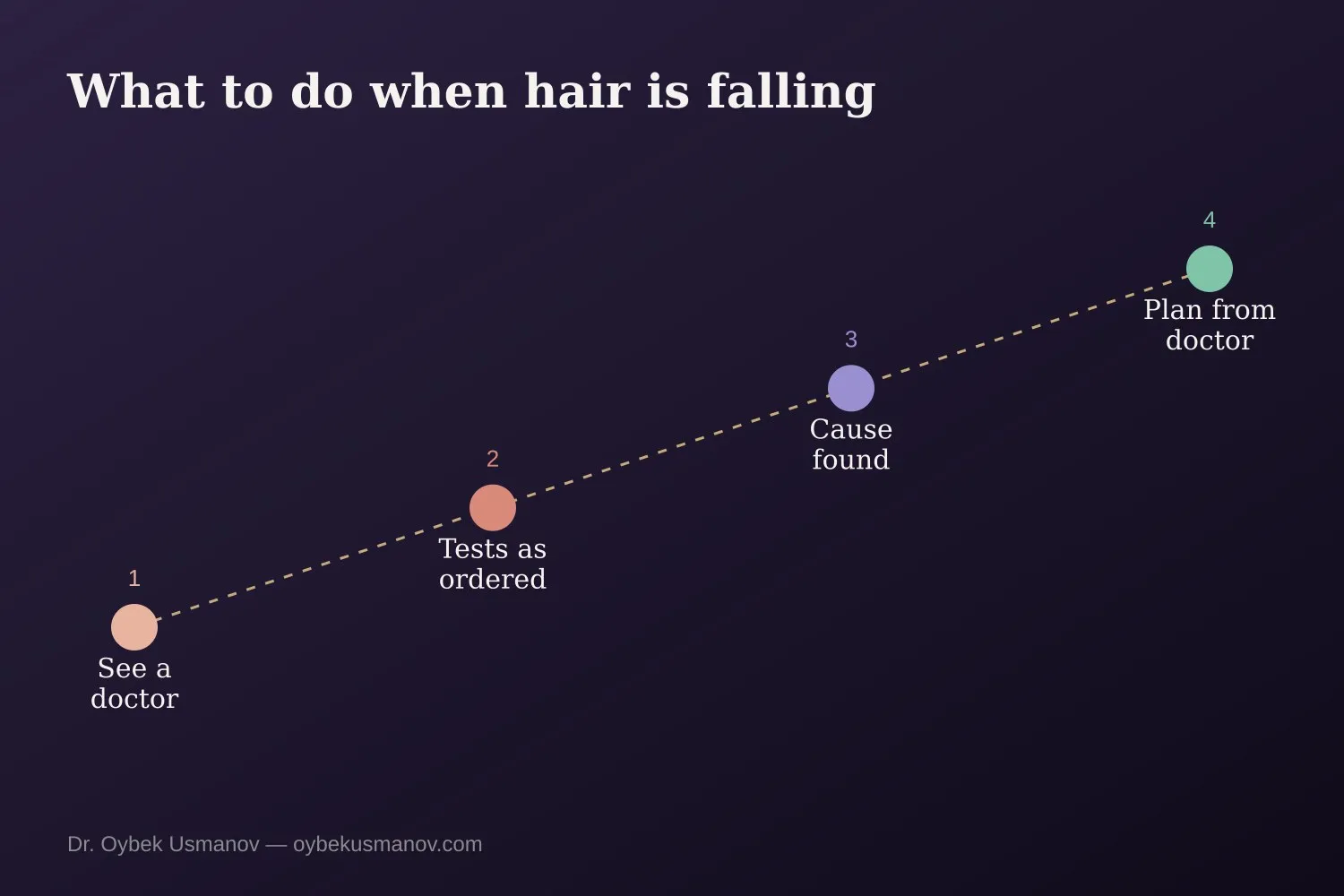
And iron pills?
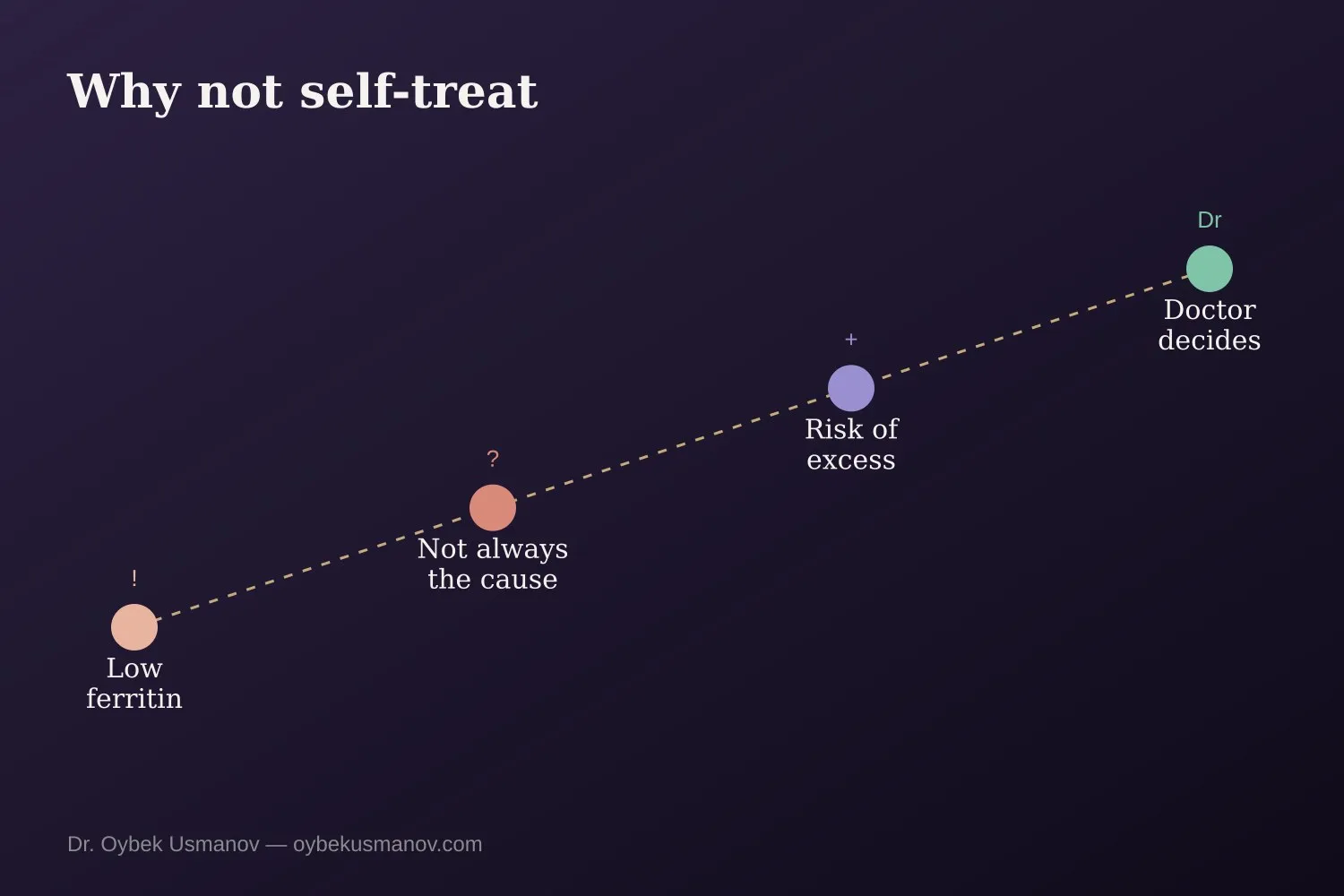
The review by Trost and colleagues notes that evidence is insufficient for universal screening for iron deficiency in everyone with hair loss, or for iron without anaemia; the decision should rest on clinical judgement. It also stresses that excess iron is harmful, especially in some hereditary conditions (Trost et al., Journal of the American Academy of Dermatology, 2006, doi:10.1016/j.jaad.2005.11.1104).
In an observational study of 200 women with telogen effluvium given iron, those with baseline ferritin of 50 ng/ml or more were mostly very satisfied, and those below 50 mostly not satisfied. The authors stress this measures satisfaction, with no comparison group (Soutou et al., Indian Journal of Dermatology, 2024, doi:10.4103/ijd.ijd_744_22).
The honest summary: a link between ferritin and hair loss is plausible, but studies give no magic number and no universal protocol.
Who should discuss a test
- Women with heavy periods, pregnancy or breastfeeding in the history.
- Those with fatigue, pallor or weakness.
- Diffuse shedding that has dragged on.
- Vegetarians and people with restricted diets.
- If you already take iron, do not continue without monitoring tests.
What we do
If your hair loss is not androgenetic alopecia, a transplant is not needed, and we will say so. Send photos of your head on WhatsApp and tell us how long hair has been falling: the doctor will suggest where to start.
This article is general information and does not replace a consultation.