causes of hair loss
Hair loss during weight loss: why it happens and how long it lasts
Two to four months after rapid weight loss, many people notice heavier shedding. Most often it is telogen effluvium (TE), a temporary state linked to rapid weight loss and calorie restriction. Below is what PubMed data show.
This article is general information: diagnosis and diet plans are set by a doctor.
How common it is
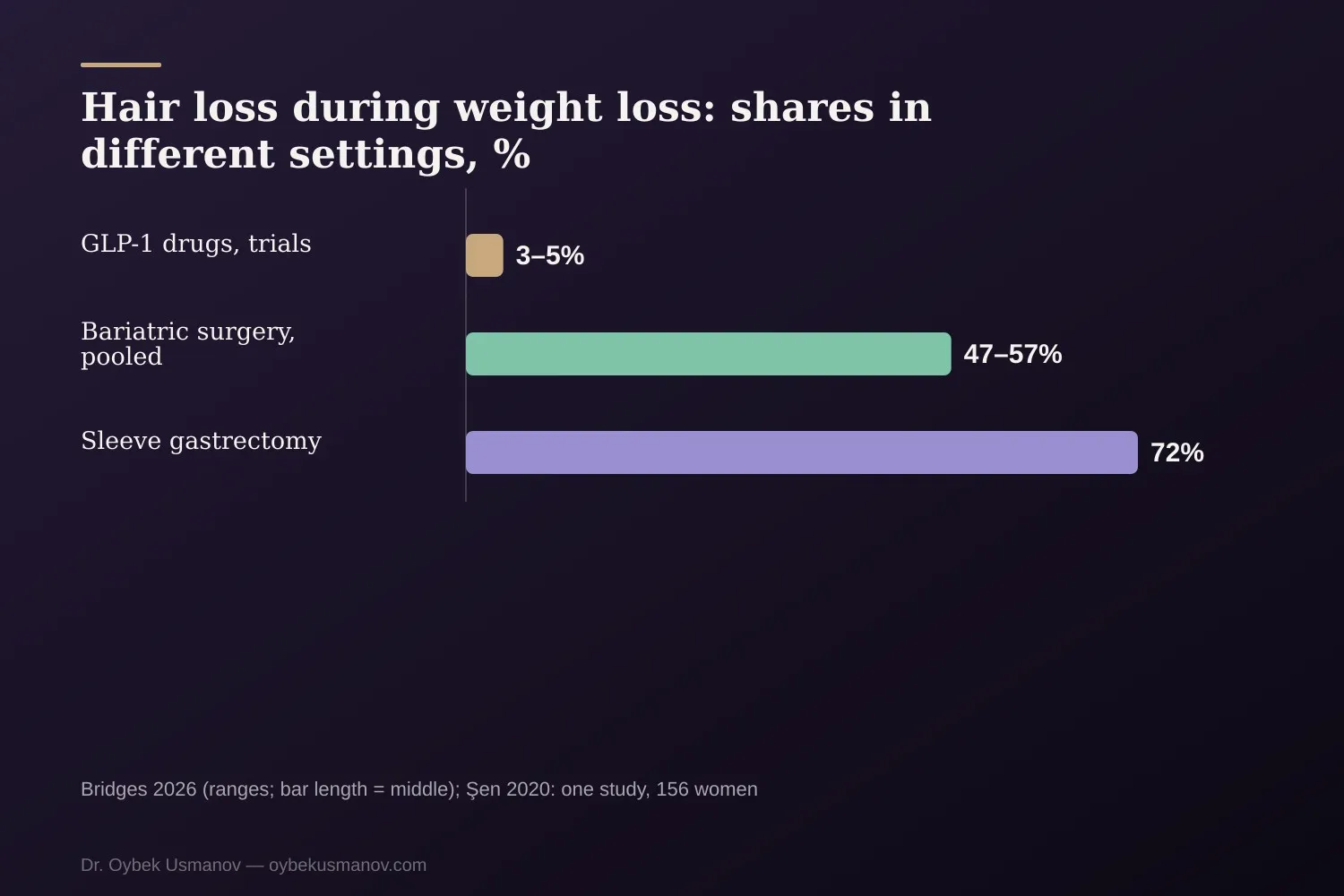
A review by Bridges and Jackson states that hair loss occurs in about 3–5% of people treated with GLP-1 drugs in pivotal trials, with a pooled risk ratio of about 3.3 versus placebo. The main mechanism is telogen effluvium from rapid weight loss and calorie restriction, with nutritional insufficiency and other factors contributing. For bariatric surgery the pooled incidence is 47–57% (Bridges & Jackson, Clinics in Dermatology, 2026, doi:10.1016/j.clindermatol.2026.09.017).
In a series of 156 women after sleeve gastrectomy, 72% reported hair loss (self-perceived) (Şen & Türkçapar, Journal of Laparoendoscopic & Advanced Surgical Techniques A, 2020, doi:10.1089/lap.2020.0468).
Different settings and methods cannot be compared directly: these are different groups, and some data are self-report.
When it starts and how long it lasts
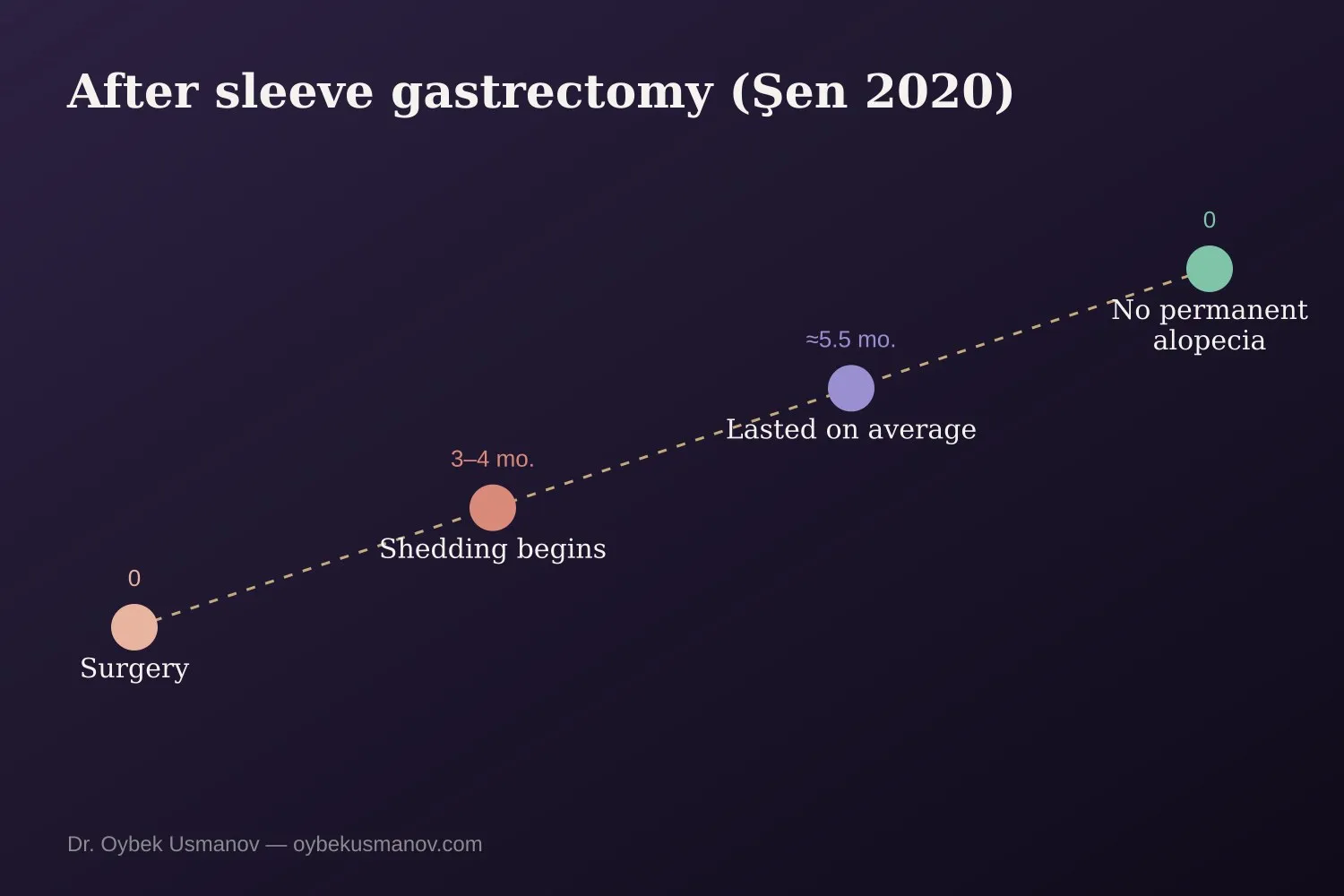
In a study of 156 women after sleeve gastrectomy, in 79% of those with shedding it occurred between the third and fourth month and lasted on average 5.5 ± 2.6 months; no patient had permanent alopecia (Şen & Türkçapar, Journal of Laparoendoscopic & Advanced Surgical Techniques A, 2020, doi:10.1089/lap.2020.0468).
This is one study and one type of surgery, but the picture agrees with TE being a temporary state.
Will biotin help?
In the same series, patients with hair loss and biotin deficiency received biotin, but only 5 of 22 (23%) reported a marked decline in shedding; the difference between those with and without deficiency was not significant. The authors concluded that biotin’s efficacy is low (Şen & Türkçapar, Journal of Laparoendoscopic & Advanced Surgical Techniques A, 2020, doi:10.1089/lap.2020.0468).
A review of biotin found limited data: benefit is possible in biotin deficiency and some rare conditions, while evidence is insufficient for healthy people (Patel et al., Skin Appendage Disorders, 2017, doi:10.1159/000462981).
Do not take supplements “just in case”: prescriptions and doses are the doctor’s to set.
When to see a doctor
- If shedding continues for more than a few months after your weight stabilises.
- If you are losing weight fast or taking weight-loss drugs: tell your doctor.
- If you feel weak, pale or cold: nutrient deficiency is possible.
- If your parting thins or bald patches appear: it may not be TE but androgenetic alopecia.
- Do not start supplements or treatment on your own.
What we do
If your hair loss turns out to be androgenetic alopecia, we will discuss options including transplant, and say honestly when it is not needed. Send photos of your head on WhatsApp and tell us when shedding began and whether your weight changed.
This article is general information and does not replace a consultation.