indications
Hair transplant in your early twenties: is it too early?
Hair loss at 20–25 is felt especially hard, and the thought “I will have a transplant and forget it” seems natural. But this topic has an important feature: at a young age the loss process is often not over yet. Here is why surgeons are cautious, what studies say and how to decide.
What science says about age
Frankly: we found no PubMed studies comparing transplant results at 20 and at 35. So all advice about the “right age” rests on the logic of the process, not on direct comparisons. And the logic is this: androgenetic alopecia is a progressive condition (Neema et al., Medical Journal Armed Forces India, 2024, doi:10.1016/j.mjafi.2024.03.006), and in a young man it is hard to predict how far it will go.
The main risk: transplanted hair stays among thinning hair
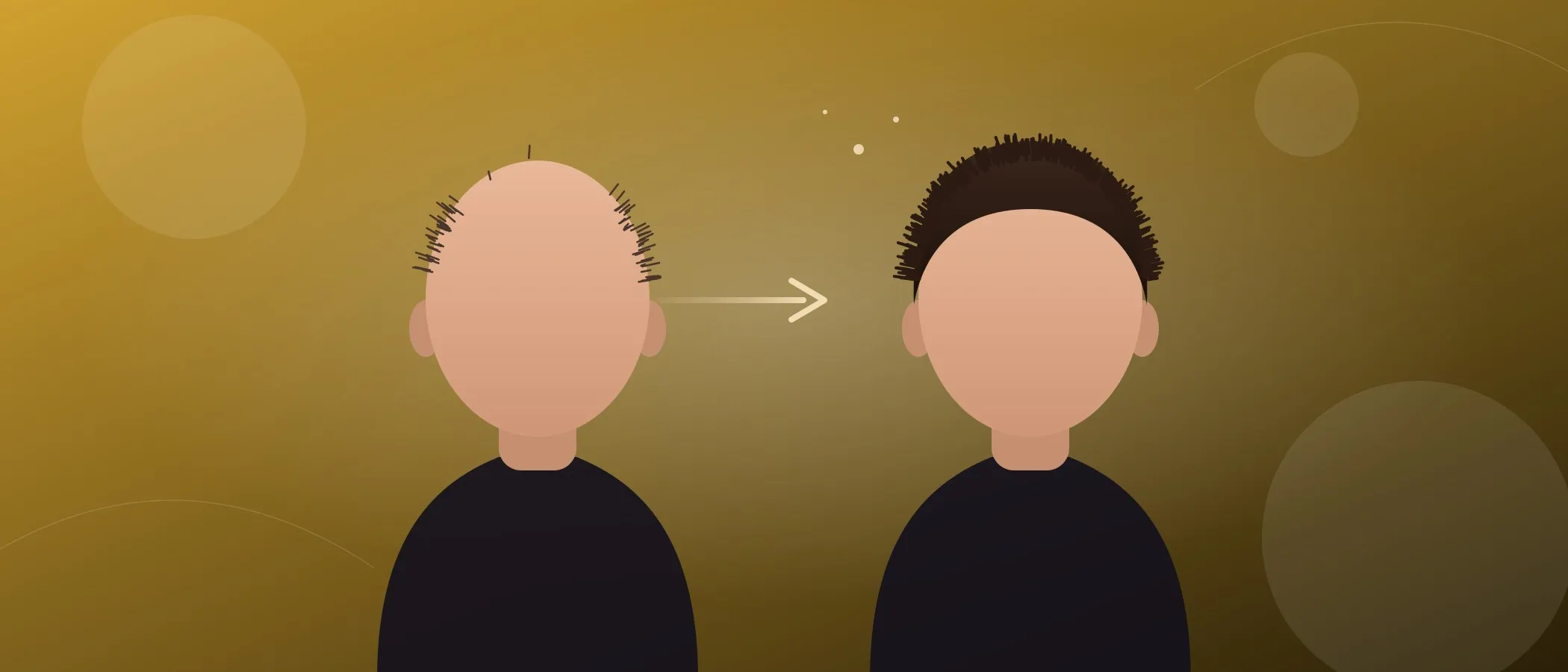
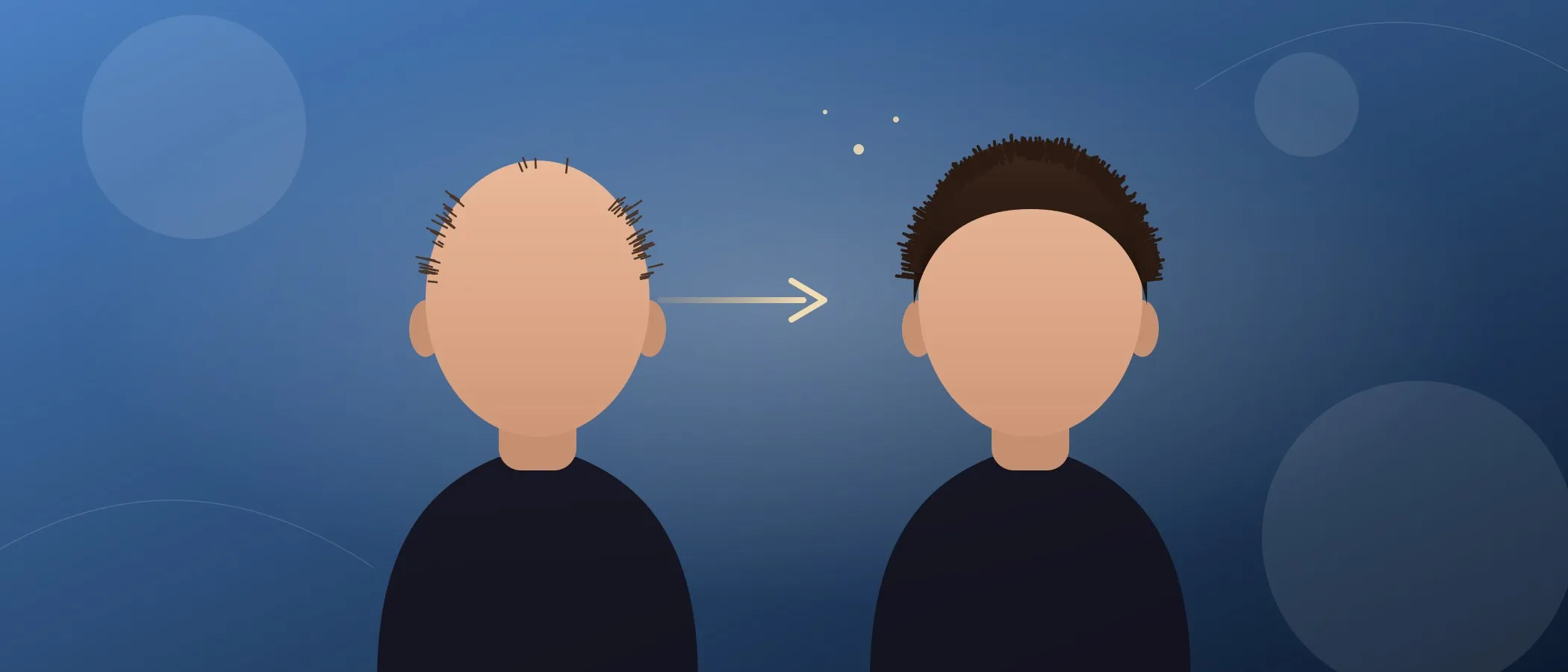
Hair moved from the donor area generally keeps its resistance, while your own hair beside it keeps thinning. After some years new recession may appear, and a top-up will be needed.
In a retrospective analysis of 820 men with advanced baldness (stages V–VII), at 12 months 94% were satisfied with the result, but 62% wanted another session to increase area or density. The authors note that beard and body hair help when donor supply is limited (Chouhan et al., Journal of Cutaneous and Aesthetic Surgery, 2019, doi:10.4103/JCAS.JCAS_173_18). It is a different group, but it shows that donor supply is limited and must be spent with the future in mind.
Early alopecia and health
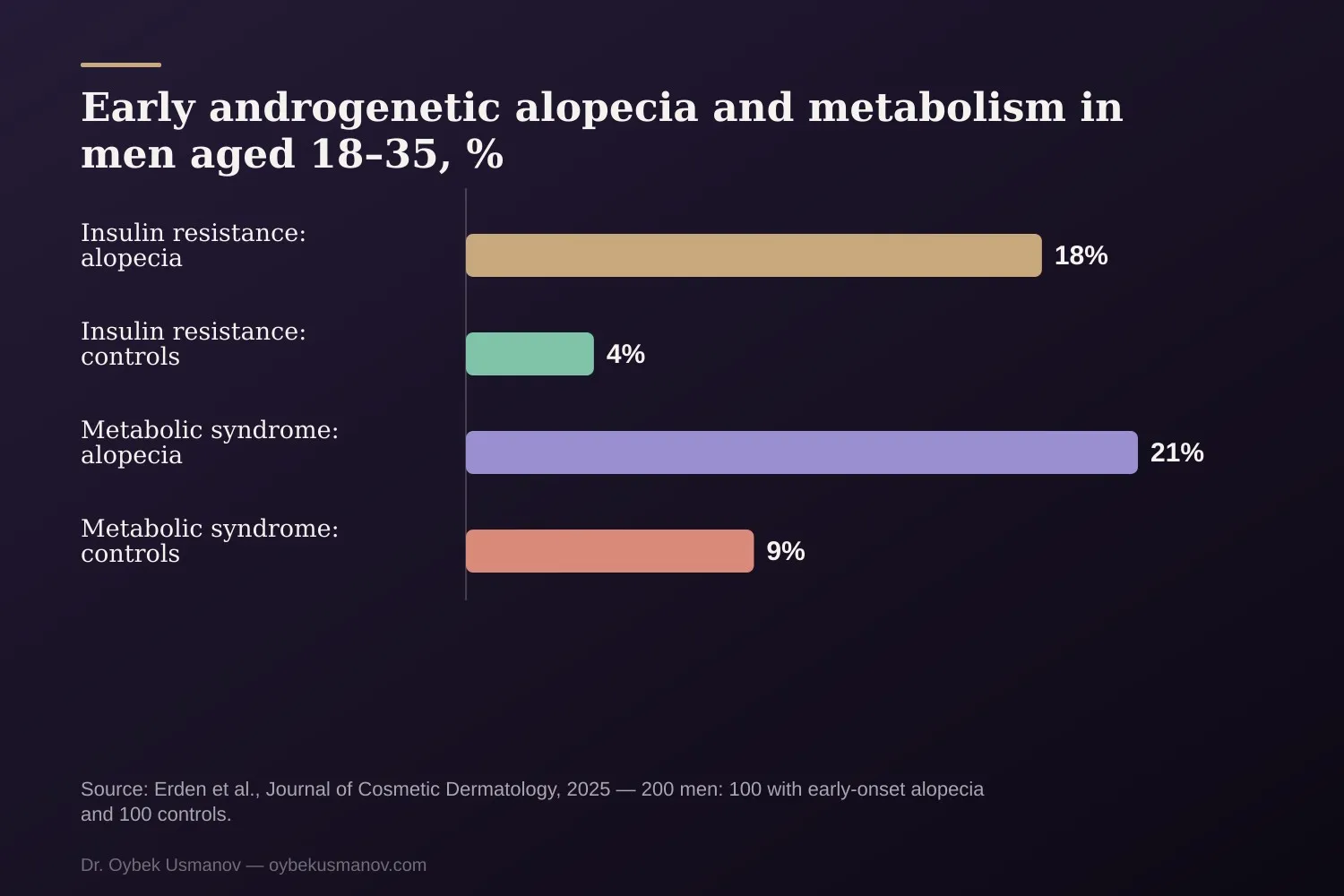
Early androgenetic alopecia has another aspect. In a study of 200 men aged 18–35, insulin resistance was found in 18% of those with early alopecia and 4% of controls, and metabolic syndrome in 21% versus 9%. The authors see early alopecia as a possible sign of metabolic disturbance and suggest screening for such patients (Erden et al., Journal of Cosmetic Dermatology, 2025, doi:10.1111/jocd.70458).
That is an association, not a diagnosis: it only says that at a young age it is worth checking general health as well as thinking about hair.
What is usually done instead of an immediate transplant
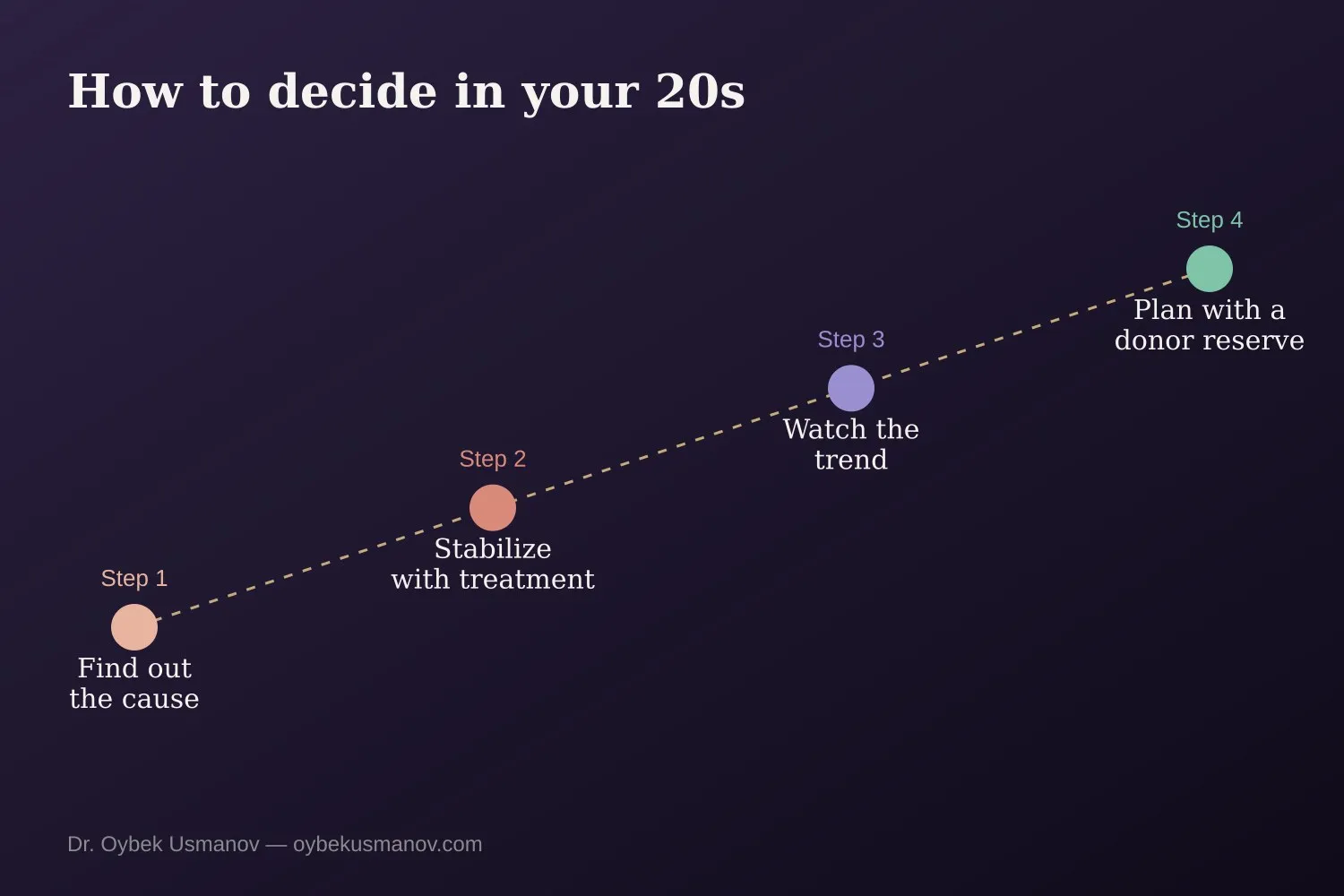
- The cause is established: not every hair loss at 20 is androgenetic alopecia.
- The process is stabilized with treatment prescribed by a doctor; a systematic review shows that in those taking finasteride hair count rose by 24.3% over two years or more versus placebo (Mella et al., Archives of Dermatology, 2010, doi:10.1001/archdermatol.2010.256).
- The trend is watched through photos every few months.
- Surgery is postponed if the loss is active and progressing fast.
When a transplant at a young age is justified
- The loss has stabilized, the hairline has settled and the trend over recent years is small.
- Localized loss after injury, burn or surgery rather than progressive alopecia.
- A good donor supply and realistic expectations.
- The surgeon proposed a plan with the future in mind: a conservative hairline design and a donor reserve.
What we do
Send photos of your head on WhatsApp and tell us when the loss began and how it has changed. The surgeon will say whether you should have surgery now and what can be done before it. We would rather advise waiting than perform an operation you will regret.
The minimum age and rules are set by the law of your country and the clinic’s policy. This article is general information and does not replace a consultation.