aesthetics
The hairline in a hair transplant: how it is designed to look natural
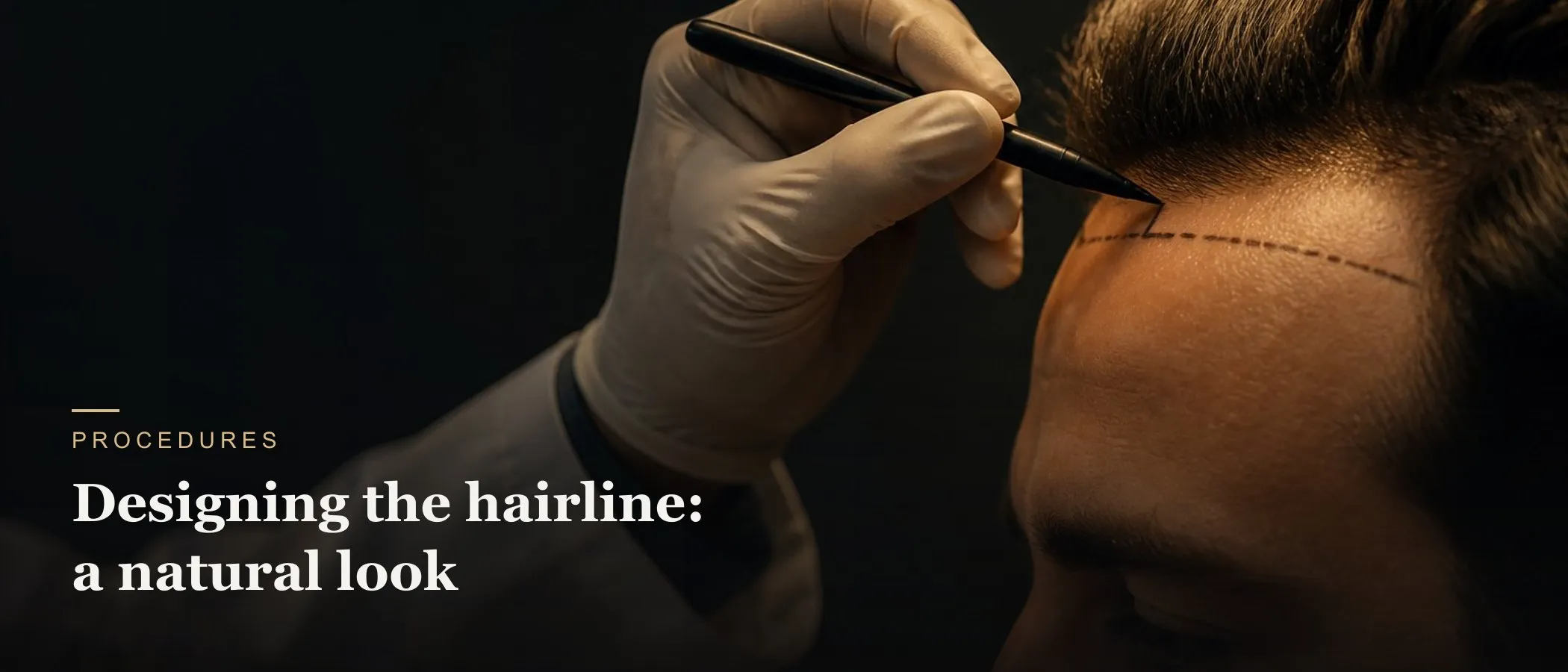
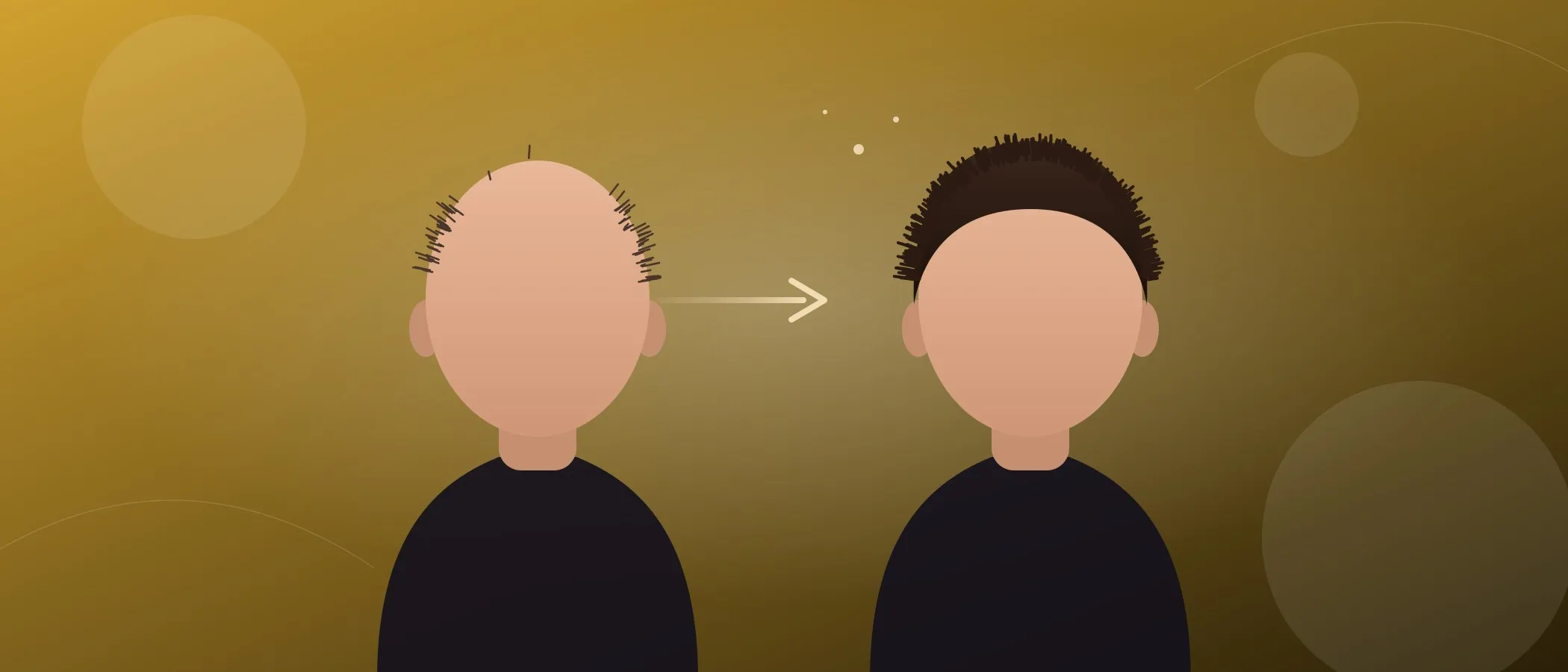
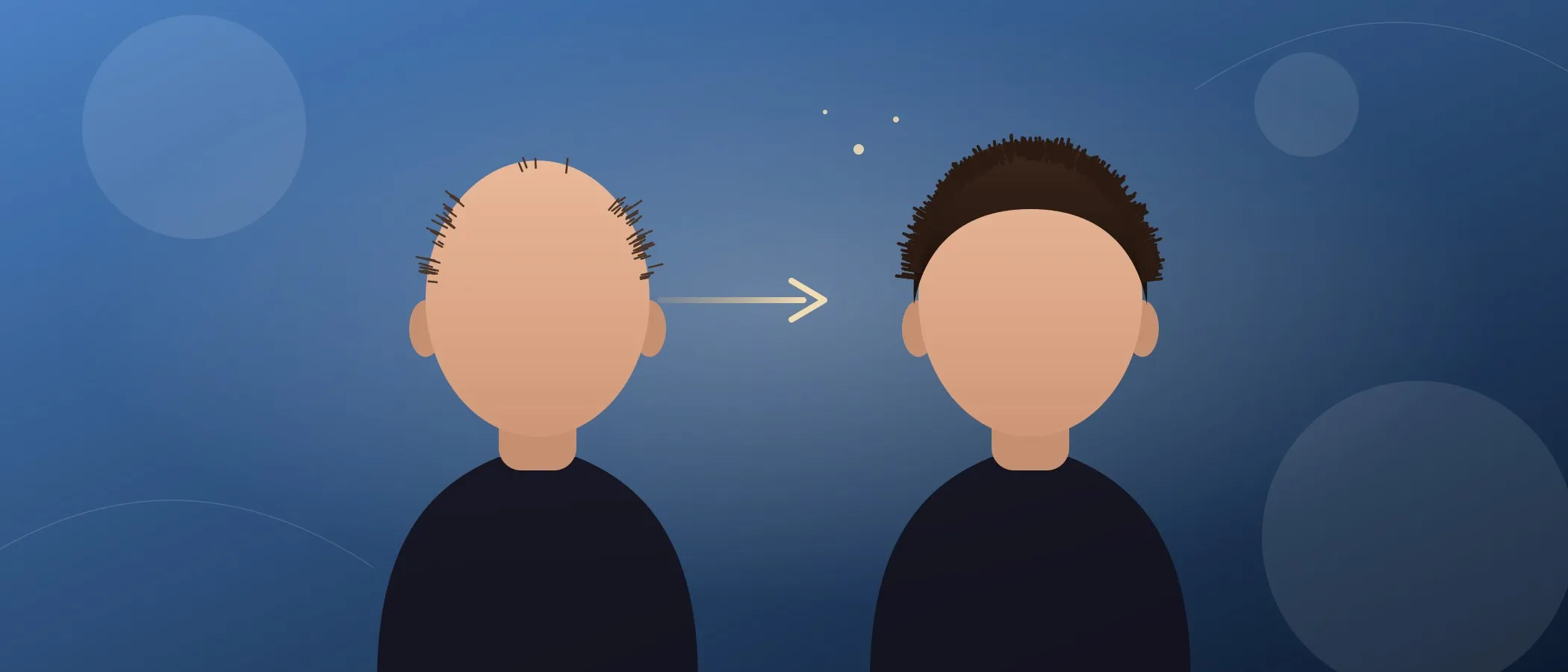
When patients say “I want it natural” they almost always mean the hairline. It is the most visible part of the result: a harsh straight line or an over-low “childlike” edge gives the operation away at once. Here is how a natural hairline is built and what to look for.
Why the hairline is an art in itself
A 2025 review stresses that thoughtful hairline design and concurrent medical management have improved the aesthetic results of transplants (Queen & Avram, Dermatologic Surgery, 2025, doi:10.1097/DSS.0000000000004675). An earlier paper shows it is not about “just using micrografts”: proper selection of follicular units combined with skill makes it possible to create a soft line with the illusion of density that looks natural after the very first operation (Shapiro, Facial Plastic Surgery Clinics of North America, 2004, doi:10.1016/j.fsc.2003.12.004).
What makes it natural
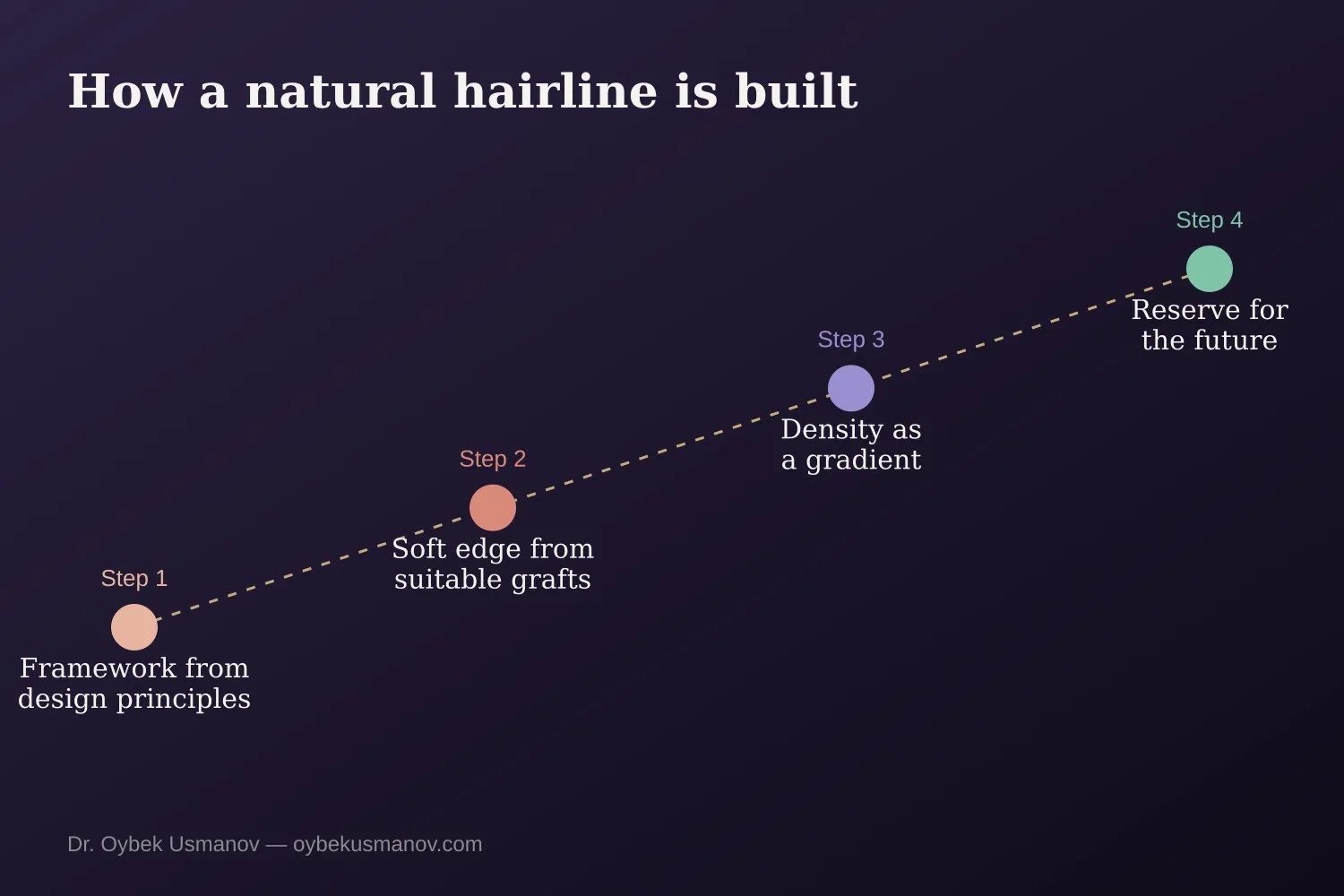
- A shape that suits your face, your age and how your hair will change: the line should not be too low.
- A soft, irregular edge instead of a hard line; at the very edge fine grafts suit best.
- Density as a gradient: sparser at the edge, thicker further back; authors of an analysis of 820 cases of advanced baldness write the same (Chouhan et al., Journal of Cutaneous and Aesthetic Surgery, 2019, doi:10.4103/JCAS.JCAS_173_18).
- The right direction and angle of hair growth, like your own.
- A plan for further loss: a natural line must look good years later too.
Fine hair for a soft line
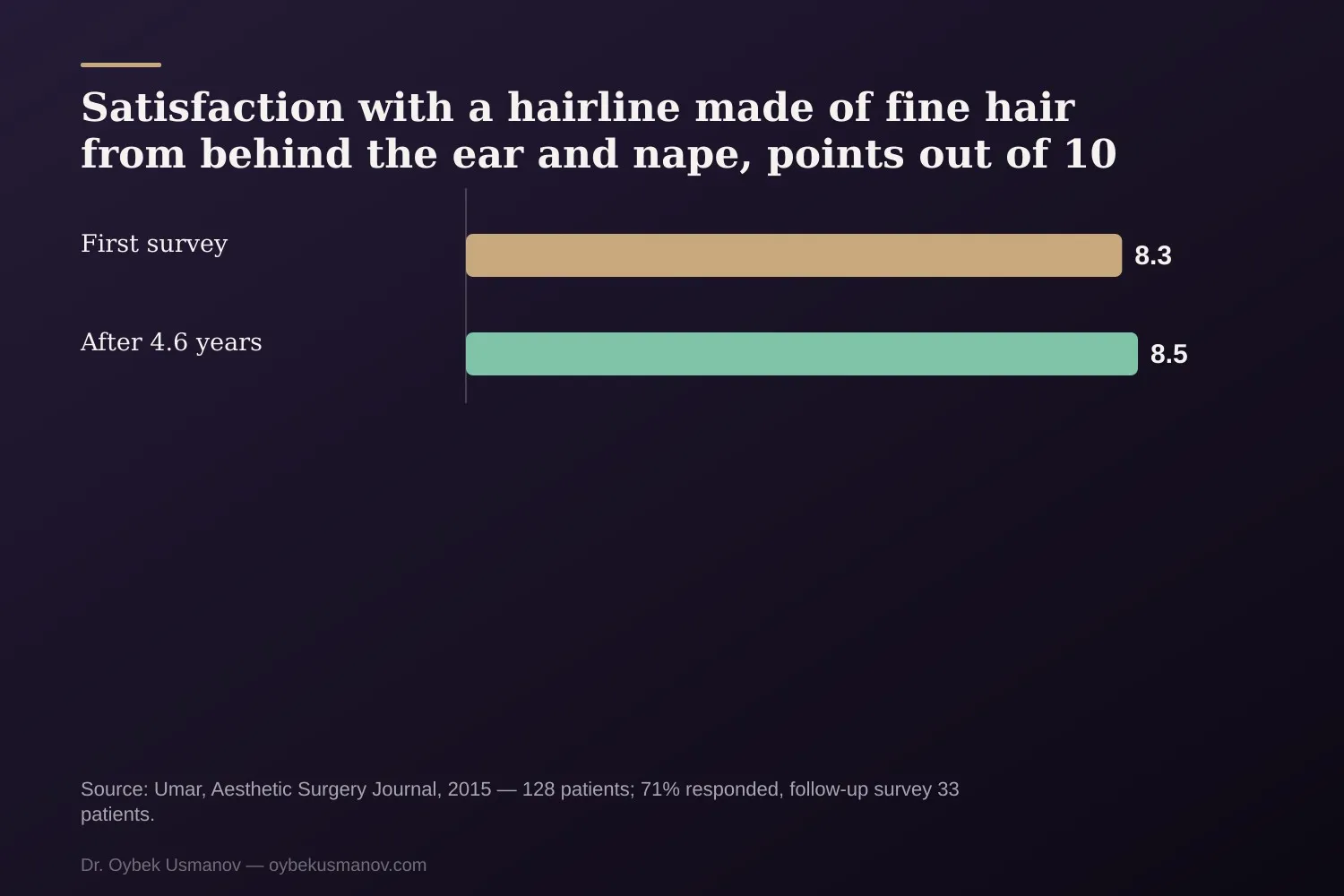
Hair from the safe donor area at the back of the head can be thick, and at the hairline it may look coarse. A US surgeon described using finer hair from the nape and behind the ear for a soft hairline and temples. In a series of 128 patients, a shave test found three quarters suitable, mean satisfaction was 8.3 out of 10 and full coverage of the area came at a mean of 9.6 months. At 4.6 years, among those who responded, satisfaction stayed high (8.5), but some patients reported graft loss: such hair may be non-permanent, so it must be tested (Umar, Aesthetic Surgery Journal, 2015, doi:10.1093/asj/sjv137).
What to expect and when
The hairline forms gradually: the transplanted hairs shed first and new growth appears after a few months. Full coverage in the series mentioned came at roughly 10 months, but everyone’s timing differs.
What to agree with your surgeon
- Show photos of your hairline at 18–20, if you have them.
- Ask how the surgeon plans the line in view of further balding.
- Clarify who draws the line and who places the grafts: that decides how the drawing becomes a result.
- Agree in advance that “lower” does not mean “better”: a line that is too low can look unnatural once your face and hair change.
What we do
The surgeon discusses and marks the hairline together with the patient before surgery, after examining the donor area and taking photos. Send photos of your face and of your head from the front and above on WhatsApp, and we will tell you what line is realistic.
This article is general information and does not replace a consultation.