planning
How many grafts do you need for a hair transplant: how it is worked out and what it depends on
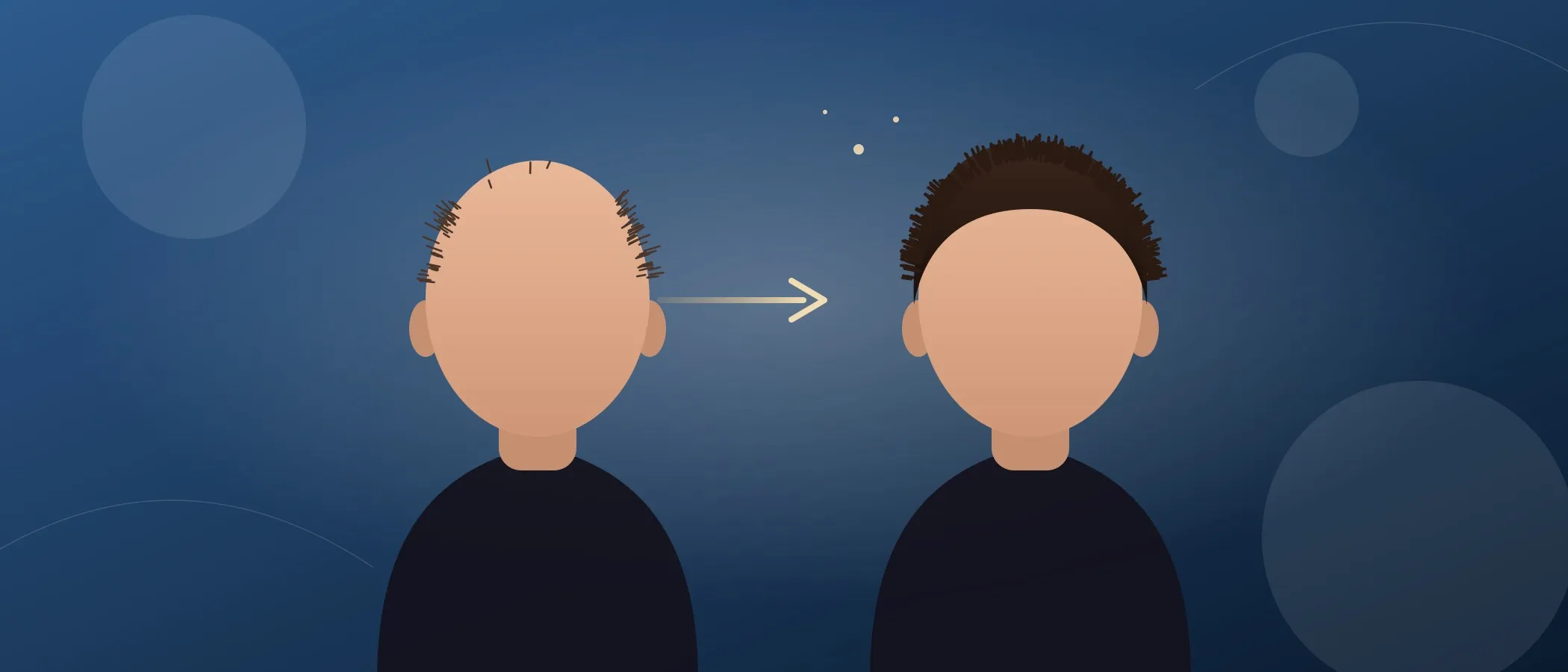
“How many grafts do I need?” is the first question people ask, often together with the price. You want a number: three thousand, five, eight. But the number is the result of a calculation, not the starting point. Here is what it is made of.
What a graft is
A graft is a follicular unit: a group of one to four hairs sharing their follicles, which is extracted from the donor area and transplanted. So “3,000 grafts” is not 3,000 hairs but noticeably more. The exact number of hairs depends on how many hairs your follicular units contain.
How the surgeon counts
The logic is simple; applying it to a specific head is the hard part.
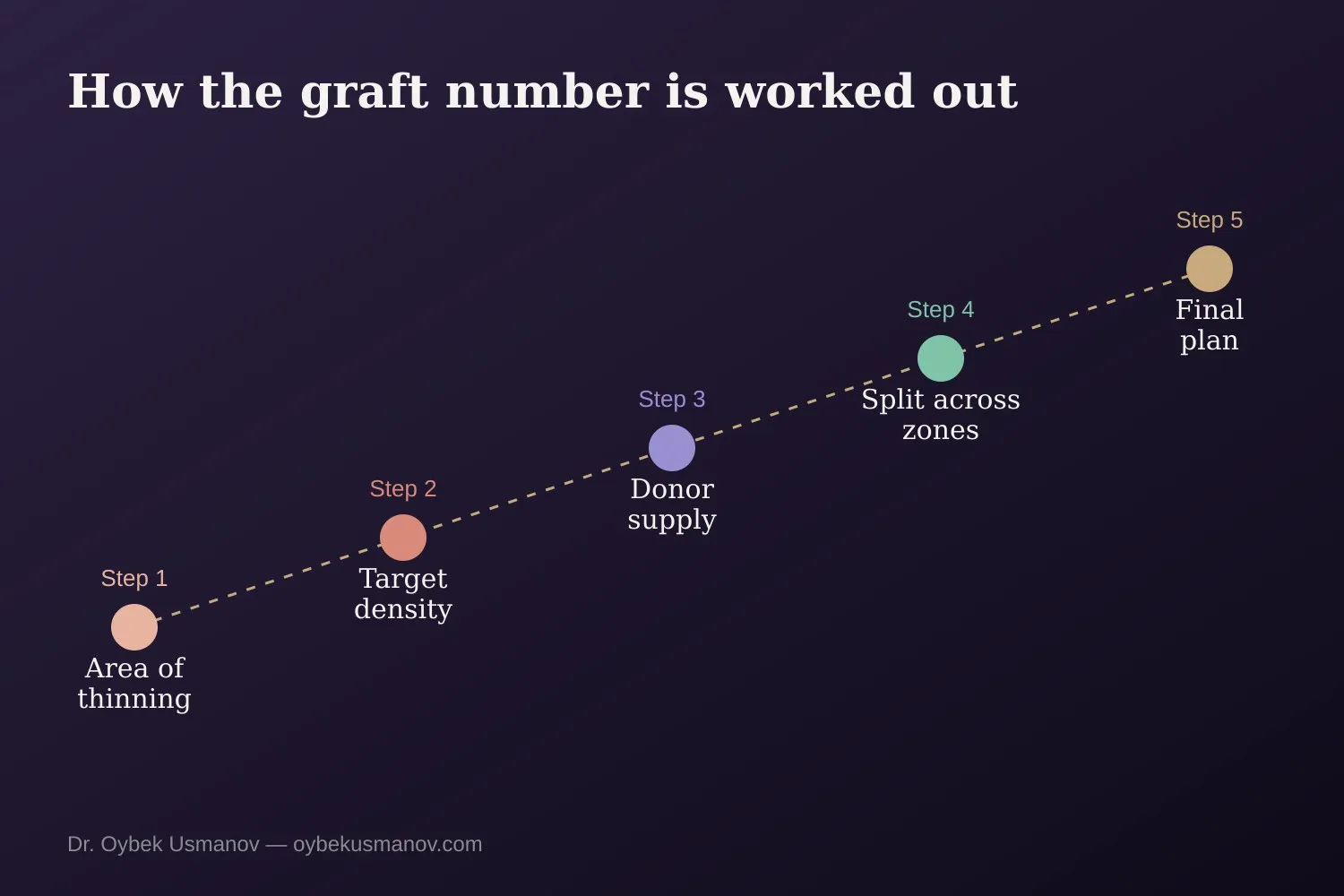
- The area to cover: hairline, front third, mid-scalp, crown.
- The target density: how many follicular units per square centimetre are needed for a natural result.
- The donor supply: how much hair at the back and sides can be taken without visible thinning.
- The split across zones: the densest placement usually goes to the hairline because it catches the eye.
What numbers appear in studies
There is no single “right number”, and studies show it. In a Chinese FUE megasession study of 36 Asian men with advanced loss (Hamilton V–VI), about 3,700 grafts were harvested on average, recipient density was 30 to 50 follicular units per cm², and the operation lasted about 10.6 hours (Di et al., Journal of Cosmetic Dermatology, 2023, doi:10.1111/jocd.15858).
That is one sample in one centre and cannot be transferred to you: everyone has their own density, caliber and area. But it shows an order of magnitude and that large sessions mean a long day of work.
What we see in practice
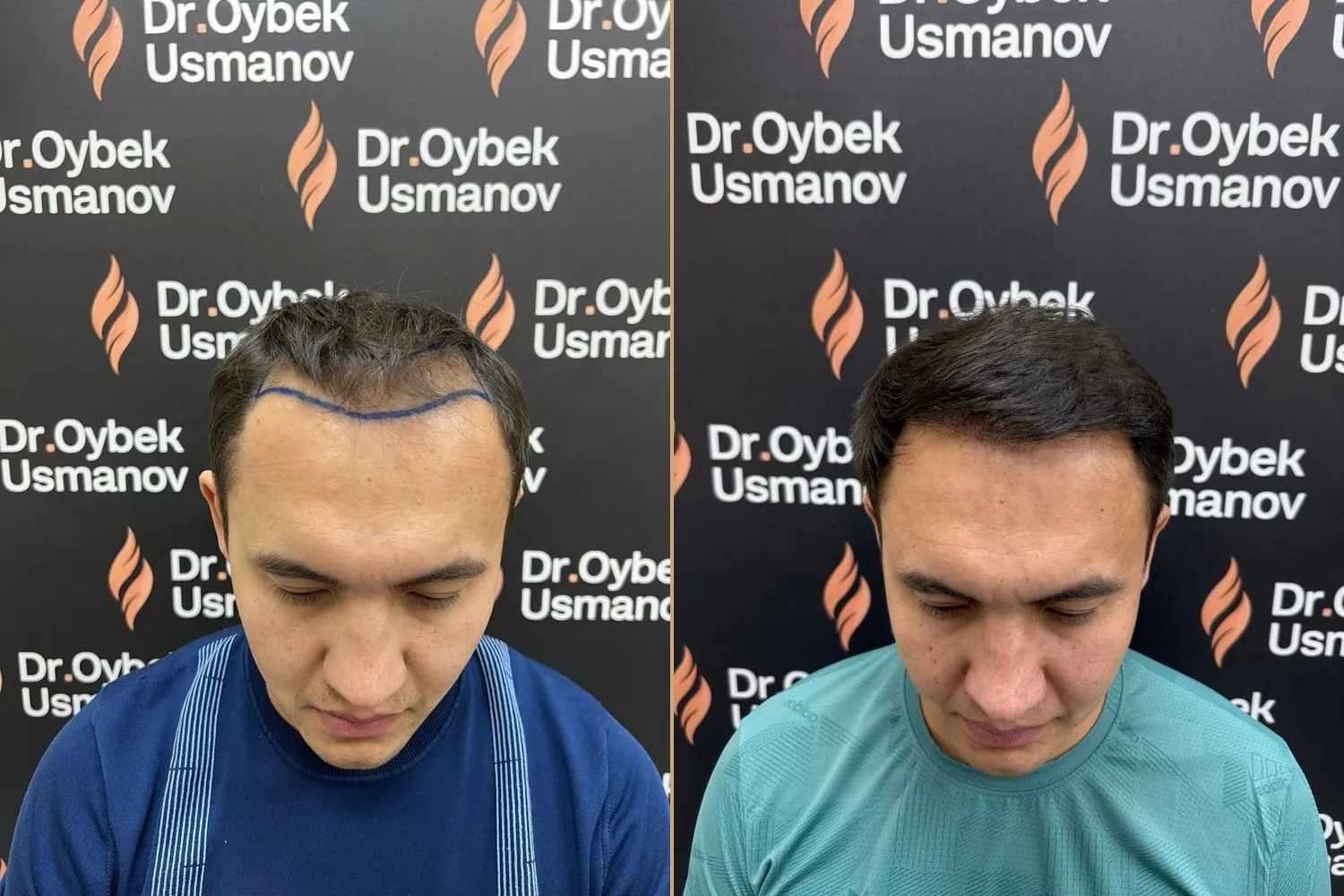
On our results page we show cases from 2,500 to 5,200 grafts — it all depended on the area and the patient’s goal. These figures were provided by the surgeon; they are not a “norm” but an example of how much the volume varies.
The donor supply is the main limit
Wanting to cover everything at once often runs into the fact that the donor area is not infinite. You take as much as keeps the back and sides from thinning and leave a reserve for the future: hair loss may continue.
The donor area is not always stable. A report of two cases of diffuse alopecia shows that the occiput, usually presumed stable, can be involved too, and this should be judged by examination, not assumption (Xu et al., Frontiers in Medicine, 2026, doi:10.3389/fmed.2026.1797275). Indian authors propose calculating the permanent zone from the patient’s own head proportions (Punia et al., Indian Journal of Plastic Surgery, 2024, doi:10.1055/s-0044-1787655).
What we do
Only the surgeon can give the exact graft count, after examination or from photos. Send photos on WhatsApp, and we will tell you what volume is realistic and how best to split it across zones.
This article is general information and does not replace a consultation.