indications
Who is a good candidate for a hair transplant, and who is not: what the surgeon assesses
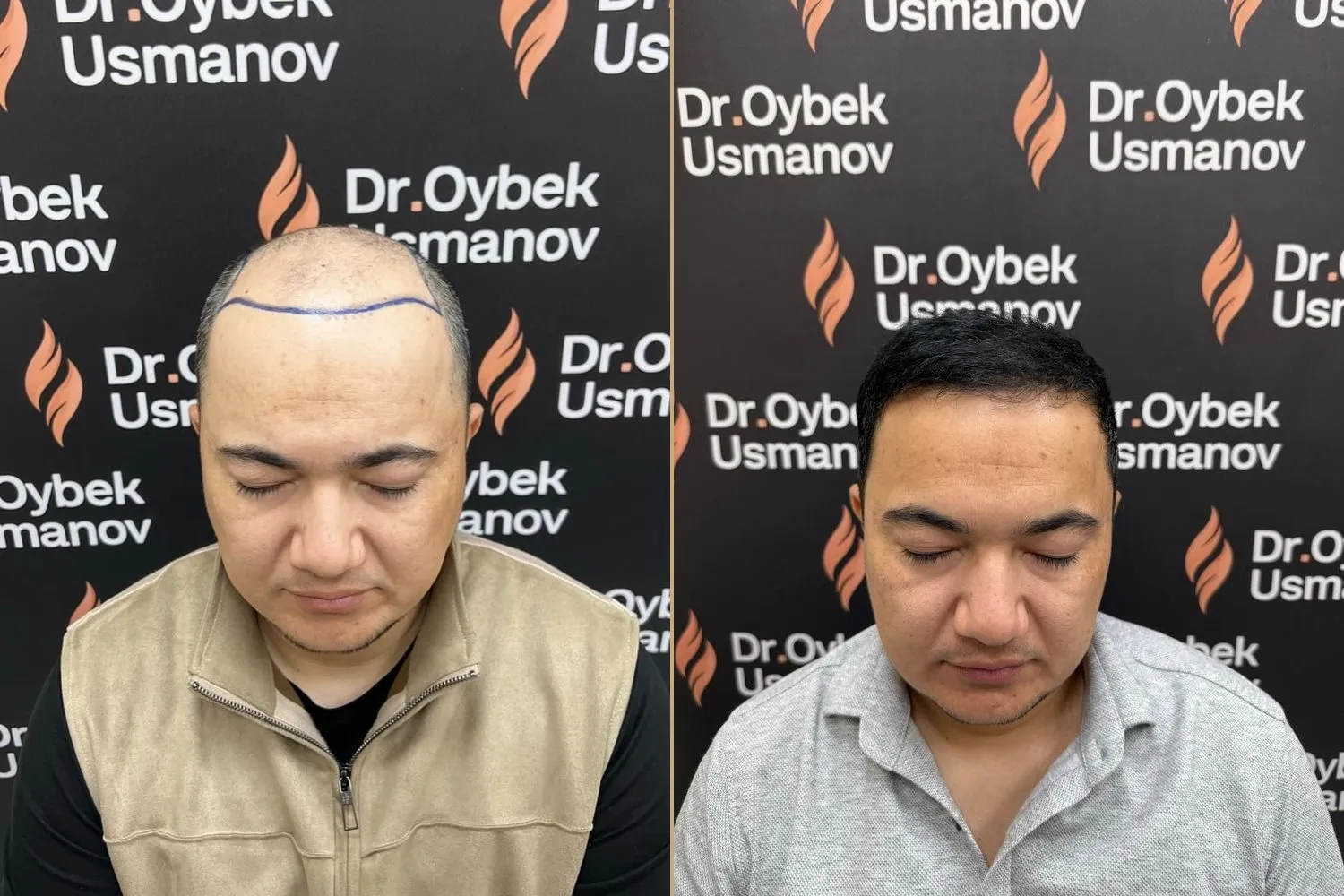
“Is a transplant right for me?” is where almost every consultation starts. The honest answer: not for everyone, and not always right away. A good surgeon looks beyond the size of the thinning area to the cause of the loss, the donor area, your health and your expectations. Here is what that looks like.
What the surgeon checks
A 2025 review notes that transplantation is most often used for androgenetic alopecia, though people with other kinds of hair loss may benefit too. The authors observe that comprehensive guidance on selecting candidates is still limited, so they cover candidacy criteria, pre-transplant medical optimization and surgical considerations (Brinks et al., International Journal of Dermatology, 2025, doi:10.1111/ijd.17961).
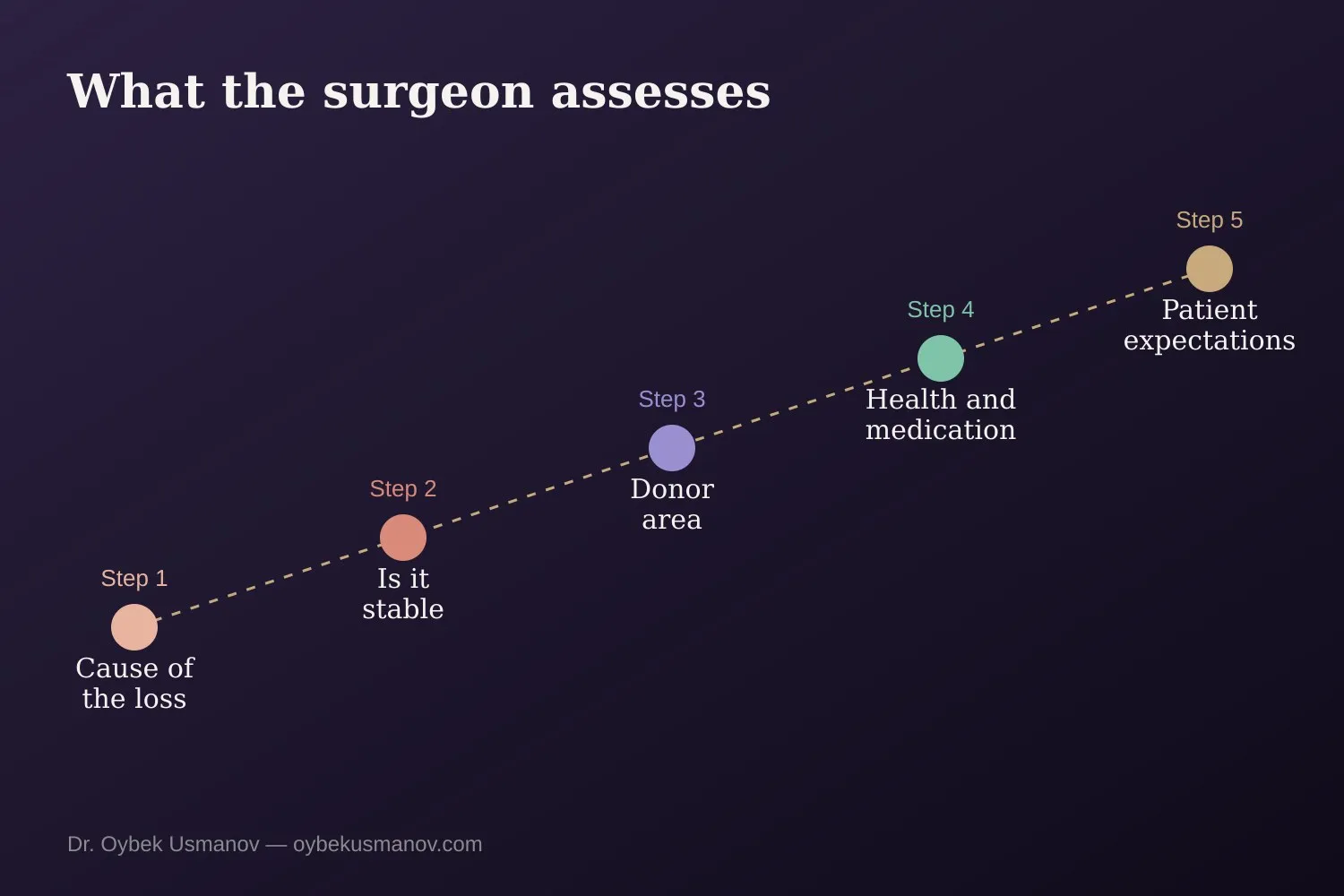
In practice the assessment is a handful of steps.
The cause of the loss
A transplant puts hair back where it was lost but does not treat the cause. So first it must be clear what is happening: male or female pattern loss, hormonal or inflammatory causes, deficiencies, the aftermath of stress, scalp disease. The diagnosis decides whether surgery is needed now, needed at all, and what comes first.
Whether the process is stable
If loss is progressing quickly, transplanted hair will sit among your own hair that keeps thinning, and over time it can look unnatural. So the surgeon evaluates the trend and, if needed, suggests stabilizing treatment first. Medication (for example finasteride or minoxidil) is prescribed only by a doctor after examination.
The donor area
Hair is taken from the back and sides of the head, areas usually resistant to balding. But “usually” is not “always”. In one surgeon’s series, a shave test with assessment of density and caliber was used to tell permanent from non-permanent donor areas (Umar, Aesthetic Surgery Journal, 2015, doi:10.1093/asj/sjv137).
Practical takeaway: donor hair is a limited supply and has to be planned ahead, not spent all at once.
Health and medication
Before surgery the surgeon asks about chronic conditions, allergies, current medication and smoking. The candidacy review lists pre-transplant medical optimization as a stage of its own (Brinks et al., 2025). Some conditions need prior treatment or sign-off from a specialist.
Expectations
This is not a formality. A transplant is not an instant result: hairs shed first, and the outcome shows at 8–12 months. The surgeon discusses what is realistic with your donor supply and says honestly if expectations do not match. Hair loss affects self-esteem and quality of life, which is exactly why overpromising is wrong.
- A good candidate: understands the cause, the loss is fairly stable, there is enough donor supply, no contraindications and realistic expectations.
- Wait or treat first: rapid active loss, an unclear cause, inflammatory scalp conditions.
- Needs individual assessment: very young age, female hair loss, scarring, limited donor hair.
What we do
Send photos of your head on WhatsApp (front, top, back and sides in good light). The surgeon will tell you your stage, whether a transplant suits you now and what to do if not. We would rather advise you to wait than perform an operation you do not need.
This article is general information and does not replace a consultation.