treatment
Laser helmets and light for hair loss: what meta-analyses show
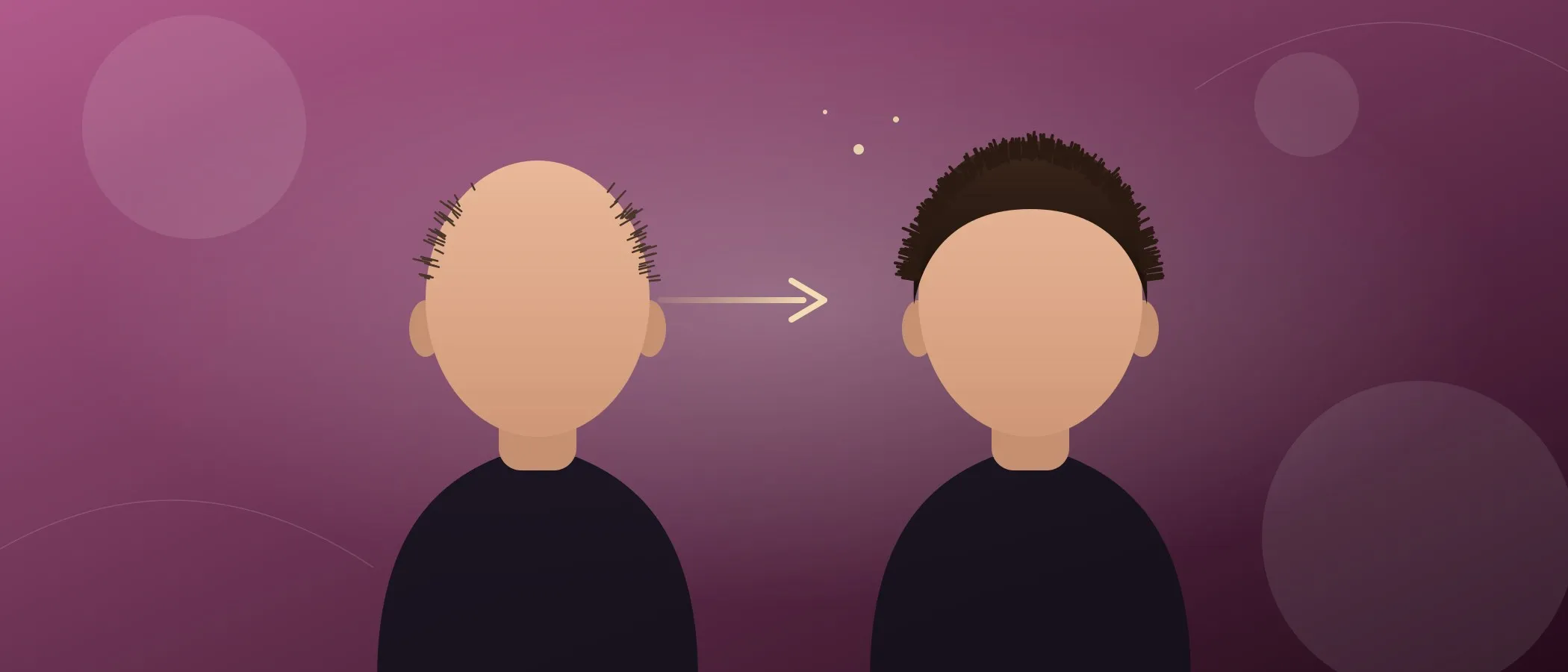
Laser helmets, combs and caps are often presented as a safe way to bring hair back. What does science say? Below is what PubMed meta-analyses show in androgenetic alopecia: with figures and with limitations.
This article is general information: the choice of treatment is for a doctor, and it does not replace a consultation.
What the meta-analyses show
A meta-analysis of 38 studies (3,098 patients, 2,930 of them with androgenetic alopecia) showed that low-level laser and LED therapy increased hair density versus placebo: standardized mean difference 1.14 for courses under 20 weeks and 1.44 for longer ones; results varied widely between studies (Perez et al., Dermatologic Surgery, 2025, doi:10.1097/DSS.0000000000004442).
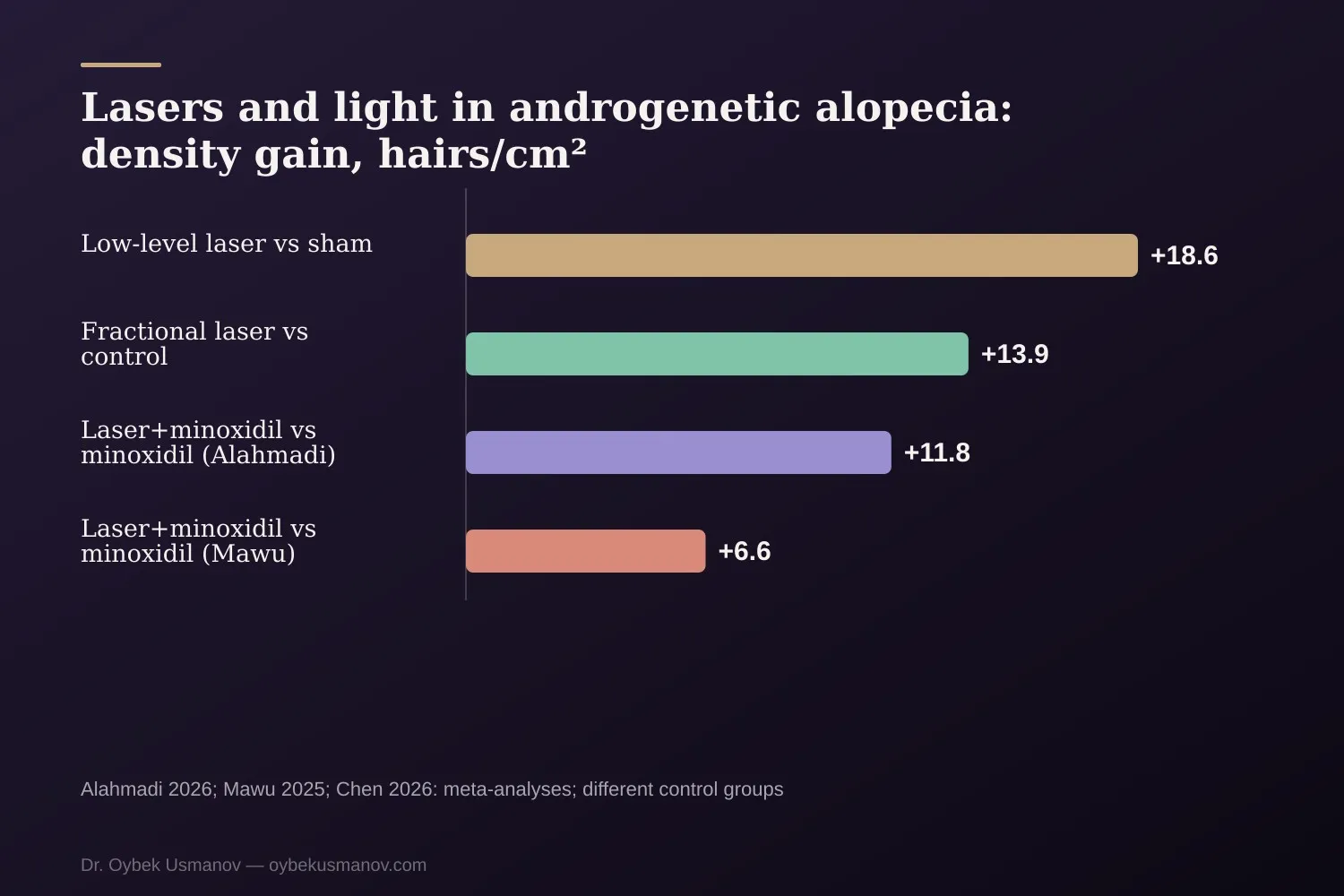
A newer meta-analysis of 37 studies (3,298 patients): on average, density rose by 18.56 hairs/cm² and shaft thickness by 10.62 µm versus sham; combined with minoxidil, density rose more than with minoxidil alone, by 11.75 hairs/cm². Adverse events were mild and transient (Alahmadi et al., Skin Appendage Disorders, 2026, doi:10.1159/000551411).
A meta-analysis of 7 randomized trials found that laser plus minoxidil gave a greater density gain than minoxidil alone: difference 6.62 hairs/cm² (95% CI 2.04–11.20), with higher satisfaction and comparable safety (Mawu et al., Lasers in Medical Science, 2025, doi:10.1007/s10103-025-04593-7).
Helmet, comb or a clinic procedure
A meta-analysis of 15 studies showed that fractional laser (a clinic procedure, not a home device) increased hair density versus control by 13.88 hairs/cm² (95% CI 6.87–20.90); adverse events, redness, pain and itching, resolved on their own. The authors stress that higher-quality long-term studies are needed (Chen et al., Journal of Cosmetic Dermatology, 2026, doi:10.1111/jocd.70909).
For home devices, a meta-analysis found that device type (comb versus helmet or cap) did not significantly affect the result, and laser was more effective than a laser-LED mix (Gupta & Carviel, Journal of Dermatological Treatment, 2021, doi:10.1080/09546634.2019.1688755).
Limits: what to look at
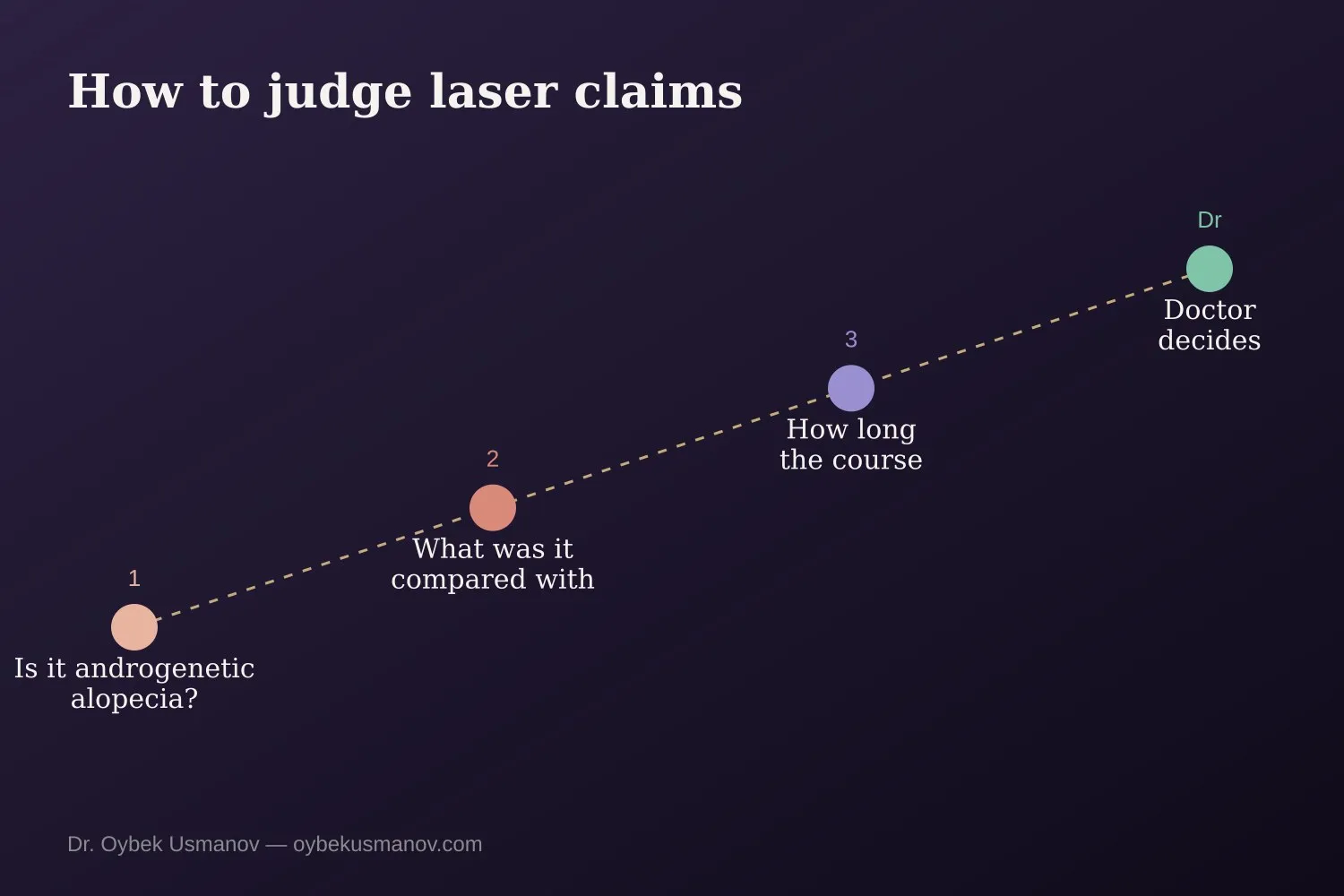
- Study results are very heterogeneous: meta-analyses give different figures and high heterogeneity.
- The effect was measured as hair density, but different comparison groups (placebo or minoxidil) give different sizes.
- The data refer to androgenetic alopecia, not other types of hair loss.
- One meta-analysis calls laser treatment promising but asks for further studies in other alopecia types.
- Long courses and patience are needed; promises of a “quick result” are not supported.
What we do
Before buying anything it is important to understand the cause of hair loss. If it is androgenetic alopecia, the doctor will discuss options including transplant, and say honestly when it is not needed. Send photos of your head on WhatsApp and tell us how long hair has been thinning.
This article is general information and does not replace a consultation.