causes of hair loss
PCOS and hair loss: what is known and what specialists advise
Women with polycystic ovary syndrome (PCOS) can experience hair loss, and the question often worries patients. But the link is not as simple as “hormones are to blame”. Below is what PubMed data show.
This article is general information: diagnosis and treatment are for a doctor to determine in person.
How common it is
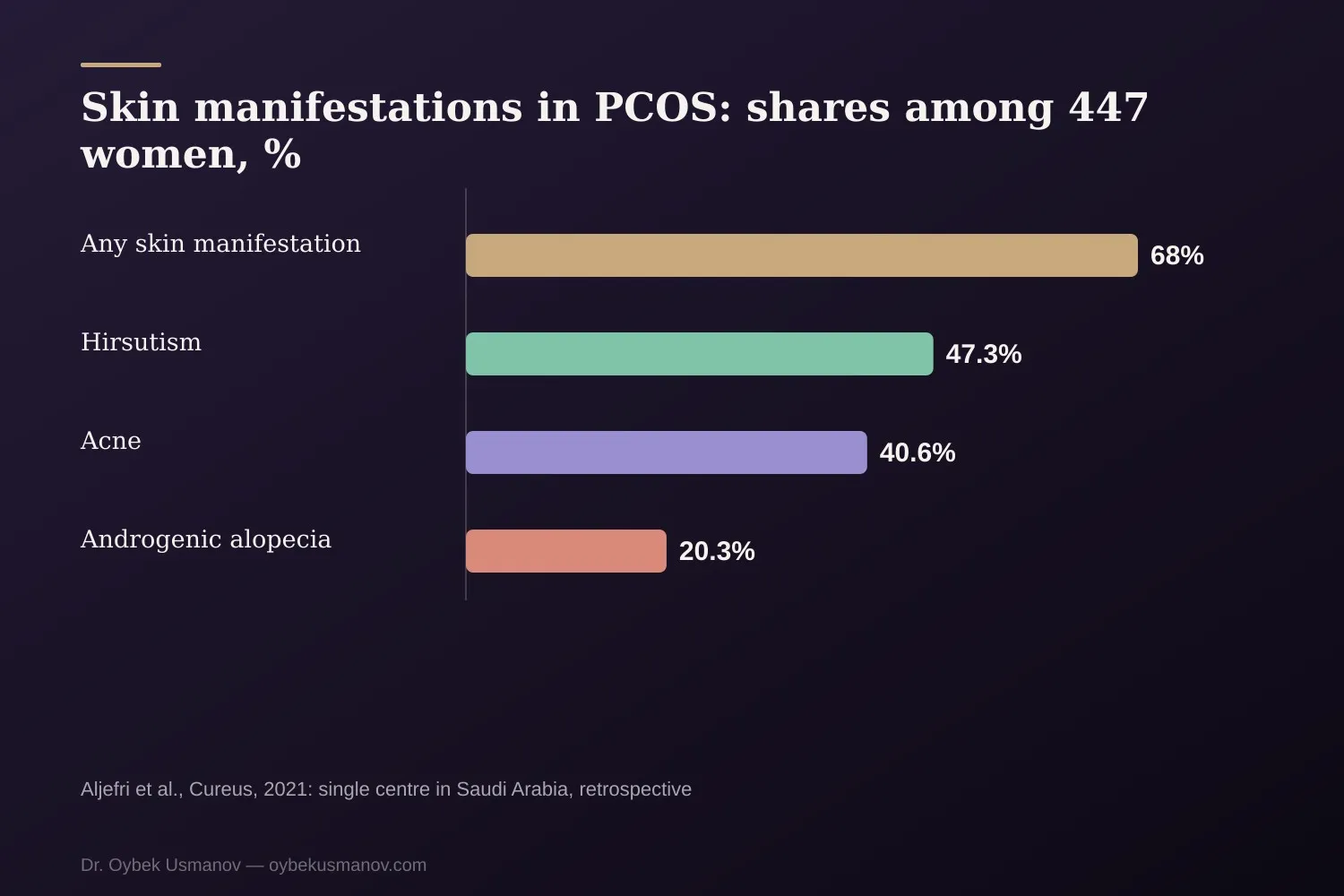
In a retrospective study of 447 women with PCOS at one centre in Saudi Arabia, 68% had skin manifestations. The commonest were hirsutism (47.3%), acne (40.6%) and androgenic alopecia (20.3%) (Aljefri et al., Cureus, 2021, doi:10.7759/cureus.20593).
These are single-centre data with no control group, so the figures cannot be applied to all women. But they show hair loss is not the commonest sign, yet a notable one.
What experts say
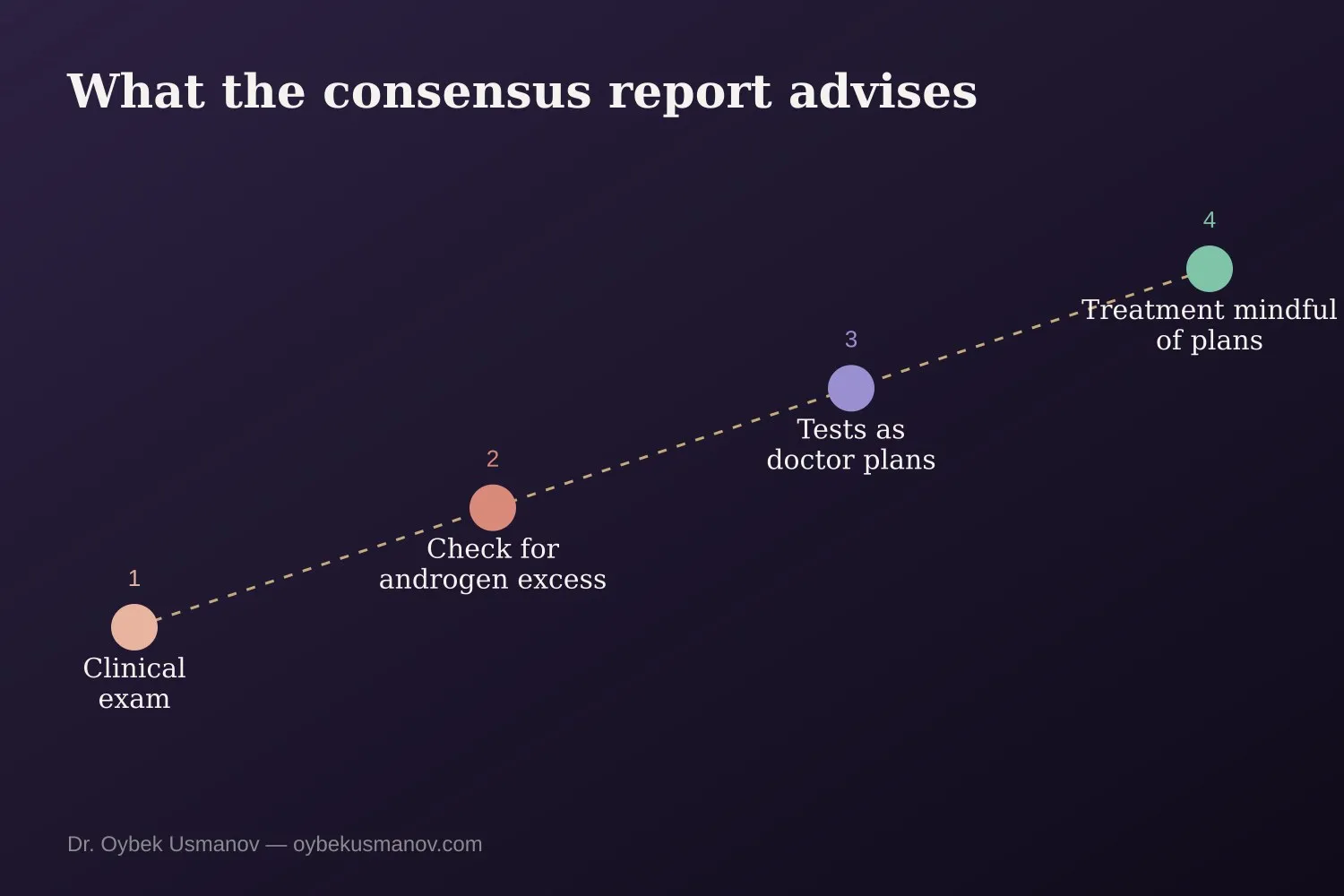
A consensus report of the multidisciplinary Androgen Excess and PCOS committee advises: assessment of female pattern hair loss is primarily clinical; isolated hair loss is not a sign of hyperandrogenism if androgen levels are normal; in all patients a possible androgen excess should be assessed; measurement of vitamin D, iron, zinc, thyroid hormones and prolactin is optional but recommended (Carmina et al., Journal of Clinical Endocrinology & Metabolism, 2019, doi:10.1210/jc.2018-02548).
A review on the topic adds: female pattern hair loss is more common in women with PCOS, but studies are few and the mechanism is unclear, because it can occur with normal hormonal markers. Some hair-growth approaches can worsen unwanted hair growth, and reproductive plans should be discussed before any treatment (Jiang et al., Current Opinion in Endocrinology, Diabetes and Obesity, 2022, doi:10.1097/MED.0000000000000777).
When to see a doctor
- If your parting thins or the crown is thinning.
- If you have irregular periods, acne, excess hair on the face and body.
- If you are planning pregnancy: say so before any treatment.
- If shedding comes with fatigue, weight change or feeling cold: tests are needed.
- Do not start hormonal drugs or supplements on your own.
What we do
A hair transplant is not right for every woman, and with PCOS the decision depends especially on how stable the process is and on concurrent treatment. Send photos of your head on WhatsApp and tell us how long hair has been falling: the surgeon will say honestly whether surgery makes sense.
This article is general information and does not replace a consultation.