causes of hair loss
Hair loss after childbirth: how long it lasts and when it is not just “postpartum”
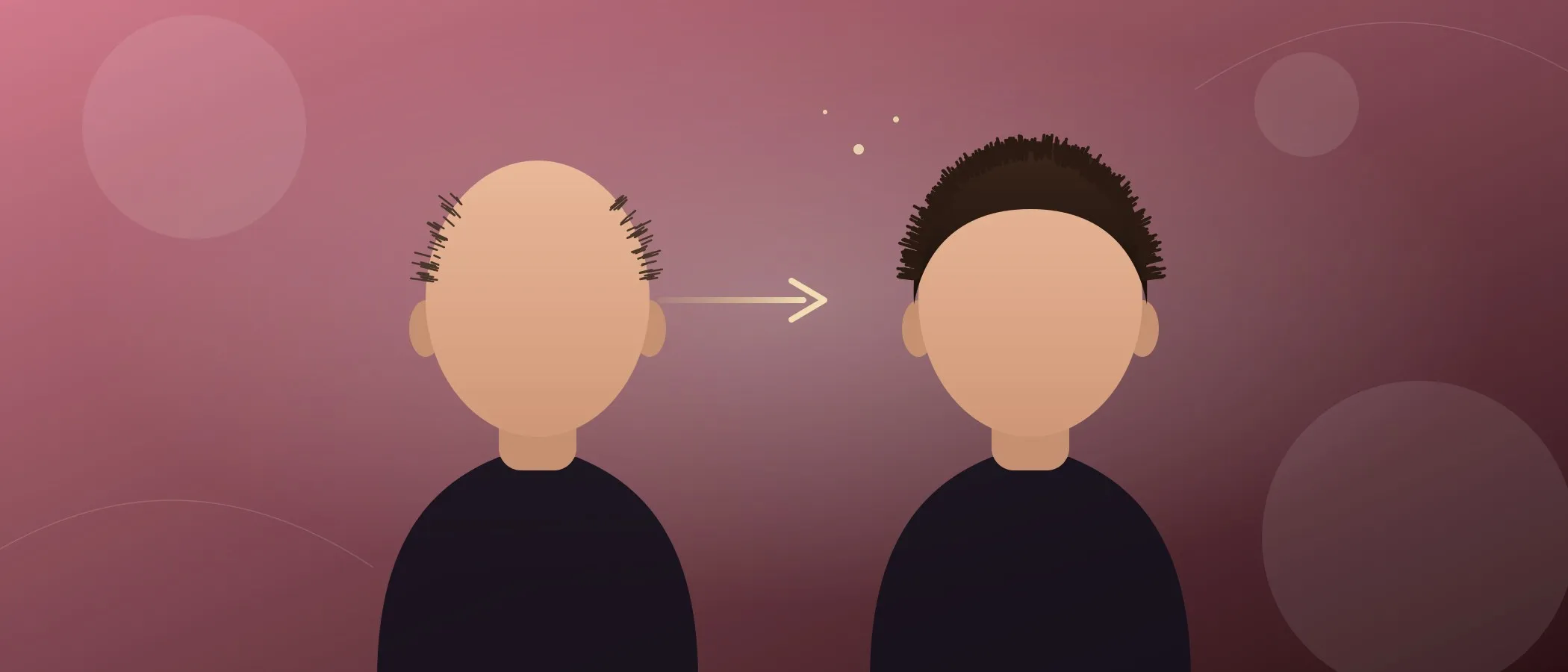
Two to three months after childbirth, hair starts coming out on the brush and in the shower. It is one of the most common questions from new mothers. Most often this is telogen effluvium (TE), a temporary state, but not always only that. Below is what PubMed studies show.
This article is general information: the diagnosis is made by a doctor in person.
How common and how long
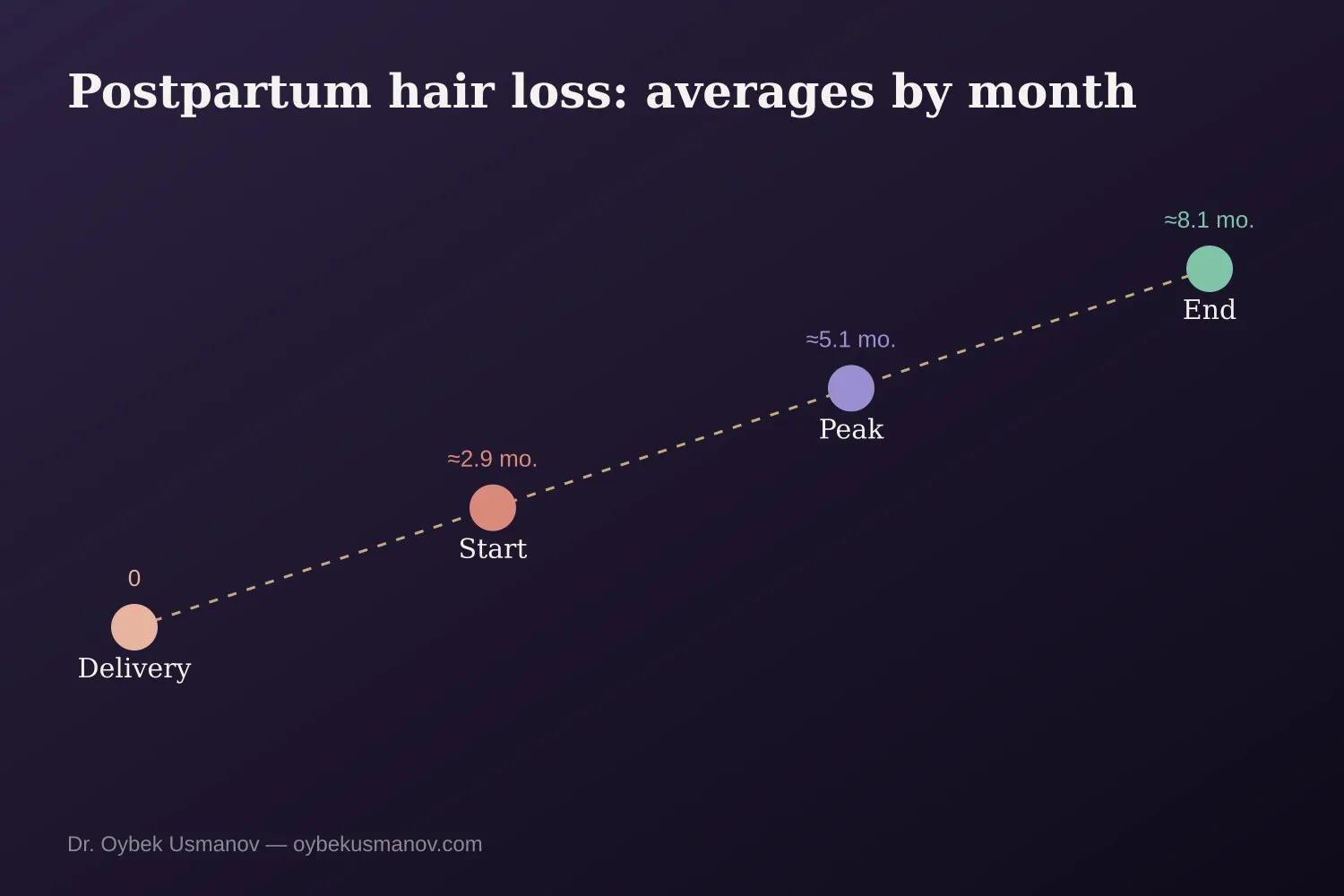
In a Japanese survey analysing 331 responses from women who completed a questionnaire 10–18 months after delivery, 304 women (91.8%) reported postpartum hair loss. The mean time of onset, peak and end was 2.9, 5.1 and 8.1 months (Hirose et al., International Journal of Women’s Dermatology, 2023, doi:10.1097/JW9.0000000000000084). These are questionnaire data: 21% of those invited responded, and women with hair loss may have been more willing to reply.
What is linked to heavier shedding
In the same study, hair loss was more common in women with earlier delivery, lower birth weight (in short, prematurity) and longer breastfeeding. Longer breastfeeding and preterm labour were independent predictors; the adjusted odds ratio for ending breastfeeding at 6–12 months was 5.96, and after 12 months 6.37, compared with stopping within the first 6 months (Hirose et al., International Journal of Women’s Dermatology, 2023, doi:10.1097/JW9.0000000000000084).
This is an association, not proven causation. Breastfeeding is beneficial, and you should not give it up because of hair.
A separate analysis of the same groups found a link between hair loss and anxiety: in women with very much hair loss, the adjusted odds ratio of anxiety was 4.58 (95% CI 1.18–17.74) (Hirose et al., Journal of Obstetrics and Gynaecology Research, 2024, doi:10.1111/jog.16130). The study does not show which is cause and which is effect.
When it is not only “postpartum”
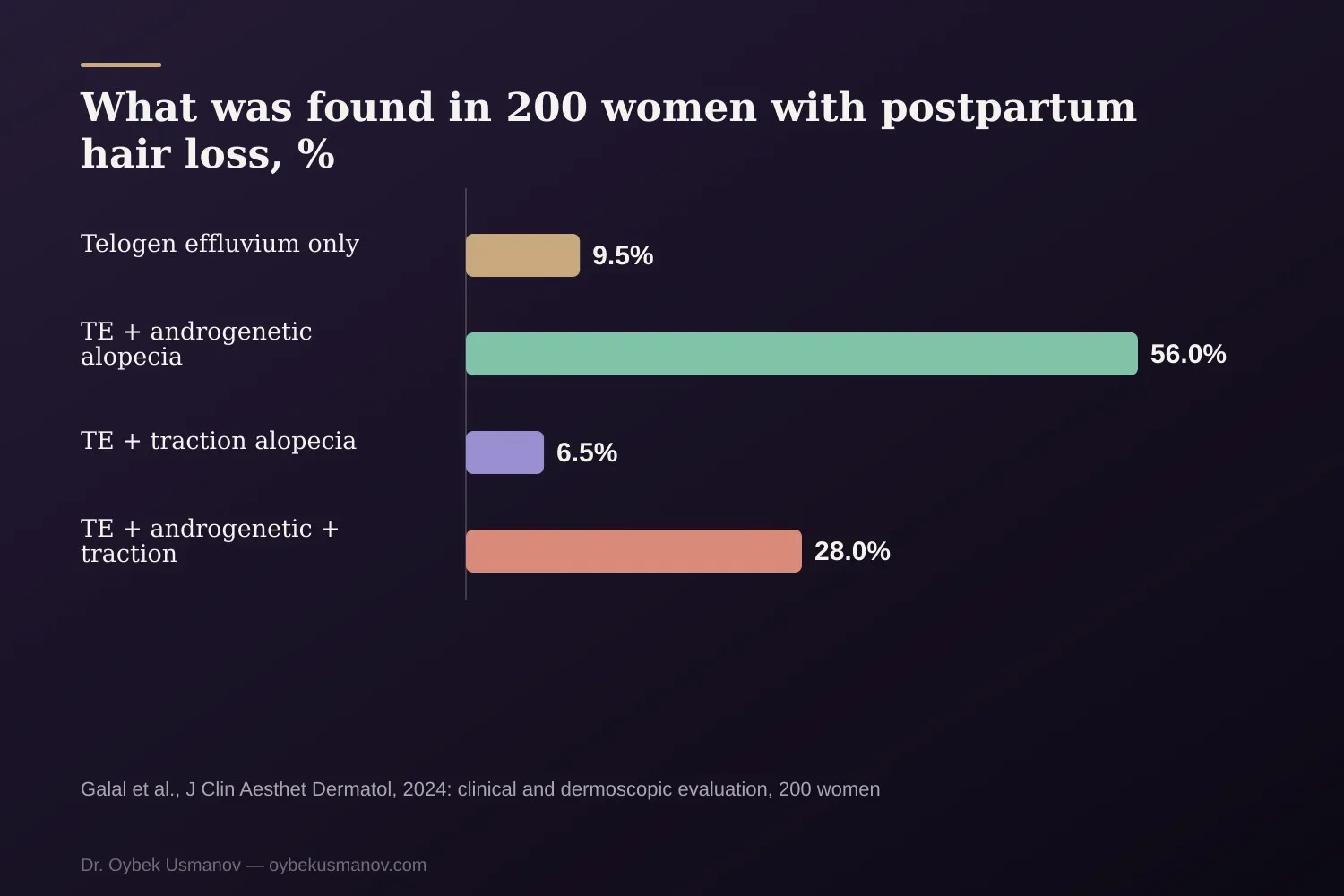
In an Egyptian study, 200 women with postpartum hair loss were examined clinically and with a dermatoscope. TE alone was found in 9.5%, TE with androgenetic alopecia in 56.0%, TE with traction alopecia in 6.5%, and all three in 28.0% (Galal et al., Journal of Clinical and Aesthetic Dermatology, 2024, PMID 38779373). The authors conclude that postpartum shedding can “unmask” existing conditions, which matters for diagnosis and treatment.
A similar point appears in a case series of three patients: TE revealed hidden traction alopecia caused by tight hairstyles (Samrao & Mirmirani, Skin Appendage Disorders, 2022, doi:10.1159/000521705).
Important: this is one small regional sample and cannot be applied to all women.
When to see a doctor
- If shedding has not eased by 8–12 months after delivery.
- If your parting thins, bald patches appear, or hair looks fine and downy.
- If you have fatigue, pallor, itching or pain of the scalp.
- If you pull your hair tight: there may be a traction component.
- Do not start treatment or supplements on your own: dosing is the doctor’s to set, especially while breastfeeding.
What we do
Surgery does not treat TE. If thinning areas remain after childbirth and the doctor confirms androgenetic alopecia, we will discuss options. Send photos of your head on WhatsApp and tell us when the changes began.
If you are planning breastfeeding or pregnancy, tell us at the consultation: timing and approach are chosen by the doctor. This article is general information and does not replace a consultation.