procedures
PRP therapy for hair: when it helps and when it does not
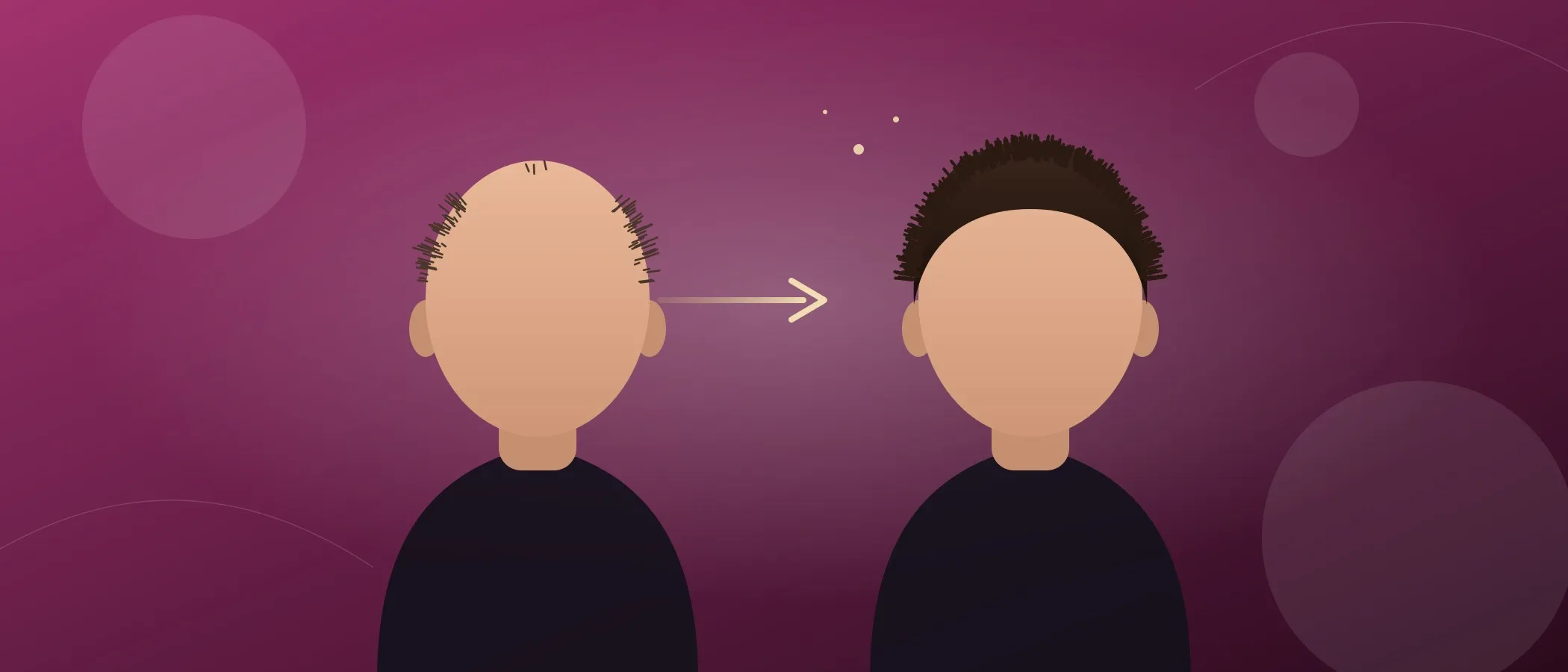
PRP therapy (platelet-rich plasma) is offered by almost every clinic — and often promised to do a lot. Let us see what it actually does, what is proven and where data are still lacking.
What PRP is and how the procedure goes
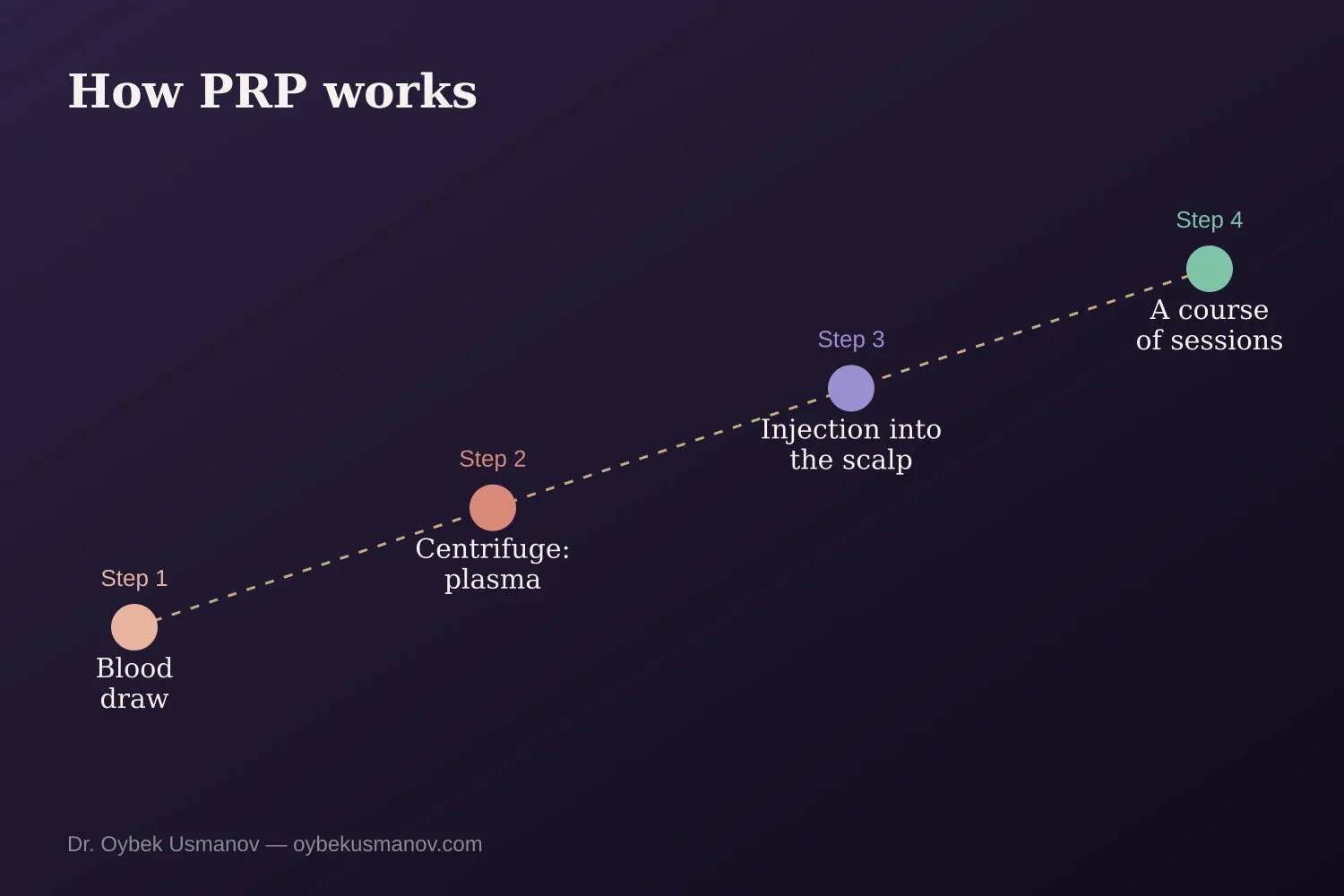
PRP is plasma from your own blood with a raised concentration of platelets. Blood is drawn from a vein, spun in a centrifuge and the resulting plasma is injected into the scalp. The procedure is minimally invasive and usually given as a course.
What the studies show
The most complete review to date is a systematic review and meta-analysis of 43 randomized trials with 1,877 participants. Activated PRP increased hair density and reduced recurrence compared with placebo, while non-activated PRP produced more adverse effects. PRP also improved clinical outcomes and patient satisfaction. It did not significantly affect hair thickness. The authors rate the evidence as moderate and note heterogeneity and a need for standardization (Anitua et al., Dermatology and Therapy, 2025, doi:10.1007/s13555-025-01542-8).
PRP and minoxidil
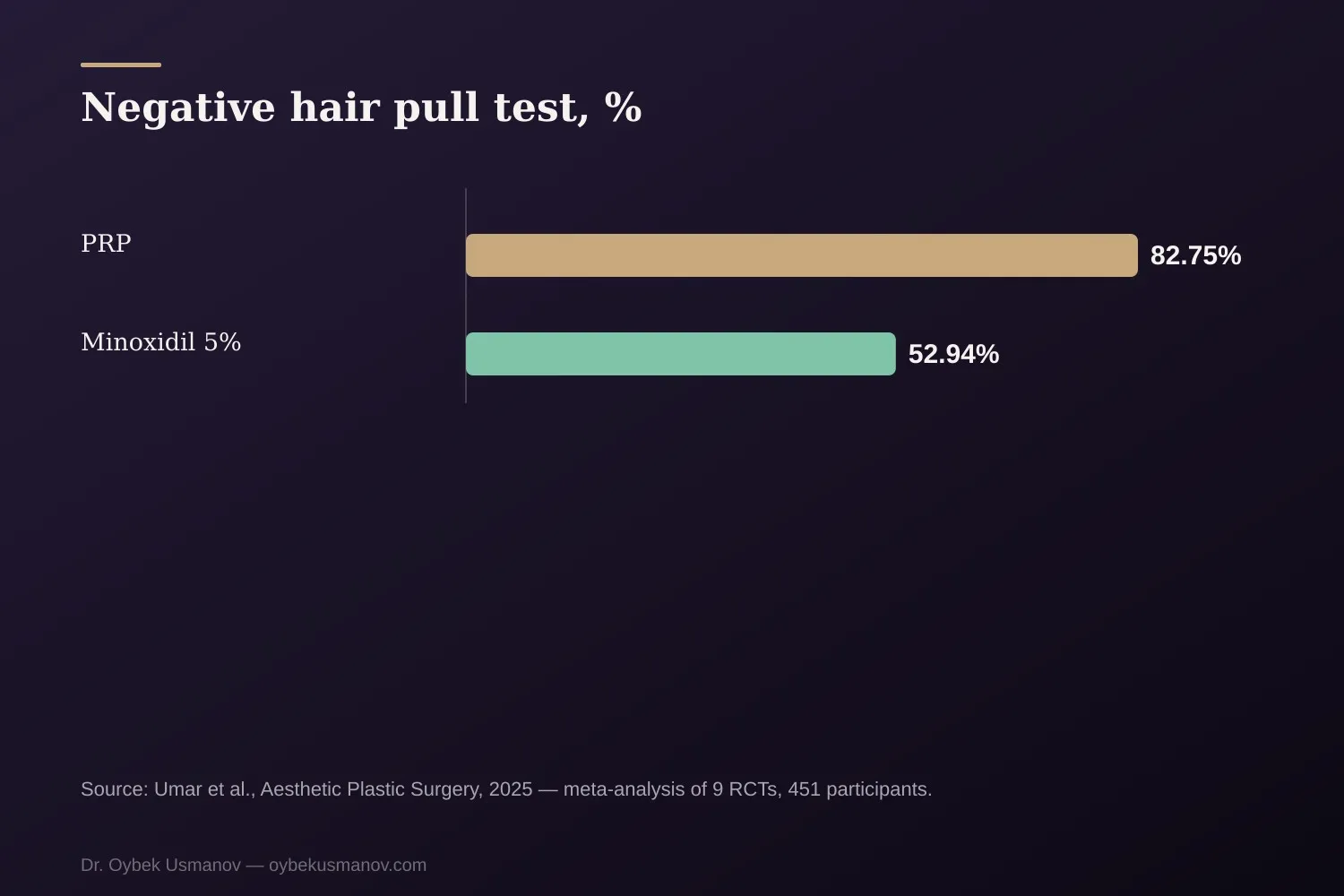
Minoxidil is the standard treatment for androgenetic alopecia, so PRP is often compared with it. A meta-analysis of 9 randomized trials (451 participants) found no significant difference between PRP and 5% minoxidil in hair density, terminal hair count or the share with marked regrowth. Patient satisfaction was higher with PRP, and a negative hair pull test was more common: 82.75% versus 52.94%. The authors stress the high heterogeneity of the trials and conclude there is no clear advantage of PRP over minoxidil (Umar et al., Aesthetic Plastic Surgery, 2025, doi:10.1007/s00266-025-05394-7).
What this means in practice
- PRP is supportive therapy, not a replacement for a transplant: it works on hair that is still growing but weakened.
- The effect depends on the protocol: how the plasma is activated and prepared affects results and safety.
- There is no single standard yet, so different clinics do PRP differently.
- Like minoxidil, PRP needs regularity: one session is not enough.
- The surgeon chooses medication and combinations after examination.
What we do
PRP therapy is among the clinic’s services. The surgeon will assess your stage and whether to start with it, combine it with other treatment or consider a transplant. Send photos of your head on WhatsApp and we will advise.
This article is general information and does not replace a consultation.