
new methods
Exosomes, PRF and stem cells for hair loss: what is known and what is not

Exosomes, PRF, stem cells, conditioned media — in clinic advertising such methods sound like the future of hair-loss treatment. What is behind them? To answer, we looked at systematic reviews in PubMed. The short version: results look encouraging, but data are still scarce and studies are heterogeneous.
These methods treat hair loss and do not replace a transplant. The review notes that PRF combined with a transplant may add benefit, but the data are limited.
What a systematic review showed
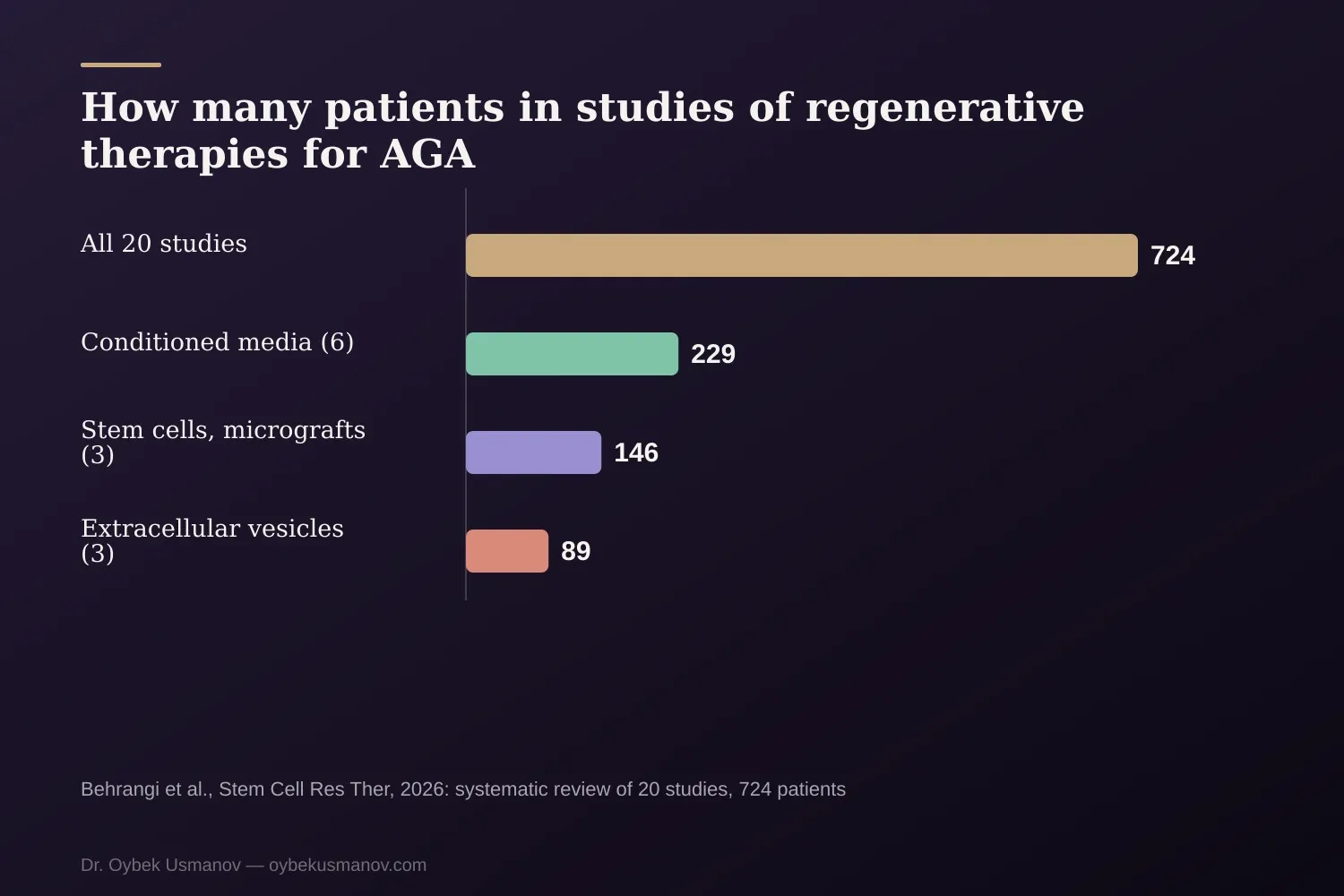
A 2026 systematic review included 20 clinical studies with 724 patients with androgenetic alopecia and compared five regenerative approaches: conditioned media, PRF, stromal vascular fraction (SVF), extracellular vesicles (exosomes) and stem cells. Conditioned media were studied most (6 studies, 229 patients) and gave a 7–16% gain in hair density and 11–32% in thickness. For PRF, marked density improvements within 3–6 months were reported; for SVF, a 41–48% density rise after a single injection; for extracellular vesicles, a 28% increase in hair count (3 studies, 89 patients); for stem cells and micrografts, a 30% density rise in two months (3 studies, 146 patients). Adverse events were mild and transient. The authors stress heterogeneity of protocols and limited long-term data and call for larger randomized trials (Behrangi et al., Stem Cell Research & Therapy, 2026, doi:10.1186/s13287-026-05016-2).
Note: these are different methods, groups and ways of measuring. The figures cannot be compared with each other or transferred to a specific person.
And exosomes separately
A systematic review of exosome-based therapy (39 studies, including preclinical) says early clinical studies report hair density gains of 8–20% and better shaft thickness, but the evidence is limited by small samples, retrospective designs, lack of control groups and inconsistent outcome measures. Wide adoption is hindered by unresolved issues of manufacturing standardization, scalability and regulation, and a lack of long-term data (Malih et al., Molecular Biology Reports, 2026, doi:10.1007/s11033-026-12255-2).
A review of PRP in androgenetic alopecia calls the method promising, safe and minimally invasive, but notes that protocol differences (centrifugation, activation, delivery) lead to different results across studies (Zhong et al., Journal of Cosmetic Dermatology, 2026, doi:10.1111/jocd.70809).

How to treat promises of “new methods”
- Ask how many patients and how long a follow-up lie behind the advertised figure.
- Ask whether the studies had control groups: without them improvement is hard to tell from chance.
- Find out which protocol exactly is meant: for PRP and other methods it differs from clinic to clinic.
- Remember these methods complement treatment, not replace proven drugs and a transplant.
- Do not decide on an expensive procedure if you are promised a “guaranteed” result: the data offer no such guarantee.
What we do
Send photos of your head on WhatsApp and tell us what you have already tried: the surgeon will explain which methods have evidence, which are still experimental and what makes sense in your situation.
This article is general information and does not replace a consultation.