aftercare
Scalp care after a hair transplant: what is known and what your surgeon decides

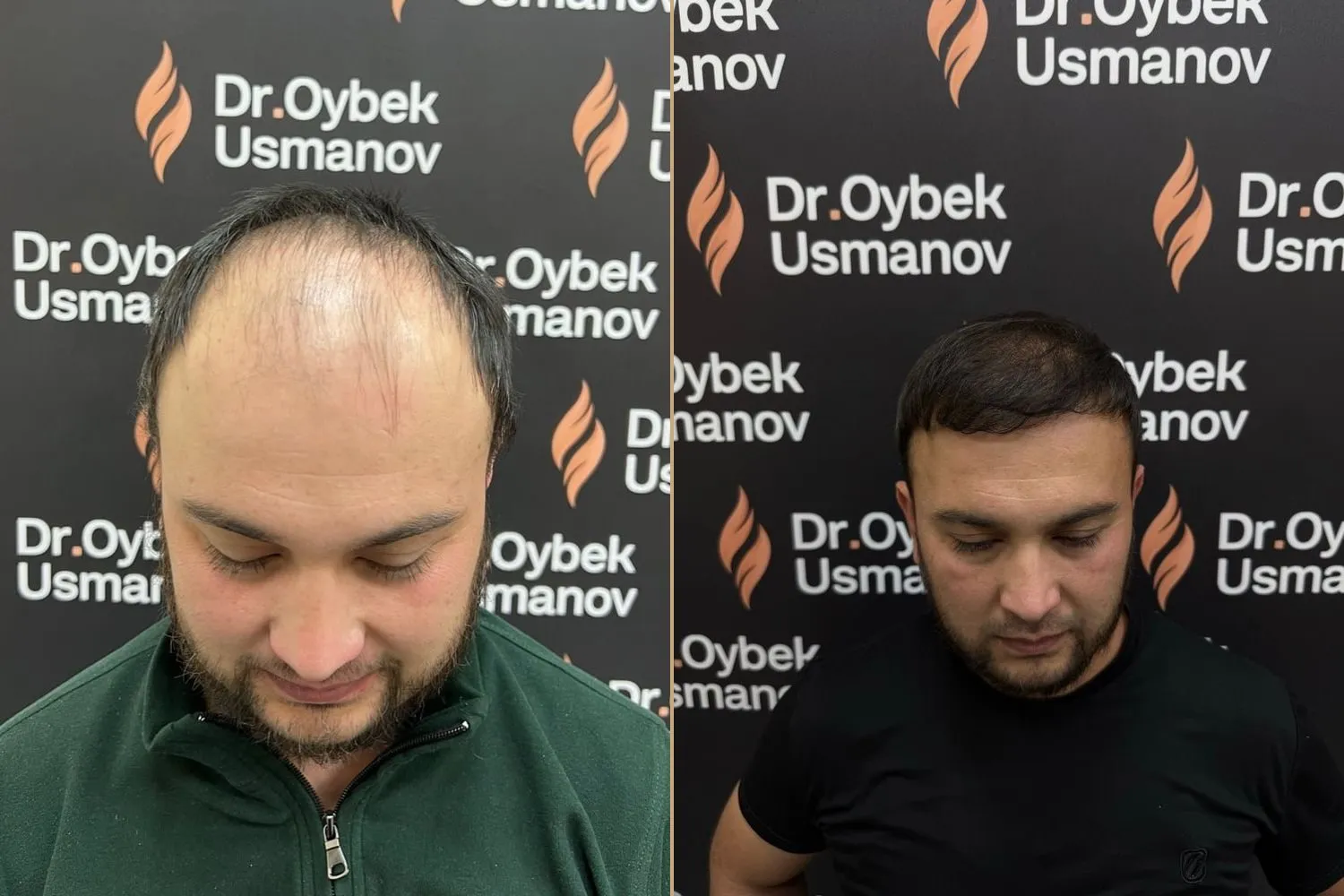
After surgery patients want an exact routine: what to wash with, how often, when to return to the usual shampoo. We have to be frank: we found no universal day-by-day scheme in PubMed, and clinics differ in detail. But there is data on what matters in aftercare and what is risked by neglecting it.
Your surgeon will give you the exact regimen in writing. Below is the logic supported by publications.
What expert consensus says
An international consensus of 38 experts advises that after transplant normal haircare is resumed gradually and close follow-up is kept through the first year (Vañó-Galván et al., Journal of Dermatological Treatment, 2023, doi:10.1080/09546634.2023.2232065).
The word “gradually” matters more than any specific number of days: skin and grafts go through several healing stages, and care is adapted to them.
Why not to delay the first care
In a multicenter study of 1,317 patients, folliculitis after transplant occurred in 12.11%. Among risk factors was first care later than 3 days after surgery (odds ratio 1.56); summer surgery, density above 45 grafts/cm² and 4,000 grafts or more were significant too (Zhou et al., Plastic and Reconstructive Surgery, 2023, doi:10.1097/PRS.0000000000011175).
This is an association, not proof of cause, but the practical point is clear: do not postpone the first treatment if your surgeon prescribed it.
Which complications relate to care
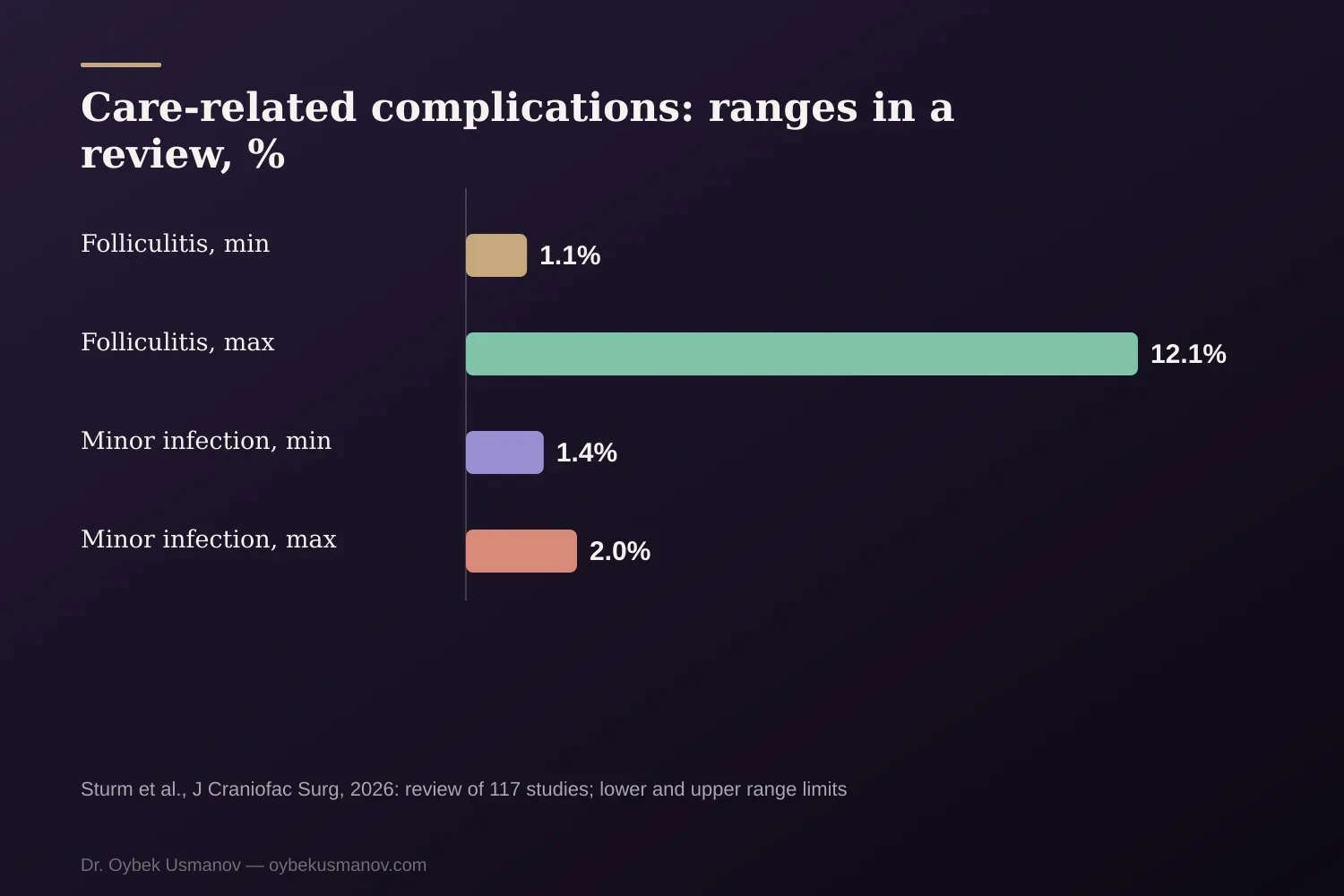
In a review of 117 studies, minor infection ranged from 1.4% to 2.0% and folliculitis from 1.1% to 12.1%; risk factors included smoking, diabetes and dense graft packing (Sturm et al., Journal of Craniofacial Surgery, 2026, doi:10.1097/SCS.0000000000013195). The authors stress that definitions differ between papers and exact rates are hard to estimate.
A review of FUE complications also mentions persistent perifollicular erythema and folliculitis as conditions of the recipient area that the surgeon monitors (Romera de Blas et al., Frontiers in Medicine, 2026, doi:10.3389/fmed.2026.1750989).
Patient education works
In a study of 116 patients, the group whose care and education used the “teach-back” method (the patient repeats instructions in their own words) showed higher follicle survival, fewer complications, better self-management after surgery and greater satisfaction (Huang et al., Plastic and Reconstructive Surgery, 2025, doi:10.1097/PRS.0000000000012076). This means clear instructions, repeated back to the surgeon, are part of the result.
- Ask for written instructions and repeat them to your surgeon in your own words.
- Do not change products or the schedule yourself: for example, do not return to usual shampoos and treatments until your surgeon allows.
- If you have strong redness, pus-filled spots, pain or fever, do not wait for the scheduled visit: contact the clinic.
- Attend follow-ups: the consensus recommends monitoring through the whole first year.
What we do
Send photos of your head and your aftercare questions on WhatsApp: the surgeon will check that all is on track and advise what to do next.
This article is general information and does not replace a consultation.