causes of hair loss
Sleep and hair loss: what is known and what studies do not show
“I am not sleeping enough, so my hair is falling out.” It is a common explanation. Below is what is actually known from PubMed: where data exist and where they do not.
This article is general information: diagnosis and treatment are for a doctor to determine in person.
What the alopecia areata study shows
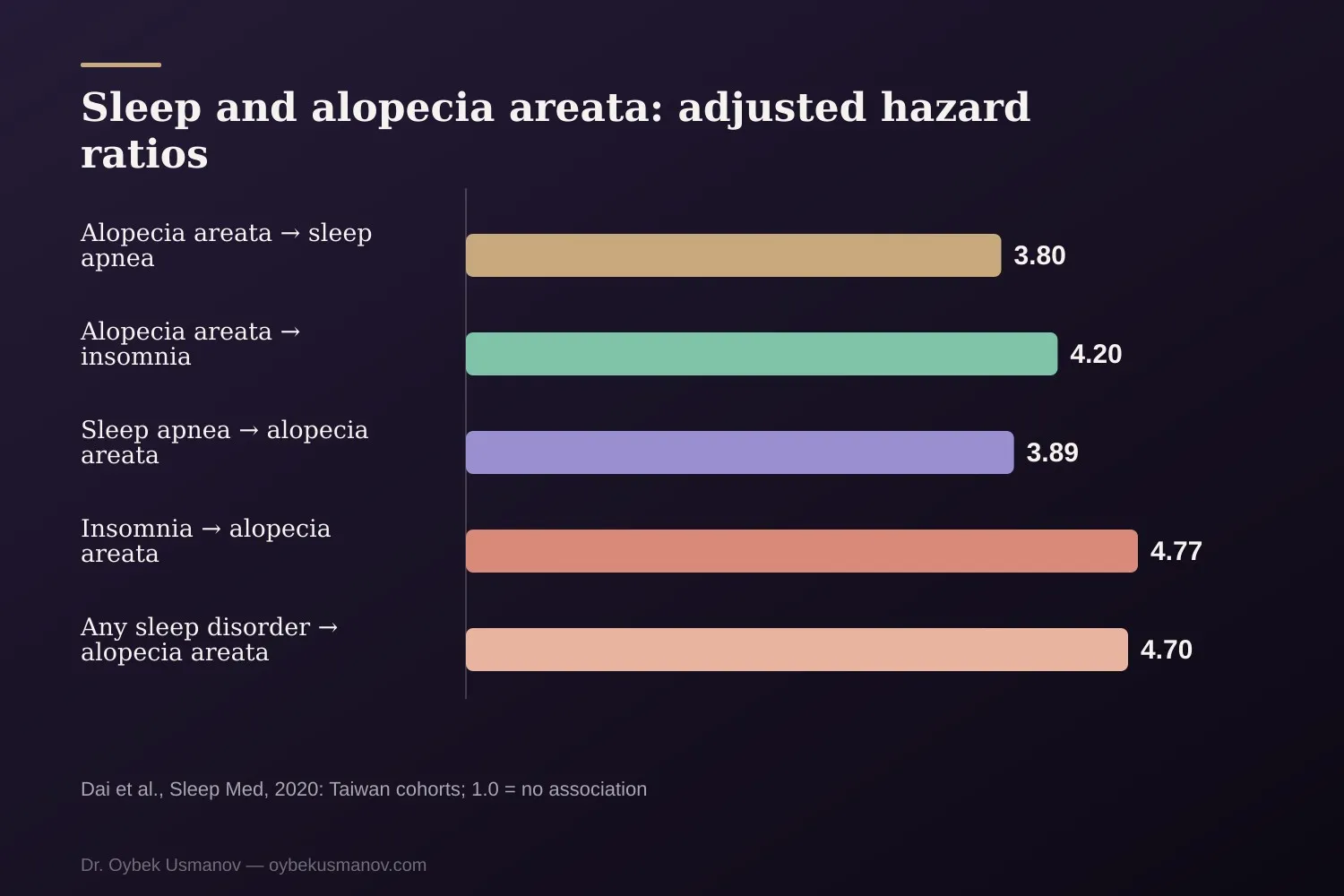
A population cohort study in Taiwan compared 5,648 patients with alopecia areata and 22,592 controls, as well as 93,130 people with sleep disorders and 372,520 controls. Patients with alopecia areata had a higher risk of sleep apnea (adjusted hazard ratio 3.80) and non-apnea insomnia (4.20). Conversely, sleep disorders raised the risk of developing alopecia areata (4.70), including apnea (3.89) and insomnia (4.77) (Dai et al., Sleep Medicine, 2020, doi:10.1016/j.sleep.2020.06.015).
The link is two-way: alopecia areata more often comes with sleep disorders, and sleep disorders with alopecia areata. The authors stress that further studies of shared mechanisms are needed.
And other types of hair loss
For other types of hair loss we could not find such large sleep studies in PubMed, so there are no figures for them in this article. A review of telogen effluvium names typical triggers: illness, surgery, childbirth, nutritional deficiencies, medications, infection and emotional stress; sleep is not named among them in the abstract, and a cause cannot always be found (Bergfeld & Mendez, Cleveland Clinic Journal of Medicine, 2026, doi:10.3949/ccjm.93a.26008).
A therapy review of alopecia areata names smoking, sleep disorders and metabolic health as significant adjunctive factors in the course of the disease, but this is the review’s general conclusion (Ferrara, Inflammopharmacology, 2026, doi:10.1007/s10787-026-02273-8).
What it means for you
- A link is not a cause: poor sleep can also result from anxiety about hair loss.
- If you snore, stop breathing in your sleep or are sleepy by day: discuss it with a doctor.
- If hair falls out in patches, see a dermatologist: alopecia areata should not be mistaken for ordinary sleep loss.
- If shedding is diffuse and has dragged on: the doctor will check other causes, such as deficiencies or the thyroid.
- Do not start sleeping pills or supplements on your own.
What we do
If your hair loss turns out to be androgenetic alopecia, we will discuss options including transplant, and say honestly when it is not needed. Send photos of your head on WhatsApp and tell us how long hair has been falling and how you sleep.
This article is general information and does not replace a consultation.