causes of hair loss
Hair loss after COVID-19: what is known, how long it lasts and when to see a doctor
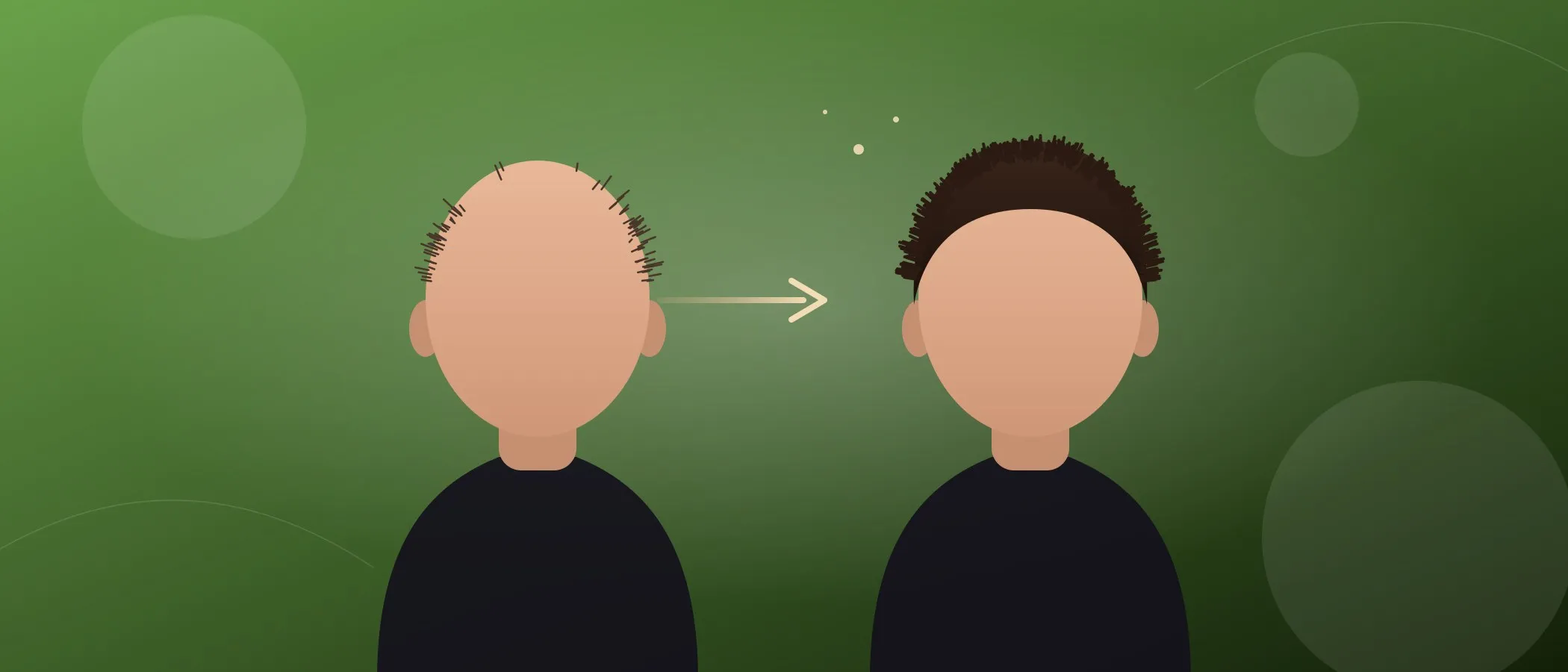
Two to four months after COVID-19 many people notice hair falling out “in handfuls”. It is frightening, especially if it goes on for weeks. The good news: in most cases it is telogen effluvium (TE), a temporary condition. Below is what PubMed studies show.
If you are thinking about a transplant, first understand the cause of the loss: TE and androgenetic alopecia are managed differently and are easily confused. The diagnosis is made by a doctor in person.
How common it is
In a large UK cohort study, 486,149 adults with confirmed COVID-19 were compared with 1,944,580 people without it. Among symptoms persisting beyond 12 weeks, hair loss was one of the strongest: adjusted hazard ratio 3.99 (95% CI 3.63–4.39) (Subramanian et al., Nature Medicine, 2022, doi:10.1038/s41591-022-01909-w).
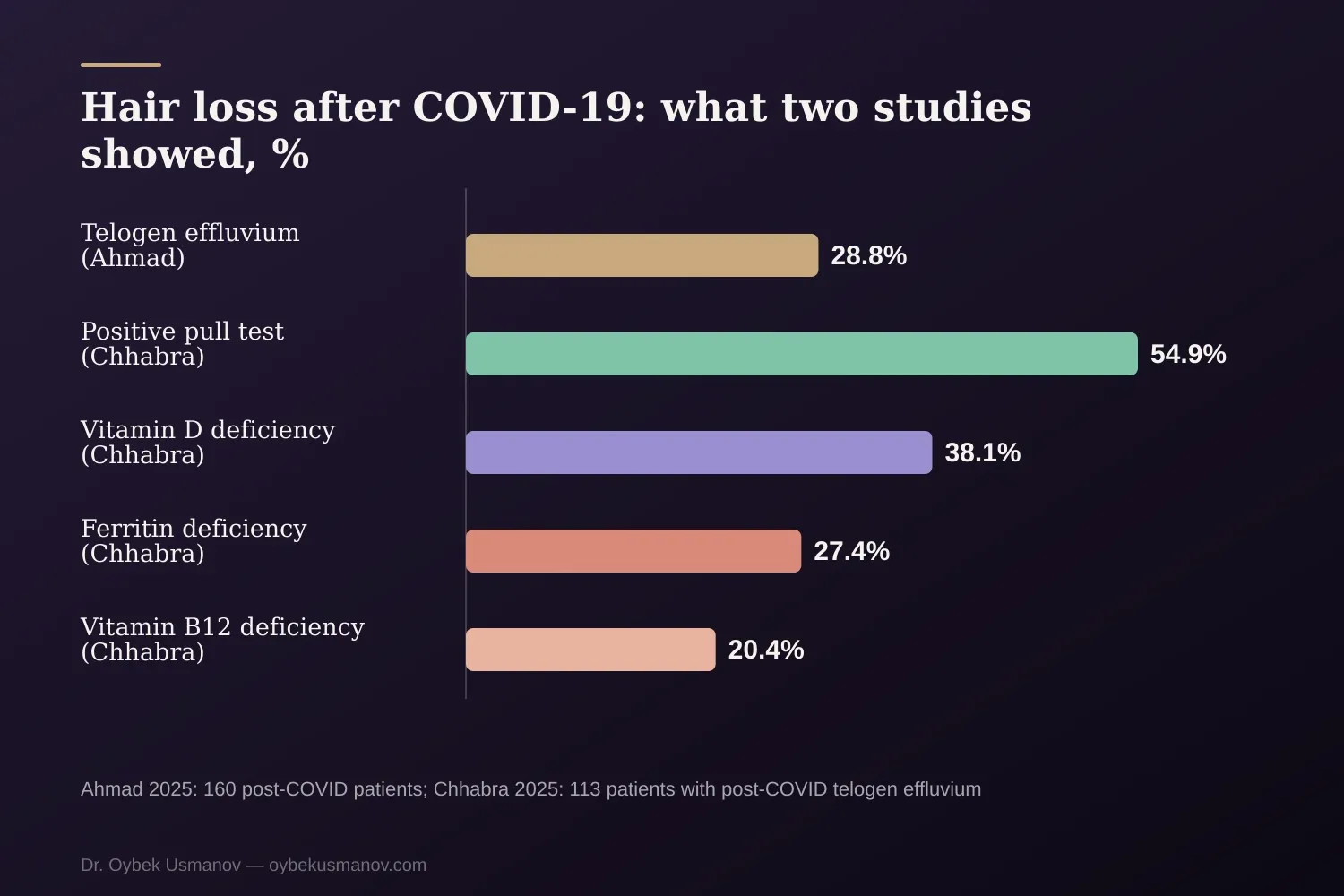
In a small cross-sectional study of 160 patients in Pakistan, telogen effluvium was noted in 28.8%, and was significantly more frequent in women than in men (Ahmad et al., Journal of the Pakistan Medical Association, 2025, doi:10.47391/JPMA.21262). In a Korean population study, the link between infection and telogen effluvium or alopecia areata was not confirmed after matching; the authors noted an association with vaccination but stressed that the benefits of vaccines outweigh the risks and that alopecia is generally reversible and less severe (Cho et al., Annals of Dermatology, 2025, doi:10.5021/ad.25.007).
Different data give different pictures: countries, methods and definitions differ. One thing is clear: complaints of hair loss after COVID-19 are common but not universal.
How long it lasts
In a series of 113 patients with post-COVID TE, 85.8% were women, 92% had an acute course, the median duration of hair loss was 2 months; the pull test was positive in 54.9%, and vitamin D, ferritin and vitamin B12 deficiency were found in 38.1%, 27.4% and 20.4% respectively (Chhabra et al., International Journal of Trichology, 2025, doi:10.4103/ijt.ijt_38_22). The authors advise assessing micronutrient deficiency.
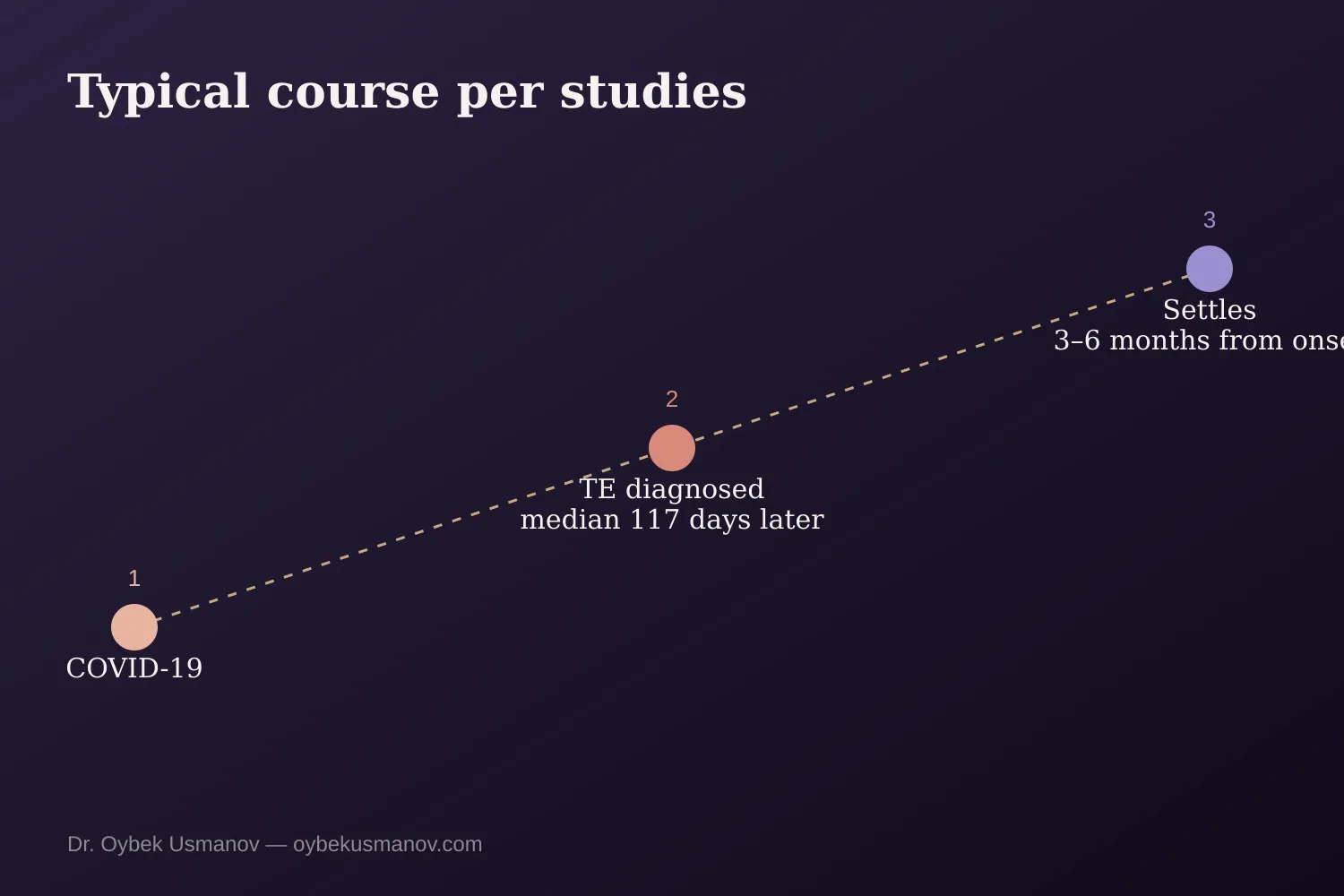
In another series of 69 patients, the time from COVID-19 to TE diagnosis had a median of 117 days (80–181), and TE is described as self-limiting (Villarreal-Villarreal et al., Actas Dermo-Sifiliográficas, 2025, doi:10.1016/j.ad.2025.104569). In a clinical study of 12 people, it was noted that shedding in TE usually stops 3–6 months after onset and that there is no evidence-based treatment (Ohyama et al., The Journal of Dermatology, 2025, doi:10.1111/1346-8138.17844).
When to see a doctor
- If shedding does not ease after 3–6 months or is very heavy.
- If you get bald patches, a thinning parting, patchy loss, or itching, pain or scaling of the scalp.
- If you have fatigue, pallor, weakness or other signs of iron, vitamin D or B12 deficiency: the doctor may order tests (we wrote about this separately).
- If shedding persists long, rule out other causes: androgenetic alopecia, thyroid disease, alopecia areata.
- Do not start treatment or supplements on your own: evidence for TE treatment is scarce, and dosing is the doctor’s to set.
What we do
Send photos of your head on WhatsApp and tell us when shedding began and whether you had COVID-19: the surgeon will help work out whether it is TE or another cause and whether a transplant is worth considering.
This article is general information and does not replace a consultation.