complex cases
Hair transplant for scarring alopecia and scars: what studies show
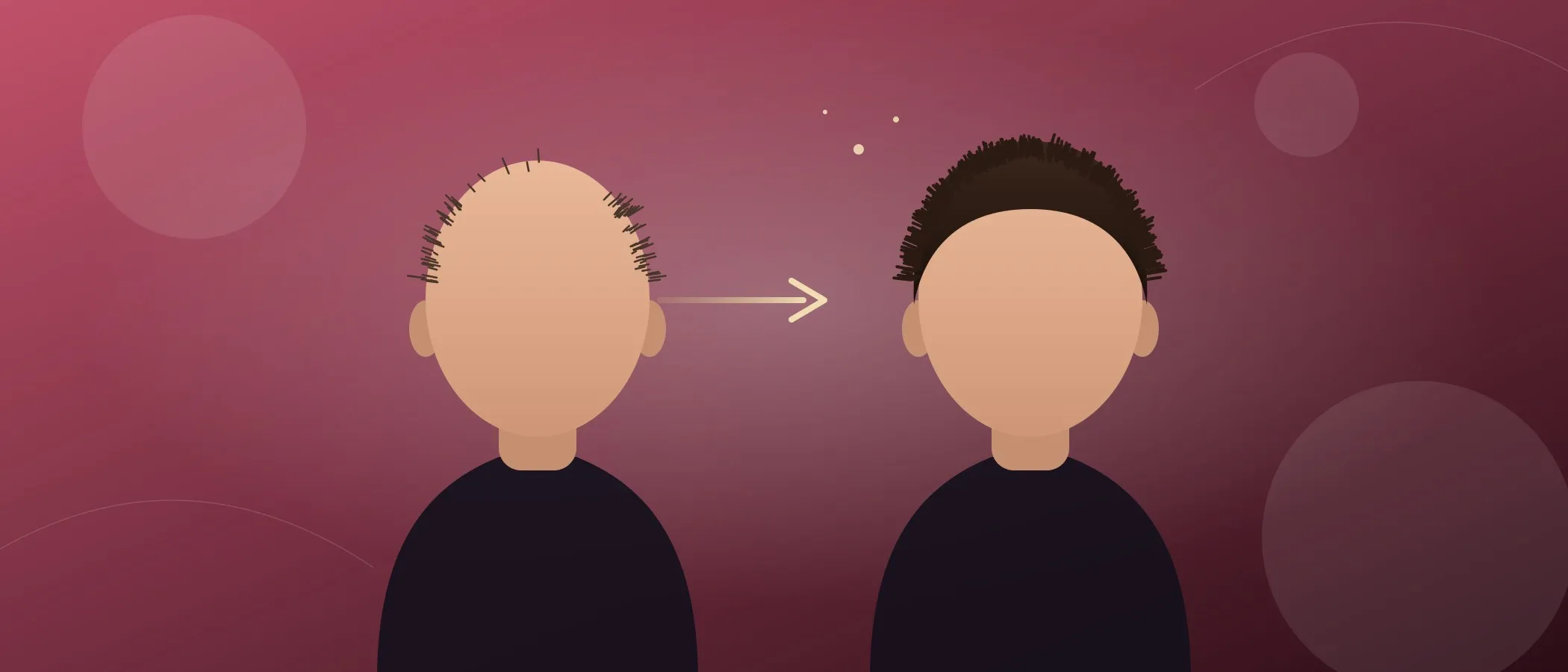
Scarring alopecia and scalp scars are a difficult area for transplantation. Follicles in a scar are destroyed permanently, and the blood supply of scar tissue is poorer than healthy skin. So the question “is it possible?” needs numbers, not optimism. Below is what PubMed publications show.
In short: transplant is possible and can give a noticeable cosmetic effect, but the result is less reliable than in ordinary androgenetic alopecia, and disease activity, scar quality and several years of follow-up matter.
How many grafts survive and how that changes over time
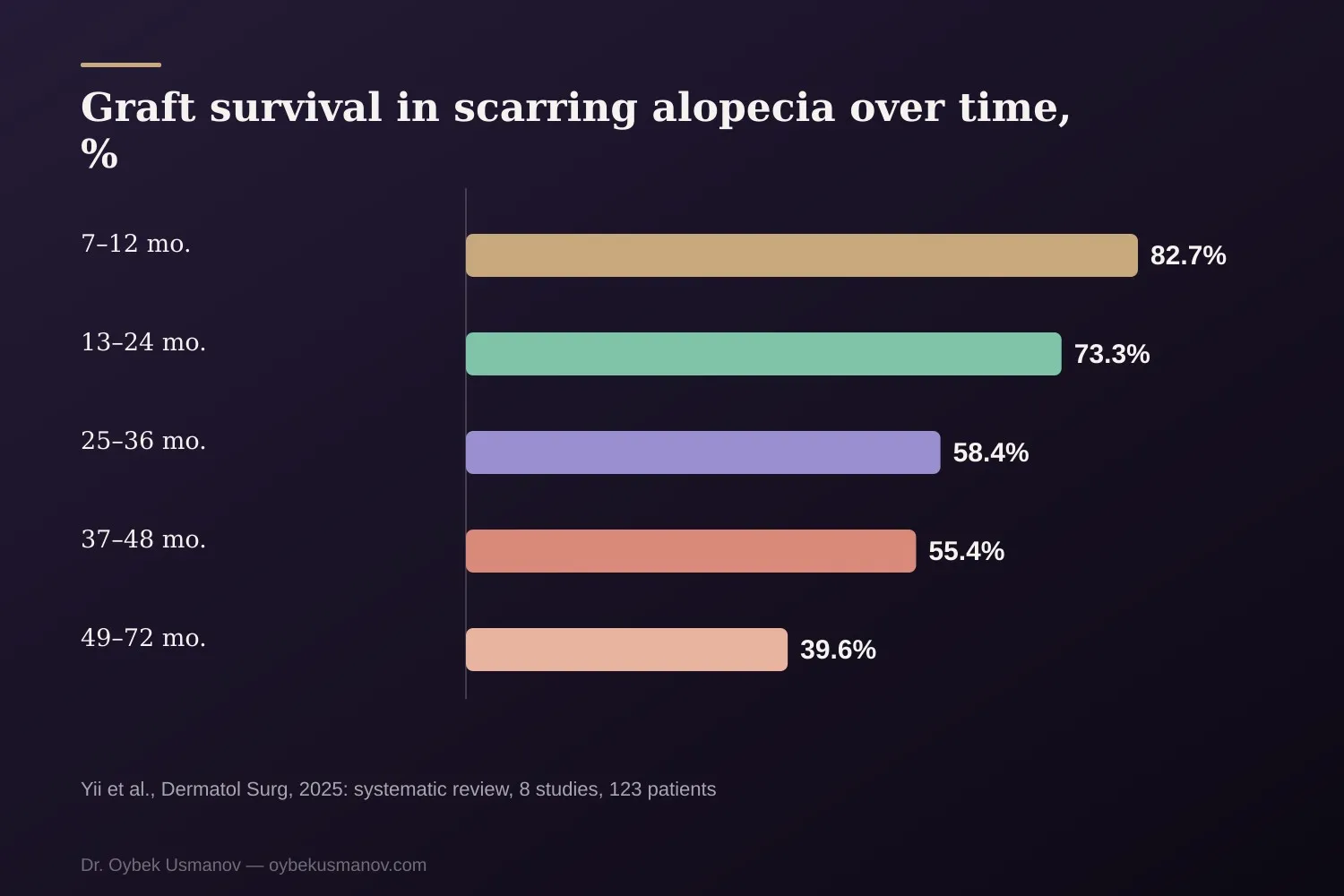
A systematic review of 8 observational studies (123 patients) in primary cicatricial alopecia found weighted graft survival of 82.7% at 7–12 months, 73.3% at 13–24, 58.4% at 25–36, 55.4% at 37–48 and 39.6% at 49–72 months. Four patients had disease reactivation after transplant. The authors conclude survival peaks at about one year and declines over time (Yii et al., Dermatologic Surgery, 2025, doi:10.1097/DSS.0000000000004707).
A more recent systematic review in lichen planopilaris (classic form and frontal fibrosing alopecia; 13 papers, 113 patients) describes survival mostly at 80–100% at 6–12 months, 71–100% up to 24 months and below 41% after the second year. No prospective studies were found, and reporting differs widely (Palacios-Diaz, Lasheras-Pérez, Anais Brasileiros de Dermatologia, 2026, doi:10.1016/j.abd.2026.501426).
Individual studies: from lichen planopilaris to post-surgical scars
In 32 patients with inactive lichen planopilaris at a density of 20–25 follicular units per cm², survival was 78.62% at 12 months and 79.96% at 24 months; histologic features at the time of surgery did not affect it (Daruwalla et al., Dermatologic Surgery, 2021, doi:10.1097/DSS.0000000000003103).
In extensive scarring alopecia (mean 120 cm²), a dense-packing FUE megasession gave survival of 85%, lower than in non-scarring controls, with an average operating time of about 8 hours (Zhu et al., Dermatologic Surgery, 2021, doi:10.1097/DSS.0000000000002454).
In 15 patients with post-surgical scalp scars at about 35 units per cm², mean survival at 12 months was 80.67% (range 70–90%) (Yoo et al., BioMed Research International, 2019, doi:10.1155/2019/3423657).
Note these are small, heterogeneous works, and the reviews point to the lack of prospective studies and inconsistent follow-up.
What a patient should know
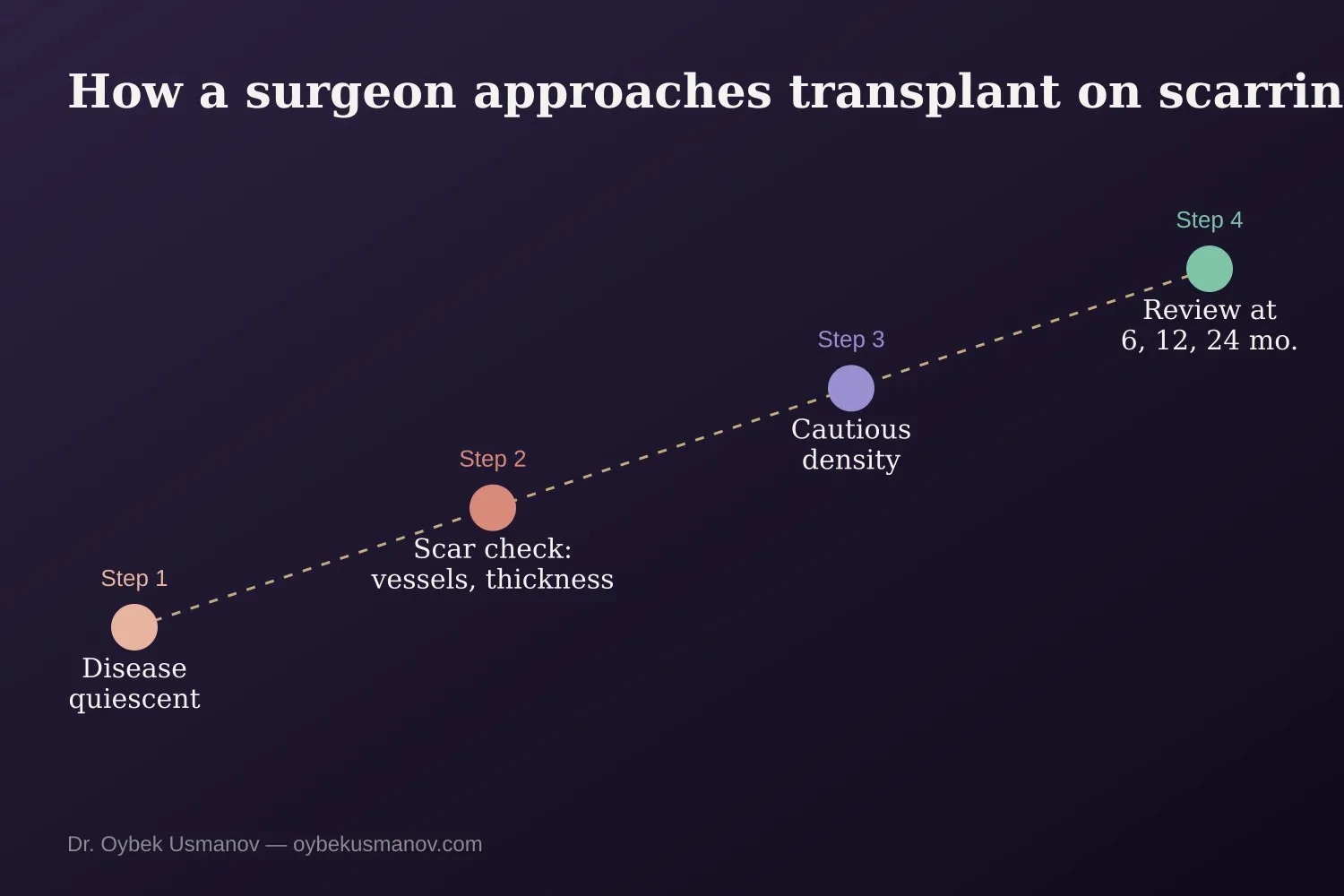
- A transplant is considered when the disease is “quiet”: in the review, patients had no clinically active disease, but the length of quiescence before surgery varied widely (0 to 60 months).
- The disease can reactivate: in the Yii review four patients relapsed after transplant, so a dermatologist is needed.
- Survival after two years and later may decline: follow-up and honest expectations are needed.
- Expect the scar to be assessed (blood supply, pliability, thickness) before surgery, and the result will be less predictable than in androgenetic alopecia.
- Diagnosis and the decision to operate are made by doctors at an in-person exam: photos allow only a preliminary view.
What we do
Send photos of your head and information on your diagnosis and treatment on WhatsApp: the surgeon will say whether a transplant can be considered and what examinations are needed first. We show clinic results only with the surgeon’s data.
This article is general information and does not replace a consultation.